
Due to client NDA commitments, the showcased projects represent only a portion of our work and not the full scope of what we’ve delivered.
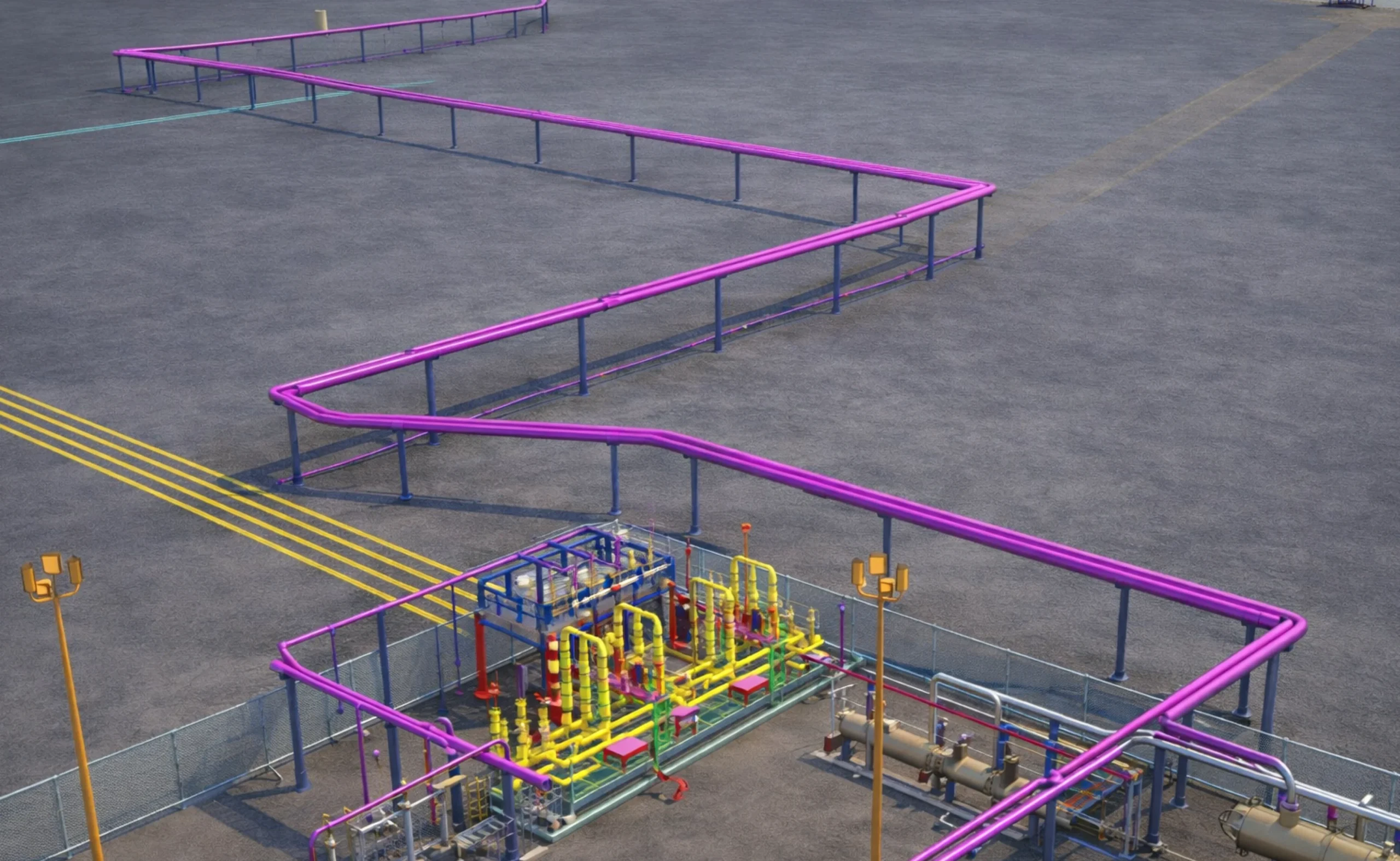
Engineering projects in the healthcare and academic sectors often face a common enemy: lack of space. Fluxiss was brought onto the Midland Metropolitan University project to handle the pipe stress analysis for the facility’s complex gas and mechanical systems. The heart of the challenge sat within the plantroom, where every inch of real estate was already claimed, and the budget required a lean, high-efficiency approach.
In a high-density plantroom, pipes don’t just sit still. As gas and mechanical fluids change temperature, the metal expands and contracts. Without proper engineering, this movement leads to misalignment, joint failure, or catastrophic pipe bursts.
The main difficulty we faced was the limited footprint. Standard solutions—like massive expansion loops—weren’t an option because there simply wasn’t room. Additionally, the project required a solution that prioritized construction economy, meaning we couldn’t just throw expensive hardware or total redesigns at the problem.
Our approach was rooted in “smart flexibility.” Instead of forcing a total redesign, we analyzed the existing layout to see where the system could naturally absorb movement.
We didn’t over-engineer. By focusing on the “behavior” of the system rather than just the math, we delivered a solution that was easy for the site team to install.
Pipe stress analysis is often treated as a data-entry task. At Fluxiss, we treat it as a puzzle. Whether it’s a University gas plant or an industrial facility, we look for the most direct path to safety and efficiency. We don’t just give you a report full of numbers; we give you a blueprint for a system that actually works in the real world.
We’re proudly serving clients across the USA, UK, UAE, and Europe. From corporate giants to research labs and the shipping industry,