Common Seismic Analysis Mistakes in Structural Design
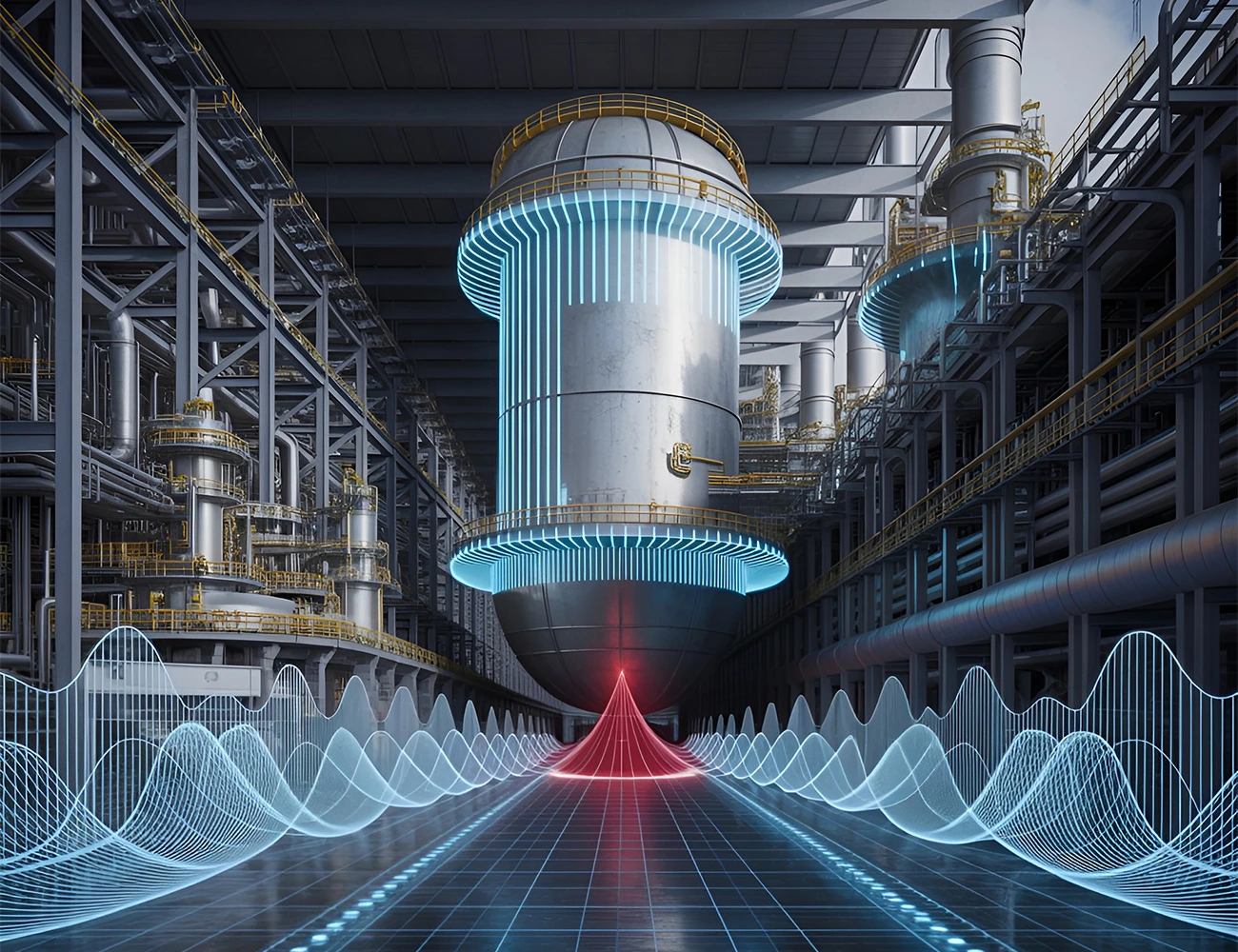
Seismic software can calculate thousands of results from a small set of assumptions. Errors in that starting point affect every downstream check. A useful review begins with the design basis and follows the load path through the model, concentrating on inputs that change mass, stiffness, dynamic response and the way earthquake forces reach the foundations.
Using the wrong mass source
Check whether self-weight, permanent equipment, partitions, stored material and applicable portions of variable loads are represented. Avoid double-counting self-weight through both element density and an imported load case. Mass distribution and centre of mass matter as much as the total.
For an industrial structure, confirm equipment operating states and contents. Empty, operating and maintenance configurations may have different masses and load combinations. Reconcile the seismic mass report with an independently prepared weight summary.
Assuming stiffness without reviewing the structure
Rigid diaphragms, fixed bases and unmodified section stiffness are modelling choices. Their suitability depends on actual construction and the assessment method. Check connection releases, cracked stiffness where applicable, soil or foundation flexibility and components that may inadvertently create a load path.
Inspect mode shapes for disconnected parts, unexpected local motion or unrealistically stiff response. A very short period can indicate unintended restraints; a long period can reveal a release or connectivity error. Compare against a physical estimate rather than accepting a plausible-looking animation.
Mishandling spectrum units and response factors
A spectrum entered in units of g requires treatment consistent with the solver's acceleration convention. Check whether reduction and amplification factors are already included in the spectrum or applied later. Double application can substantially change demand while leaving the plotted curve visually convincing.
Record damping, modal combination, directional combination and required scaling. Closely spaced modes need an appropriate combination approach. Do not use a default setting without checking its assumptions and the project-adopted rules.
Omitting torsion, drift and compatibility
A regular plan does not prove torsion is negligible. Review eccentricity, the location of resisting elements and any required accidental torsion. Drift assessment also needs the correct displacement definition and code factors; raw elastic displacement may not be the acceptance quantity.
Check gaps between adjacent structures and movement at equipment, stairs, piping and façade interfaces. A primary frame may pass while an attached component is unable to accommodate relative movement. Coordinate those demands with the responsible disciplines.
Stopping the review at member forces
Trace diaphragm forces through collectors, connections, anchors and foundations. Check local transfer regions and any capacity-design or overstrength provisions required by the adopted system. A strong beam does not compensate for an unverified collector or anchor group.
FEMA's seismic design examples show calculations as a connected process. Use a review checklist that connects inputs, analysis and detailing, and record which provisions apply to the specific structural type.
Close assumptions before issuing the model
The review package should contain mass reconciliation, mode checks, spectrum settings, load combinations, drift results and interface demands. Assign each unresolved assumption an owner and a consequence. Re-run affected checks after a changed equipment weight, brace layout or foundation condition.
Fluxiss can review seismic models and supporting calculations with the aim of identifying which input changes matter to the design decision and which missing details must be resolved before construction.
Frequently Asked Questions
Yes. Incorrect distribution, eccentricity or rotational inertia can change modes and force distribution even when the total matches.
Technical references & further reading
Practical engineering explainers connecting analysis methods, design inputs and project decisions.
Related articles.

Let's Build Something Great Together.
Partner with Fluxiss for engineering that holds up - under pressure, under load, under scrutiny.