Pipe Stress Analysis: Common B31.3 Pitfalls
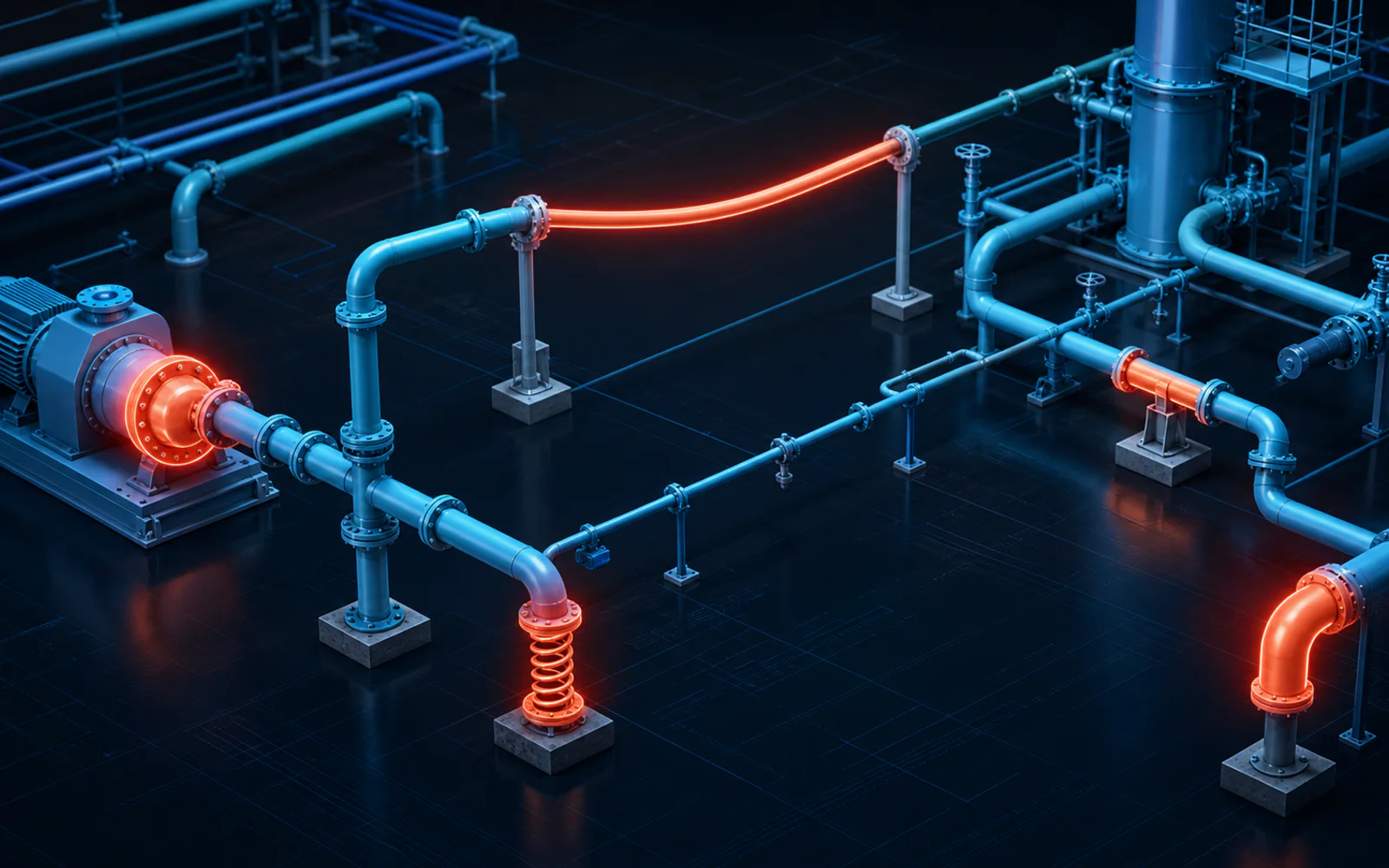
After a decade of reviewing pipe stress models - both our own and third-party verifications - the same handful of B31.3 mistakes show up again and again. Most are not code-interpretation debates; they are modelling choices that quietly produce unconservative results. This article walks through five of the most common, and what to check in your own CAESAR II model before it goes out the door.
The first is the missing sustained case. B31.3 requires a sustained stress check (weight + pressure) independent of the expansion case, and the code allowable is different. A model that only runs the operating (thermal) case and reads off the expansion stress is not compliant - and the sustained stress is usually the one that fails first on hot, large-bore lines with long unsupported spans.
“Five recurring mistakes we see in CAESAR II models and B31.3 stress reports - from missing operating cases to spring supports selected against the wrong load case.”
The second is spring support selection against the wrong load case. Variable spring hangers are sized to carry operating weight, not the cold or hydrotest load. If the spring is selected against the design weight at ambient, the operating load will be off by the cold-to-hot travel allowance, and the rod load may exceed the spring’s rated range. Always check the spring table against the operating case, and verify that the indicated travel falls within the working range of the selected hanger.
The third is friction. Sliding supports with friction coefficients of zero are convenient but rarely honest. For lines that rely on sliding supports to absorb thermal growth, zero friction over-predicts flexibility and under-predicts sustained and occasional stresses. Use a realistic friction coefficient (0.3 for steel-on-steel is a reasonable default), and check the sensitivity by running a low-friction case for comparison.
The fourth is nozzle flexibility. Default rigid nozzles are a conservative simplification for small lines on heavy vessels, but they are wrong on large-bore lines connected to thin-walled equipment or to fixed equipment like pumps and turbines. Use WRC 107/537 or equipment-vendor flexibility values where the equipment manufacturer has provided them; ignoring nozzle flexibility can push nozzle loads well above the vendor allowable without the stress report flagging it.
The fifth is occasional load combinations. Wind and seismic are occasional loads per B31.3, and the code allows an increased allowable - but only when the load case is correctly categorised and combined. A common error is running seismic as a sustained case, which both over-penalises the stress and misses the code-permitted allowable increase. Build the occasional case explicitly, apply the correct code combination, and verify the stress type in the output.
M Bilal contributes pipe stress analysis insights to the Fluxiss content library.
Related articles.


Let's Build Something Great Together.
Partner with Fluxiss for engineering that holds up - under pressure, under load, under scrutiny.