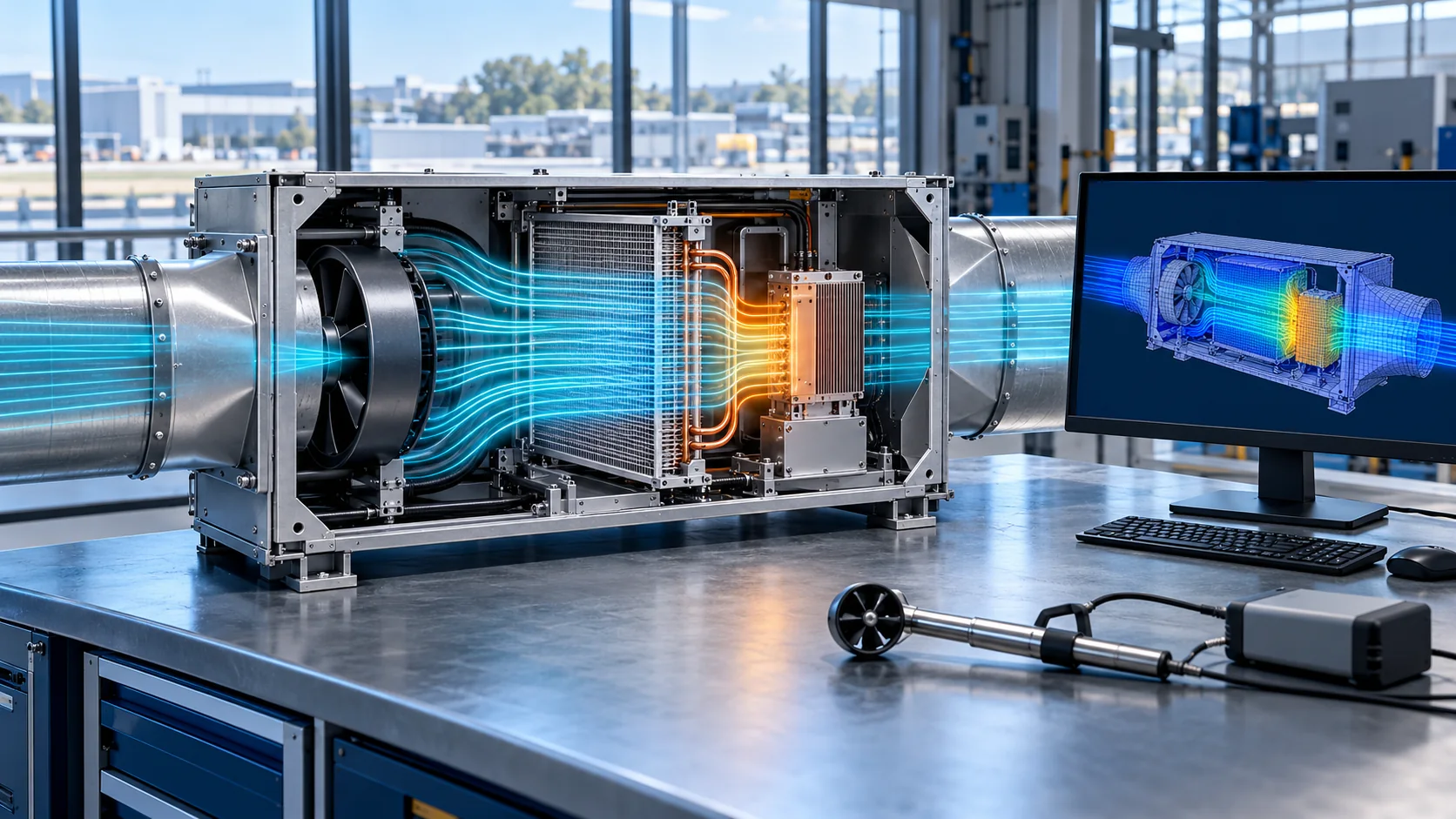
This service spotlight explains how the Fluxiss Computational Fluid Dynamics service turns a flow or heat-transfer question into a reviewable engineering result. CFD can compare pressure loss through equipment, airflow distribution in a room or enclosure, cooling of a component, external aerodynamic loads or the movement of smoke and contaminants. The useful starting point is therefore not a request for colourful contours, but a defined decision: which design option must be compared, what quantity will decide it and what evidence is available for checking the model.
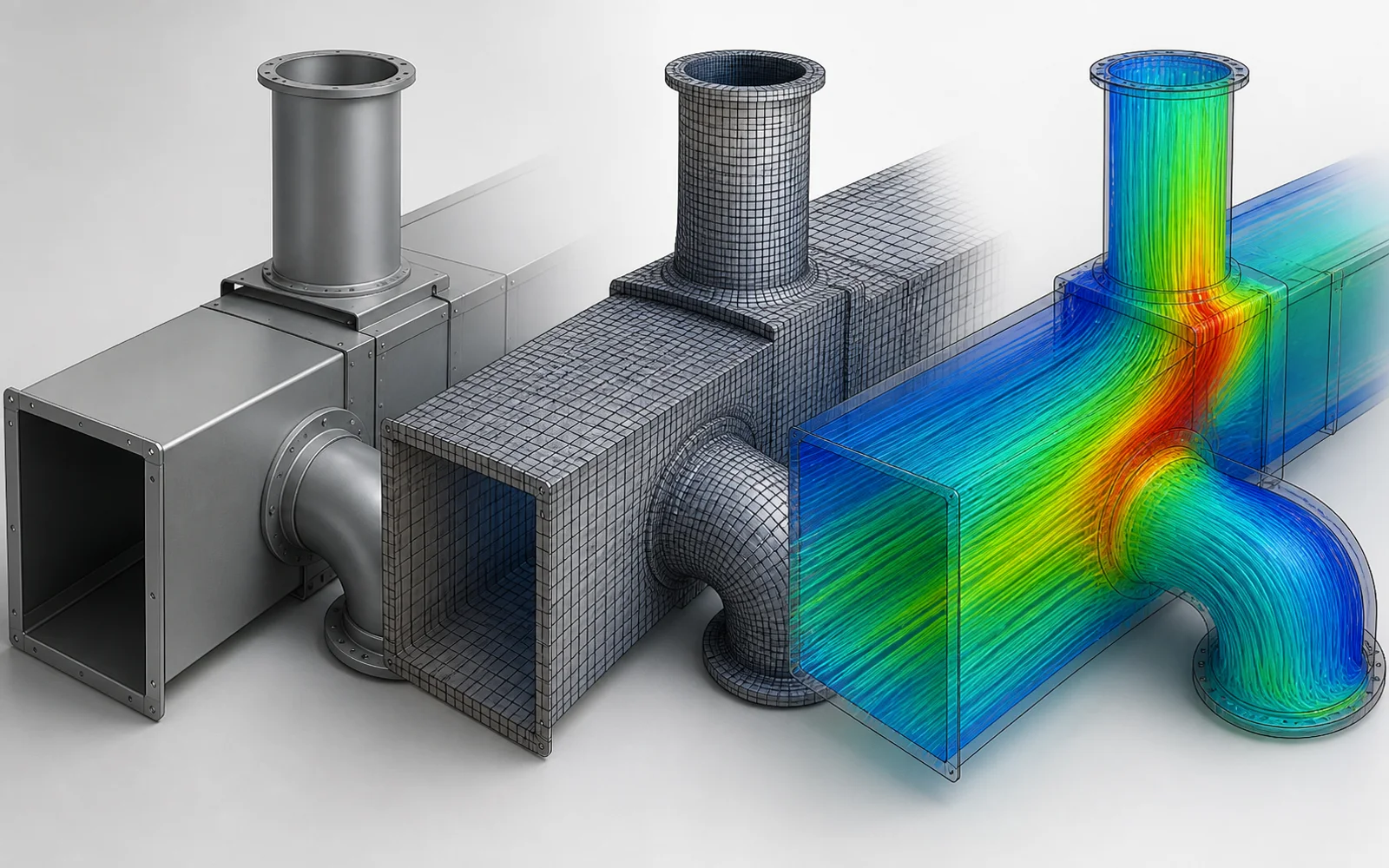
Model preparation begins with the real operating envelope. Geometry is simplified only where the removed detail cannot materially change the result, and the fluid domain, inlets, outlets, walls, heat sources and interfaces are documented before solving. Boundary conditions should come from equipment data, measurements, upstream calculations or clearly labelled assumptions. For rotating fans, pumps or machinery, the selected modelling method must match the decision and available data rather than adding complexity that the inputs cannot support.
“See how Fluxiss defines CFD objectives, prepares geometry and boundary conditions, checks mesh and solution quality, and turns airflow, pressure-drop and heat-transfer results into reviewable engineering decisions.”
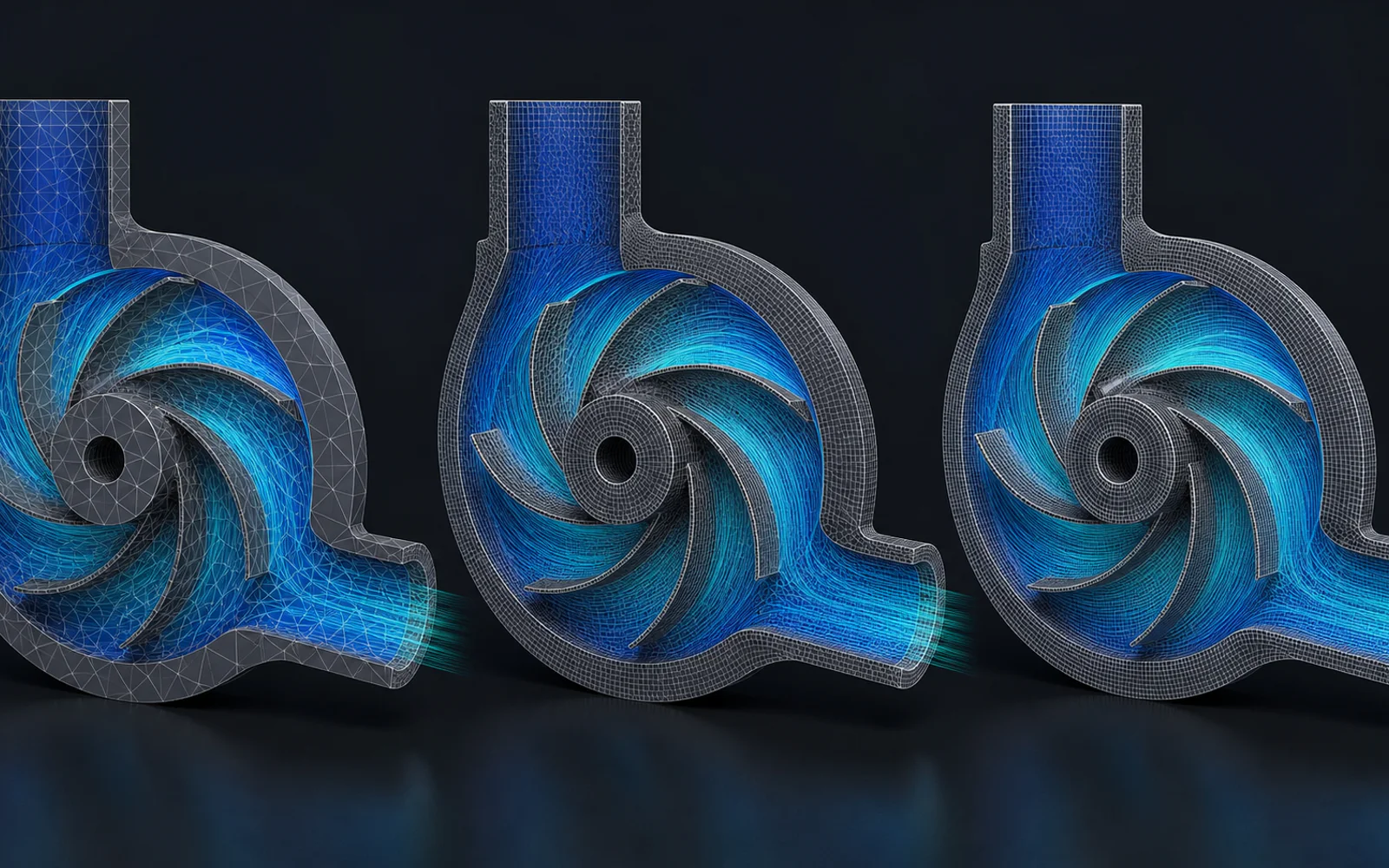
Mesh and solver choices are then tied to the expected physics. Boundary layers, jets, recirculation zones, small clearances and heat-transfer surfaces need enough local resolution to capture their effect on the quantity of interest. The team checks mass and energy balance, residual behaviour, monitor stability and sensitivity to mesh refinement before relying on a result. Our article on the CFD mesh independence study explains why a result must remain acceptably stable as the grid is refined, especially when two design options differ by only a small amount.
The service covers connected analysis routes. Aerodynamic Performance Analysis addresses drag, lift, wakes and external pressure distribution. Thermal Management and Heat Transfer covers electronics, batteries, engines, heat exchangers and HVAC equipment where temperature uniformity and cooling capacity drive the design. Specialized Applications extend the workflow to process flow, smoke movement, fire-safety questions and hydrodynamic problems. Each scope uses the same principle: model detail and reporting depth are selected to support the decision being made.
Results are reviewed as engineering evidence rather than screenshots. Pressure drop, flow split, velocity, temperature, heat flux or force is extracted at the locations agreed in the scope, and limitations are stated alongside the findings. Where test or operating data exists, it is used for comparison; where it does not, sensitivity cases show how uncertain inputs affect the conclusion. The final recommendation connects the simulation back to geometry, equipment selection or operating changes that the project team can act on. Readers can also review how computational fluid dynamics works and the applications of CFD across engineering for a broader introduction.
A useful CFD enquiry includes CAD geometry, fluid properties, flow rates or pressure conditions, heat loads, fan or pump data, operating cases, available measurements and the decision deadline. Identify the outputs that matter and the alternatives to be compared. As part of the wider Computer Aided Engineering practice, Fluxiss can coordinate CFD with structural, thermal or design work where one discipline affects another. Teams can contact Fluxiss or schedule a technical meeting to define the modelling assumptions, verification approach and required deliverables before a proposal is prepared.
Fluxiss Team contributes services insights to the Fluxiss content library.
Let's Build Something Great Together.
Partner with Fluxiss for engineering that holds up - under pressure, under load, under scrutiny.