
Designs go from “napkin sketches” to multi-million dollar prototypes, and if there is one thing we learned at Fluxiss, it’s this: the air is never your friend until you make it one. Our engineers don’t just “check” if a design works. We use Aerodynamic Performance Analysis to practically dictate how a product should look before the first bolt is even tightened.
In our research and recent work across the US and Europe, we’ve seen a massive shift. We are moving away from just “validating” a finished part. Now, we use CFD aerodynamic simulation as a generative driver. Whether you are in London designing offshore wind farms or in Chicago perfecting an EV’s range, the goal is the same: absolute efficiency.
When we talk about external aerodynamics analysis, we are looking at the “handshake” between your product and the atmosphere. It’s about how the air hugs—or fights—your surface.
Every Newton of drag is a thief stealing your fuel or battery life. In our recent projects, we’ve used GPU-resident solvers to run drag force calculation in near real-time. This isn’t just for race cars in the UK; it’s for every delivery van in New York trying to squeeze an extra 20 miles out of a charge through aerodynamic drag reduction.
For our aerospace clients, lift force calculation is the bread and butter. But in 2026, we’ve taken it further with aerodynamic lift optimization. By using adjoint solvers, we can “morph” a wing’s shape automatically to hit a target lift-to-drag ratio. This drastically reduces the transition-phase energy for eVTOL aircraft.
If you’ve ever seen a flag snap violently in the wind, you’ve seen a “von Kármán vortex street” in action. At Fluxiss, we use vortex shedding simulation to make sure that chaos doesn’t destroy your structure.

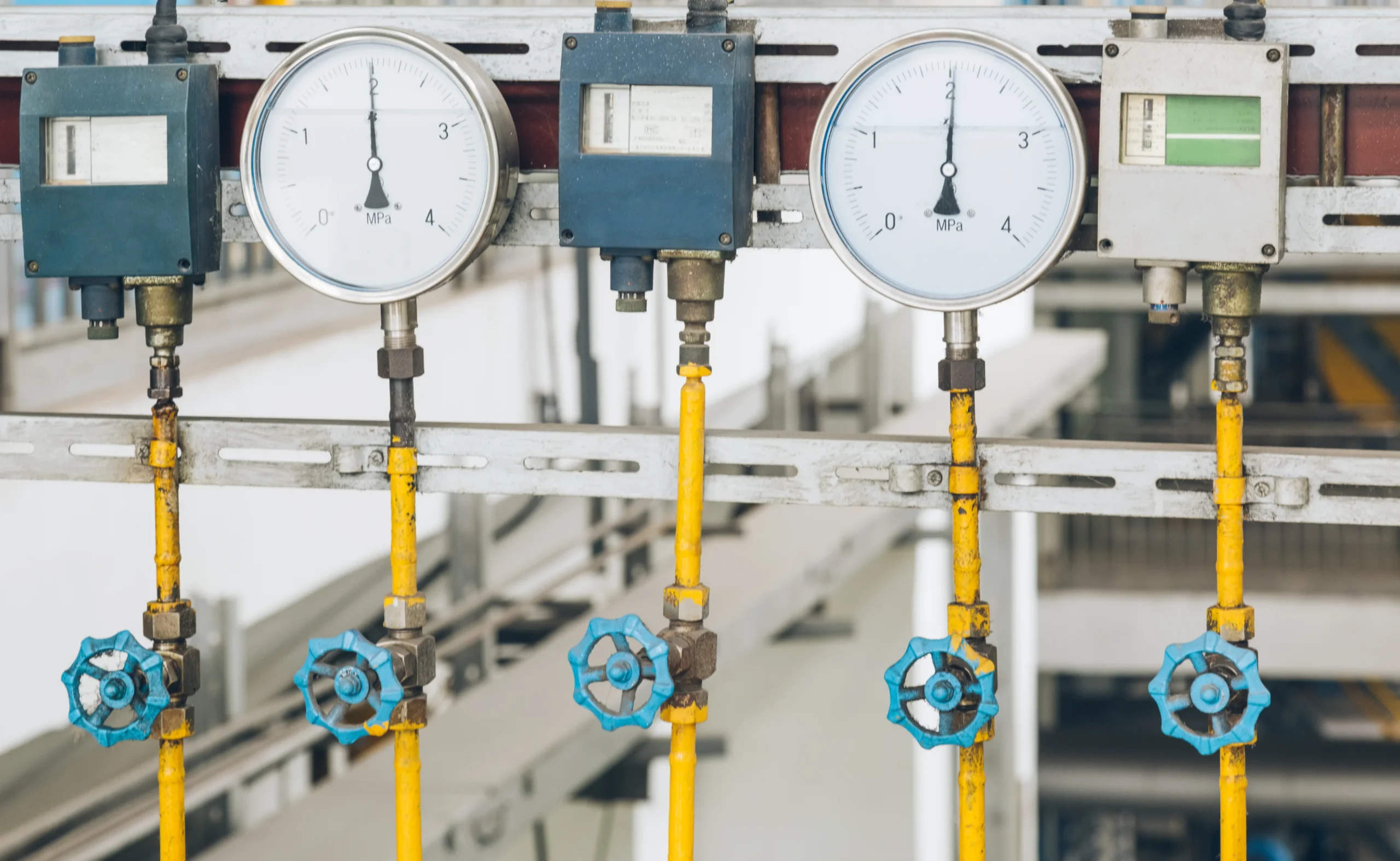
This is where the “unseen” efficiency happens. Pressure drop analysis is critical for anything moving fluid through a pipe, duct, or cooling system.
We’ve studied how pressure distribution analysis can make or break a data center’s cooling budget. If your fans have to work 20% harder because of a poorly designed duct, you’re literally blowing money into the air. We focus on the pressure coefficient analysis to find exactly where flow separation is causing energy loss.
Pro Tip: In the UK’s growing hydrogen sector, minimizing pressure loss in fuel cells is the difference between a viable product and a lab experiment.
This is probably the most “mind-bending” part of what we do. Fluid-Structure Interaction (FSI) models the two-way street: the air deforms the structure, and that deformation changes the airflow.

We don’t just give you a colorful map and call it a day. Following the latest AIAA and Royal Aeronautical Society guidelines, every CFD flow visualization we produce comes with a Grid Convergence Index (GCI) study. This means you can actually trust the data to make “decision-critical” engineering choices.
From automotive CFD aerodynamics in Detroit to architectural wind simulation in Dubai, we are here to optimize your world.
By using advanced aerodynamic simulation, we catch "flow separation" and "parasitic drag" in the digital phase. This reduces the need for expensive physical wind tunnel tests. At Fluxiss, we focus on aerodynamic efficiency optimization to ensure your first prototype is already 90% optimized, saving months of rework.
Steady state aerodynamic simulation looks at the average flow over time—great for a car at a constant speed. Transient aerodynamic analysis captures time-varying changes, like vortex shedding simulation or crosswinds. It’s essential for aerodynamic stability analysis in unpredictable real-world environments.
In systems like HVAC or fuel cells, every "drop" in pressure requires more pump or fan power. Our external flow pressure loss studies and internal duct optimization use flow separation modeling to ensure the "optimal internal path," directly lowering your operational energy costs and improving aerodynamic performance optimization.
Yes. We have an architectural wind simulation which is based on turbulence modeling CFD to simulate the interaction of high-velocity winds with complex structures. The flow-induced vibration analysis is analyzed by us to avoid structural fatigue, so that the skyscrapers and bridges of cities such as New York or London are safe and stable.

We’re proudly serving clients across the USA, UK, UAE, and Europe. From corporate giants to research labs and the shipping industry,