

What direction does heat transfer
What Direction Does Heat Transfer? The Physics of Hot and Cold
Before we started researching this for Fluxiss, we thought we already knew the answer. Heat moves from hot to cold. Easy, right? That’s what every science teacher told us in eighth grade.
But the more we read into it, talked to a couple of our mechanical engineers, and went through actual thermodynamics textbooks, we realized there’s so much more going on than that one sentence. The direction of heat transfer isn’t just a fun fact. It’s the reason your HVAC system works, the reason a steel mill in Pittsburgh doesn’t melt itself, and the reason ice cubes don’t randomly form in your coffee cup.
So, in what direction does heat transfer actually take place?
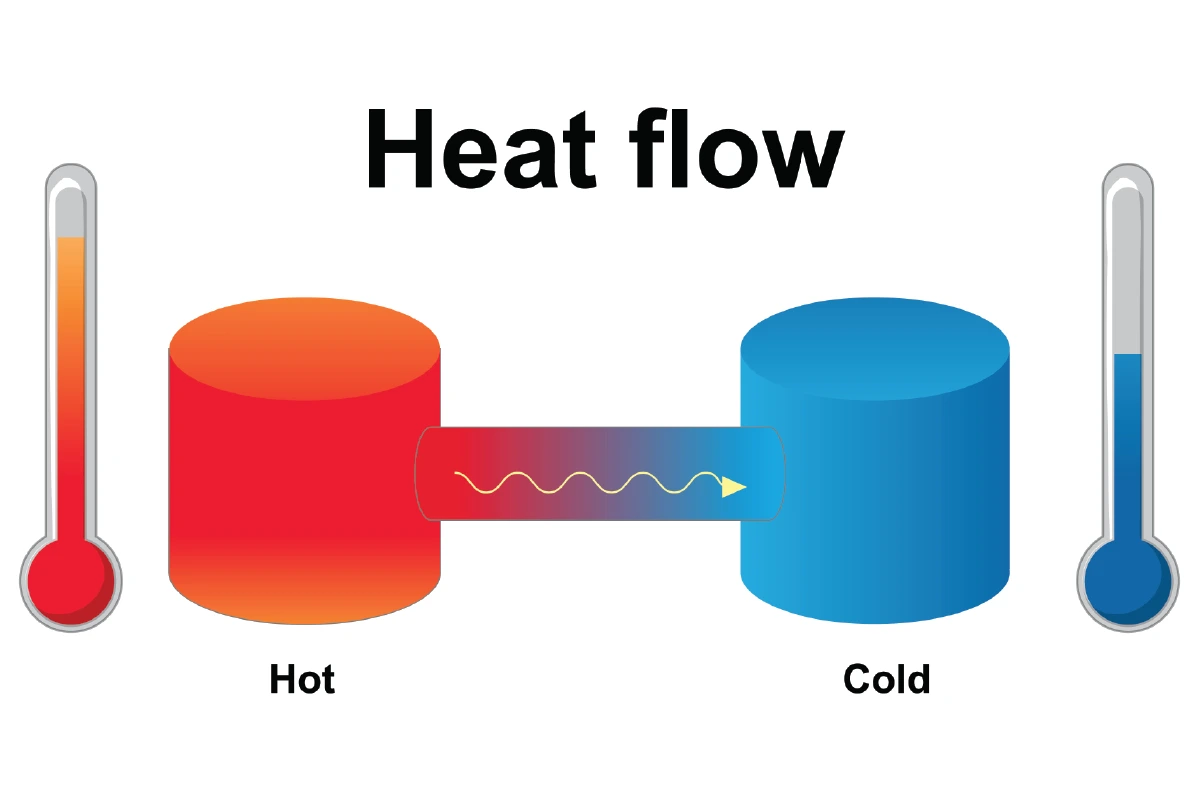
Heat always flows from a warmer to a cooler body. Not with reverse power transfer, on its own! This is not an estimate or “general rule”. It’s deep into the nature of physics, the second law of thermodynamics. Whereas in OpenStax’s physics resources, heat transfer is always spontaneous from hot to cold, but not the other way around.
In our minds, we kept recalling that line and then thinking, okay, but why never? Why is it that this seems to be a rule and not a trend?
A cold object, on coming in contact with a hot object, never gets colder and will only heat the hot object. Well, keep in mind that one second. A soda can does not get any colder when placed next to a hot cup of tea, and the tea does not get any hotter. That will be in violation of physics. The soda warms up. The tea cools down. They’re in the middle, sort of.
That meeting point has a name, by the way, and it’s one of those phrases engineers throw around a lot: thermal equilibrium.
Hot To Cold Is Not Optional, It’s the Law
We always assumed “heat flows from hot to cold” was just how things usually happen, kind of like water flowing downhill. Turns out, it’s stricter than that.
When a path for conduction or radiation is made available, heat always flows spontaneously from a hotter to a colder body, according to the explanation on Wikipedia’s second law of thermodynamics page. The word “always” isn’t an exaggeration here. There’s no spontaneous exception.
Now, we know what some of you are thinking. What about my refrigerator? Or my AC unit? Don’t those move heat from cold to hot?
Yes, heat pumps and refrigerators do move thermal energy from a colder space to a hotter one, but they cheat. Heat can be made to flow from a colder region to a hotter region, which is exactly what happens in an air conditioner, but heat only does this when it is forced. Your AC unit is using electricity to force that reversal. Left alone, with no compressor, no pump, no outside push, heat will never do that on its own.
So the direction of heat transfer is hot to cold, period, unless something is actively working against nature to push it the other way.
The Three Ways Heat Actually Travels (Conduction, Convection, Radiation Explained)
Once we understood the direction, we got curious about how heat transfer works.” Because heat doesn’t just teleport from one object to another. It has to use a mechanism. And there are three: conduction, convection, and radiation.
Conduction: When Things Touch
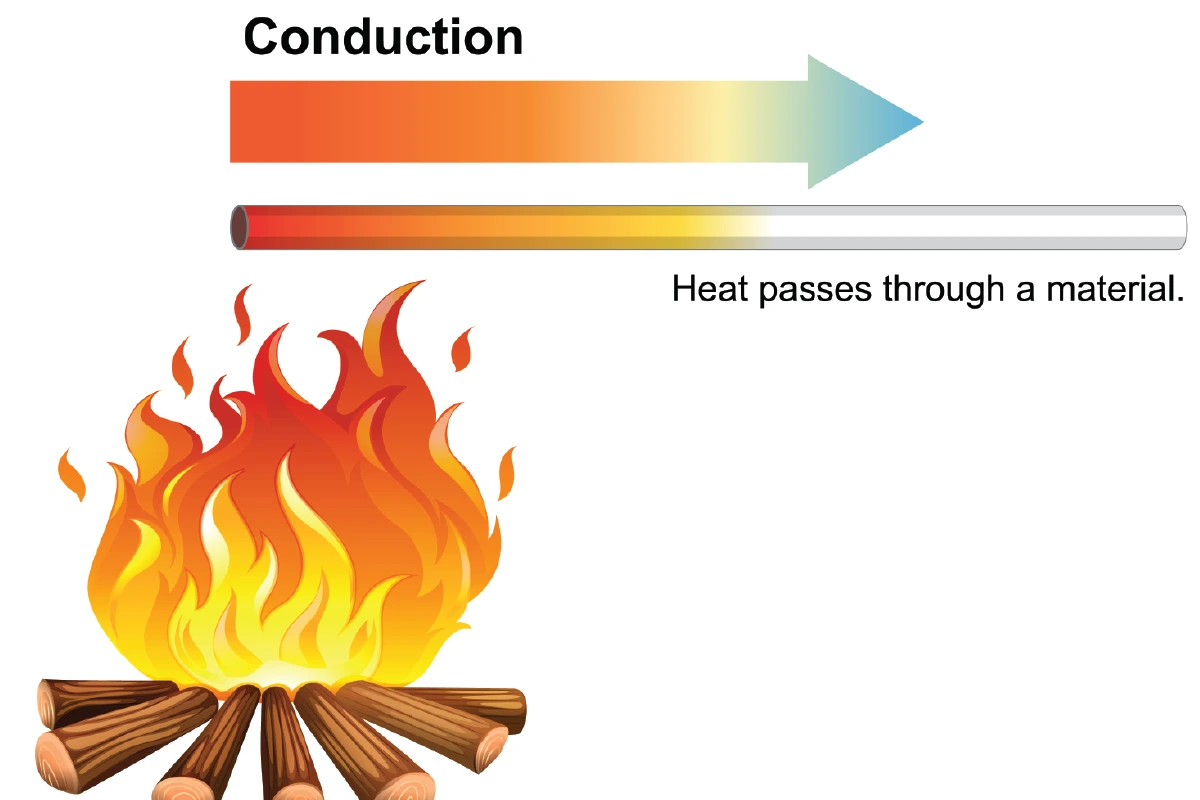
After visualizing this one, it’s easy to grasp. Conduction is heat flow through a solid or across a solid. Imagine that a metal spoon is placed in a hot pot of soup. Even if the handle is not close to the flame, its heat can be transferred from one molecule of one to another molecule of the other, and so on, from the hot end to the cooler end of the handle.
The higher the thermal conductivity of a material, the faster heat is transferred into the piece being worked. The lower the thermal conductivity of a material, the more insulating properties it has. It is for this reason that oven mitts are designed the way they are. They are composed of materials that are designed to be poor conductors of heat.
Convection: When Fluids Get Moving
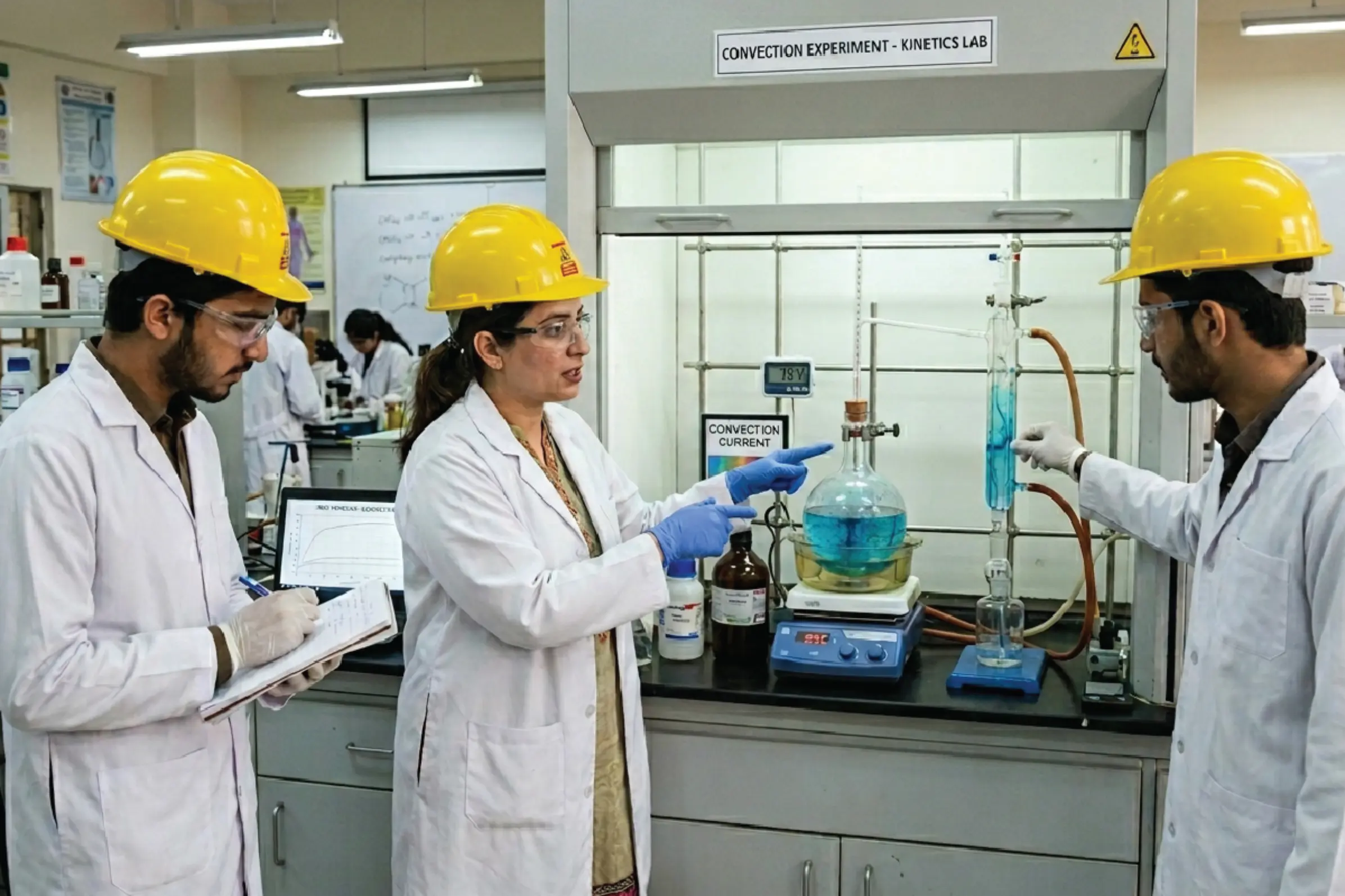
This mechanism requires the movement of a fluid (air, water or oil). Convection refers to the bulk motion of fluids, whereby a heated fluid expands, becomes less dense, and moves up, while the cooler fluid contracts, becomes denser, and moves down; this cycle of expansion and contraction transfers heat in the fluid.
This is scientifically the reason why hot air moves upward, and cooler air moves downward. It’s also why a pot of water boils in the manner it does; the water is always moving upwards from an underlying level of cooler water.
Radiation: When Nothing Has to Touch At All
When an object gives out electromagnetic radiation, it can pass through a vacuum or be absorbed, reflected, or transmitted by another object based on whether its surface properties and its structure are suitable for the radiation energy.
The sun on cold days is perfect. Between yourself and the sun, there aren’t any air currents to conduct through, so there are no molecules to convect. Pure radiation 93 million miles in space.
And here’s a fun stat we didn’t expect. The rate of heat energy movement varies among the three modes, with conduction being the slowest, convection being faster due to fluid motion, and radiation being the fastest as it occurs at the speed of light. Radiation literally moves at light speed. Conduction is the slow crawler of the group.
Temperature Gradient: The Real Reason Heat Picks a Direction
We want to slow down on one term here because we think it’s the missing piece for most people: temperature gradient.
A temperature gradient is just the difference in temperature between two points. No gradient, no movement. That’s why heat transfer refers to the movement of thermal energy from a hotter object or area to a cooler one, and this flow of energy continues until thermal equilibrium is reached, that is, when both objects are at the same temperature.
Once that gradient disappears, thermal energy transfer direction stops moving in any net sense. Not because it ran out of “heat,” but because there’s nothing left pulling it in a direction. Equal temperature and heat transfer, zero net movement.
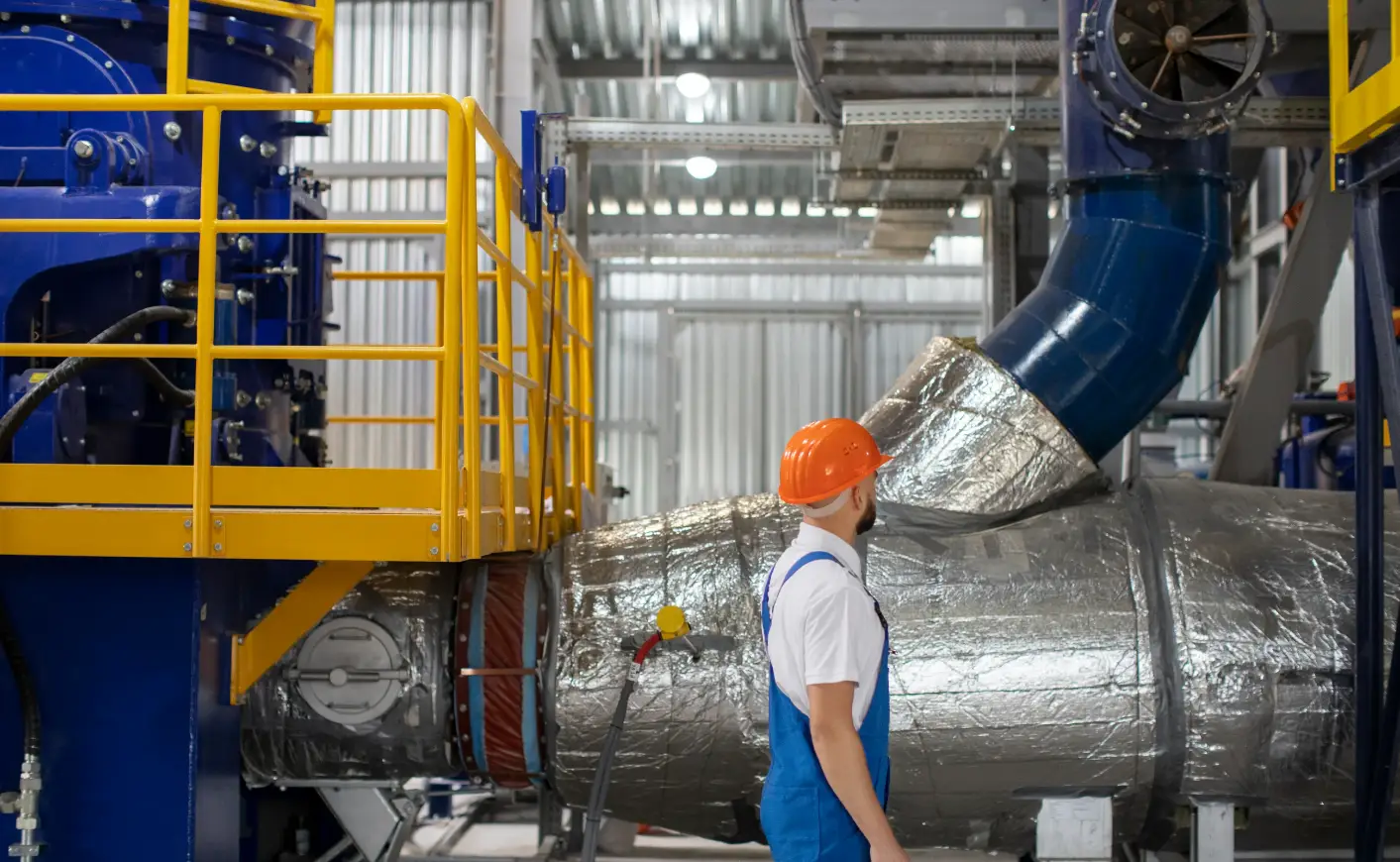
That’s how our engineering team uses it for our clients all the time, in locations such as Houston, Detroit, Manchester, and Dubai, when we’re designing a thermal barrier system. One of the fundamental understandings is that heat flows from a higher temperature to a lower temperature, and it is also important to know how the heat will flow. Once you discover the direction, it’s just step one. What really makes it easier for engineers to solve the problem is knowing whether it’s conduction, convection, or radiation that is causing that flow.
Why This “Boring” Physics Rule Runs Half the Machines Around You
The direction of heat transfer is a dried-out physics homework challenge. It’s not. It is a “rulebook,” which is not quite visible, still present at the back of nearly all thermal engineering on earth.
Understanding the heat transfer principle is essential for professionals in various other fields, such as engineering, physics, environmental science, and beyond, as it enables them to create systems that function efficiently and address practical challenges.
Heat always flows from the warm to the cold. It will not run too hot without assistance. It passes along three media: contact with objects (conduction), along liquids and gases (convection), and as pure energy waves (radiation). The greater the temperature difference, the faster it moves, until it reaches the same temperature and stops.
That’s it. That’s the whole rule nature follows, every single time, everywhere on Earth, in every factory, every home, every engine.
Ready to Put This Principle to Work?
Understanding which direction heat transfers is the easy part. Designing a real system around it, one that holds up in a Texas summer or a UAE desert plant or a UK winter, is where the actual engineering happens. That’s where Fluxiss comes in. Our team works with clients across the US, UK, Europe, and the UAE on thermal systems, insulation strategy, and heat transfer process solutions that are built on exactly the fundamentals of heat transfer we just walked through.
Frequently Asked Questions (FAQs)
Unless overcome by an external component such as a compressor, heat moves from hot to cold. This is the second law of thermodynamics; it is universal, and its application is at all times.
Due to the temperature gradient. Energy will be distributed naturally until both are in thermal equilibrium. A cold object will not spontaneously warm a hotter object.
Conduction requires direct contact, convection requires a moving fluid, and radiation requires no assistance, being transmitted as waves even through a vacuum, as with sunlight.
Only when forced. When the fridge and AC are working, they carry heat from cold to hot with the energy of the outside world. Without that push, the direction of heat transfer will never reverse, but will remain from hot to cold.