Naval Architecture from Concept to Class Approval: Hull Form, Stability, Structure and Submission

A vessel design that looks right on paper can still fail at class review: the stability booklet does not cover a real loading condition, the scantlings fall short of the rules, or a conversion adds weight high up that nobody re-checked. Each of these sends drawings back and pushes the yard schedule.
This guide follows a vessel or barge through the naval architecture stages in the order they should happen, from the first requirement to the class submittal.
Stage 1: Owner's Requirements and Concept Design
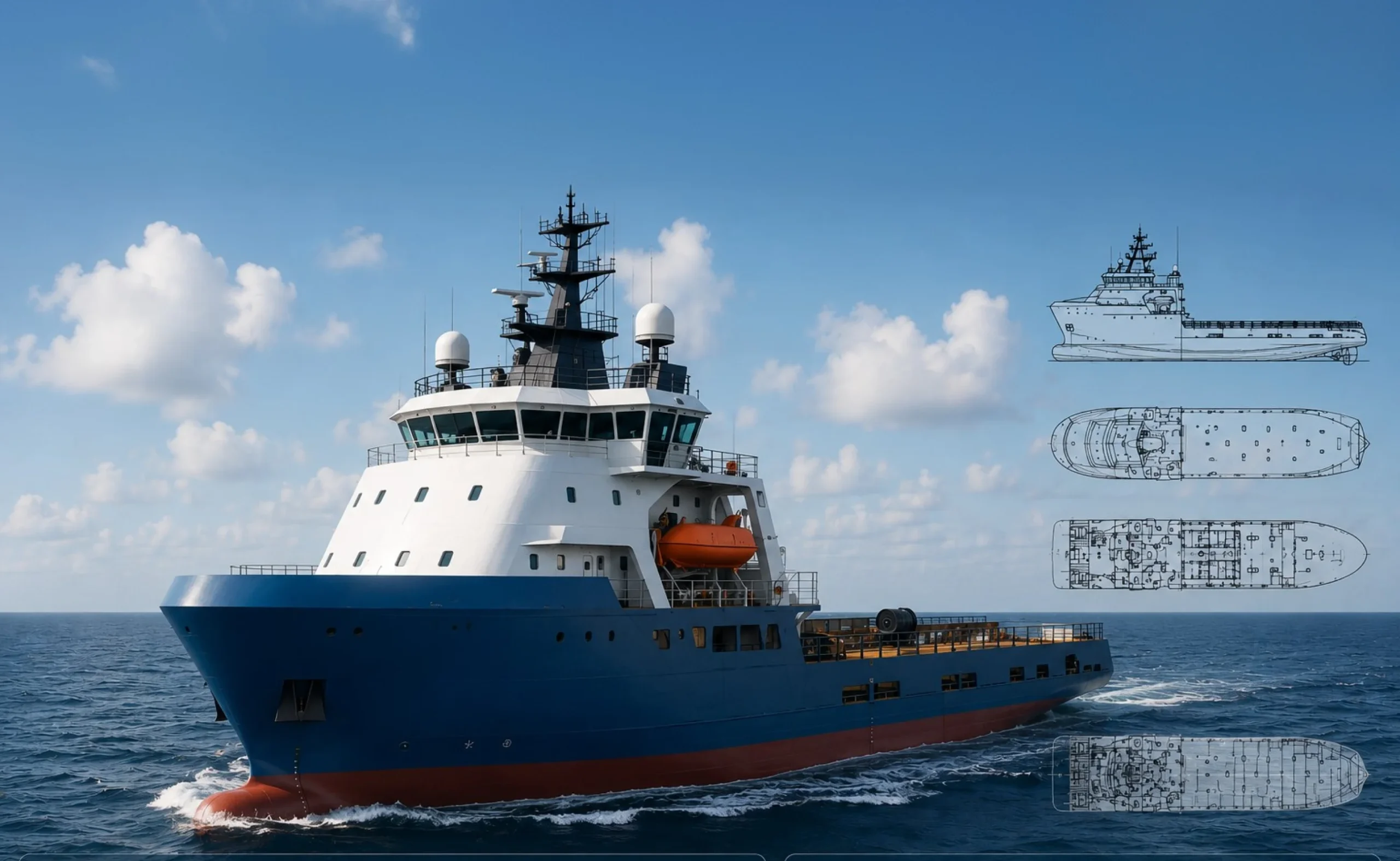
Concept design turns the owner's needs, such as cargo or deck area, speed, range, crew and operating area, into main dimensions, a general arrangement and a first weight estimate. Trade-offs are cheapest here: a little more beam can solve a stability problem that would be expensive to fix later. Our conceptual and preliminary design service covers this stage, and our article on how ships are designed in naval architecture describes the design spiral.
- Mission, payload and operating area agreed in writing.
- Main dimensions and hull type selected against port and route limits.
- Lightship weight and centre of gravity estimated with a sensible margin.
- Class society and notation chosen early, so the rules are known from day one.
Stage 2: Hull Form, Resistance and Powering
The lines plan and 3D hull model define the shape. Resistance and powering estimates size the engines and propulsion, and computational fluid dynamics can verify resistance, wake and appendage flow where empirical methods are not reliable enough. Our article on the software used in naval architecture covers the typical tools, such as Maxsurf for hull modelling and hydrostatics.
Stage 3: Intact and Damage Stability
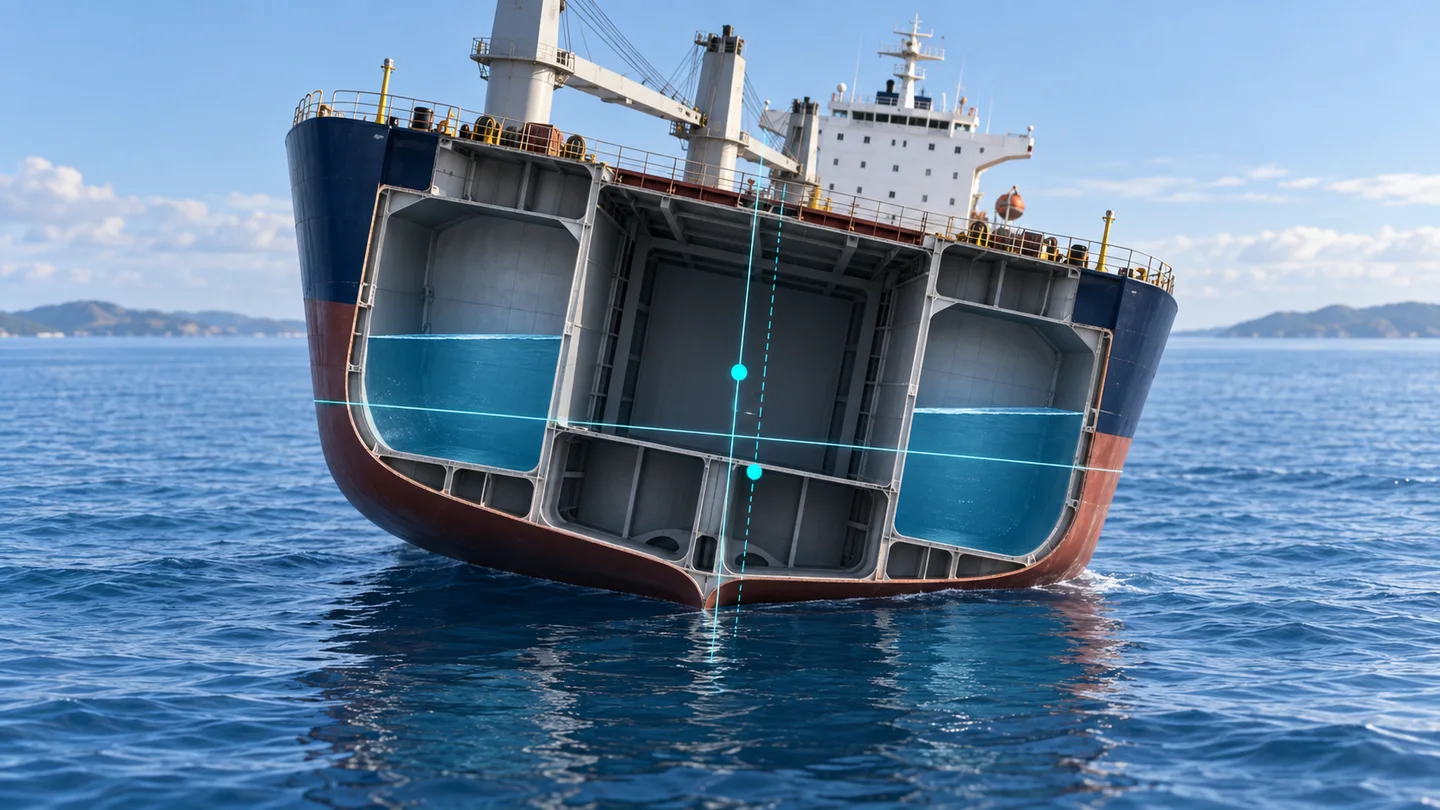
Stability is checked for every realistic loading condition: lightship, full load, ballast arrival and departure, and any special operations such as lifting or towing. Damage stability checks that the vessel survives the flooding cases the rules require. The result is the stability booklet, confirmed after build by an inclining test. Our guides on why vessel stability calculations fail and how weight changes affect vessel stability explain the common pitfalls.
Stage 4: Structural Design and Scantlings
Plate thicknesses, stiffener sizes and frame spacing are sized to the class rules of Lloyd's Register, ABS or DNV. Global hull girder strength and local strength around openings, equipment foundations and high-load areas are checked, with finite element analysis where the rules call for it or the structure is unusual. Our articles on scantling calculations and on global hull analysis versus local structural analysis go deeper.
Fatigue matters on vessels that see repeated wave loading for decades. Our guide on how to prevent fatigue cracks in ship structures shows where to look.
Where Conversions Fit
Many projects are not new builds but conversions: a barge turned into a work platform, a vessel lengthened, or new cranes and deck equipment added. Every change in weight or structure means the stability booklet and the affected structure must be re-checked and re-approved. Our article on the structural problems to check first in a vessel conversion lists them.
Stage 5: Detailed Engineering and Class Submittal
Detailed engineering produces the structural drawings, the stability booklet, the hull model and the calculations in the form the class society expects, then answers the reviewer's comments until the drawings are approved for construction. Our detailed engineering service prepares and tracks this package.
How Fluxiss Helps
Fluxiss delivers the full chain under its naval architecture service, from concept and hull form to stability, structure for class and the submittal package, typically in 15 to 30 business days. The naval and marine topic hub collects our related guides. To discuss a vessel or conversion, contact Fluxiss or schedule a technical meeting.
Frequently Asked Questions
We design to the rules of Lloyd's Register, ABS and DNV, and can work to other societies or flag requirements on request.
Practical engineering explainers connecting analysis methods, design inputs and project decisions.
Related articles.
Let's Build Something Great Together.
Partner with Fluxiss for engineering that holds up - under pressure, under load, under scrutiny.