
Due to client NDA commitments, the showcased projects represent only a portion of our work and not the full scope of what we’ve delivered.
Maritime housing isn’t just about floating hotels; it’s about solving land-based crises with offshore efficiency. At Fluxiss, we specialize in Naval Architecture and Vessel Conversion, transforming standard commercial hulls into high-density, safe, and fully operational residential hubs.
When government entities face rapid population shifts or housing shortages, they turn to marine engineering for cost-effective, scalable solutions. Our work focuses on technical compliance, structural integrity, and the logistical realities of housing hundreds of people in a marine environment.
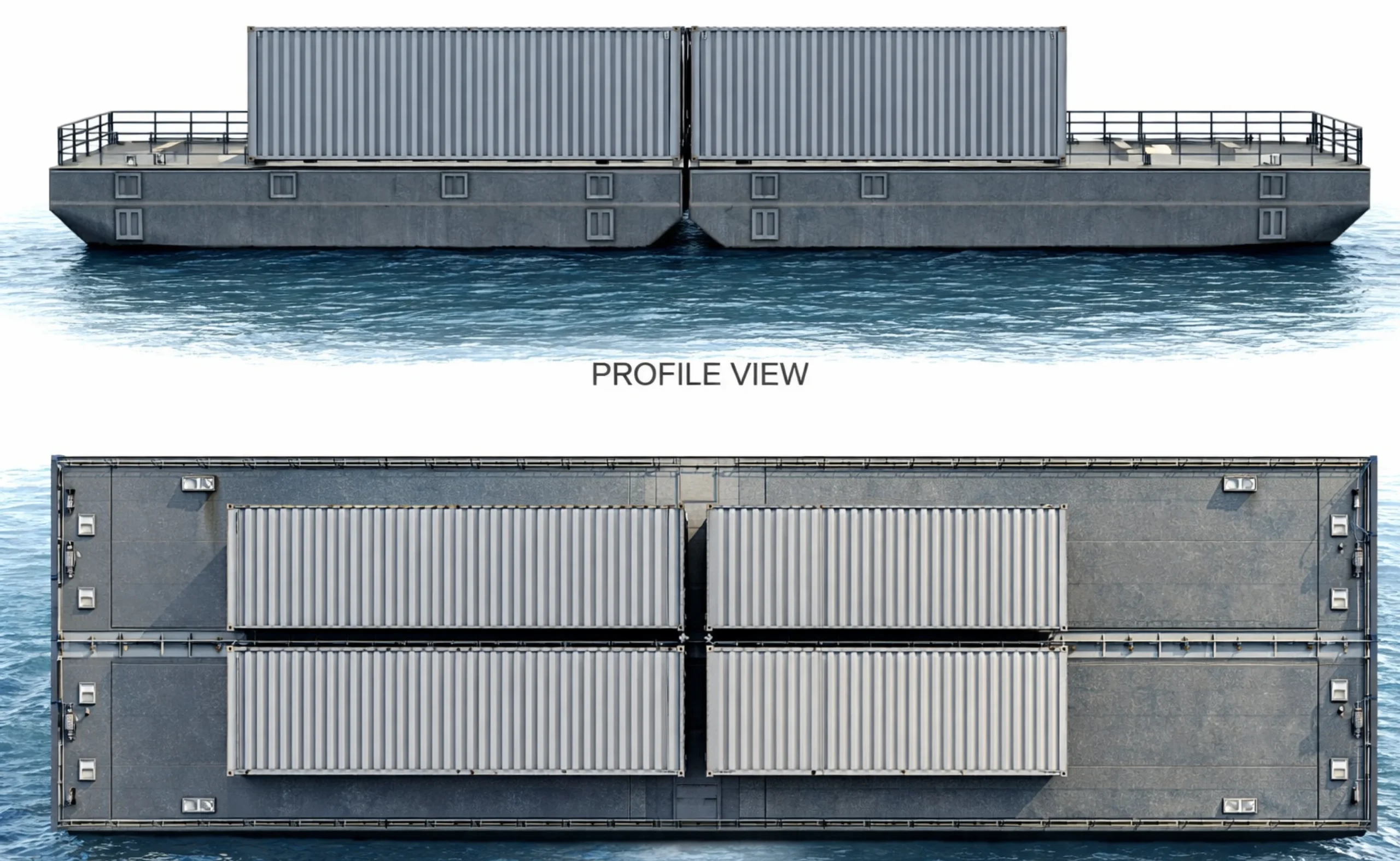
In a high-profile collaboration with Seakeepers Pvt. Ltd., Fluxiss was tasked with the engineering and conversion of a commercial barge into a floating residential facility for the UK Government. The objective was clear: create a safe, long-term living space for 444 residents as a direct cost-saving alternative to land-based hospitality.
Converting a vessel for government use requires more than just interior design. We had to bridge the gap between maritime safety codes and residential building standards. The project demanded a rigorous approach to space optimization without compromising the vessel’s buoyancy or the safety of its inhabitants.
The biggest challenge in high-capacity conversions is the “High-Density Weight Distribution.” Adding cabins, plumbing for hundreds, and massive electrical loads changes the vessel’s center of gravity.
Fluxiss delivered a complete suite of Naval Architecture and Marine Engineering plans that successfully moved the project from concept to deployment.
We’re proudly serving clients across the USA, UK, UAE, and Europe. From corporate giants to research labs and the shipping industry,