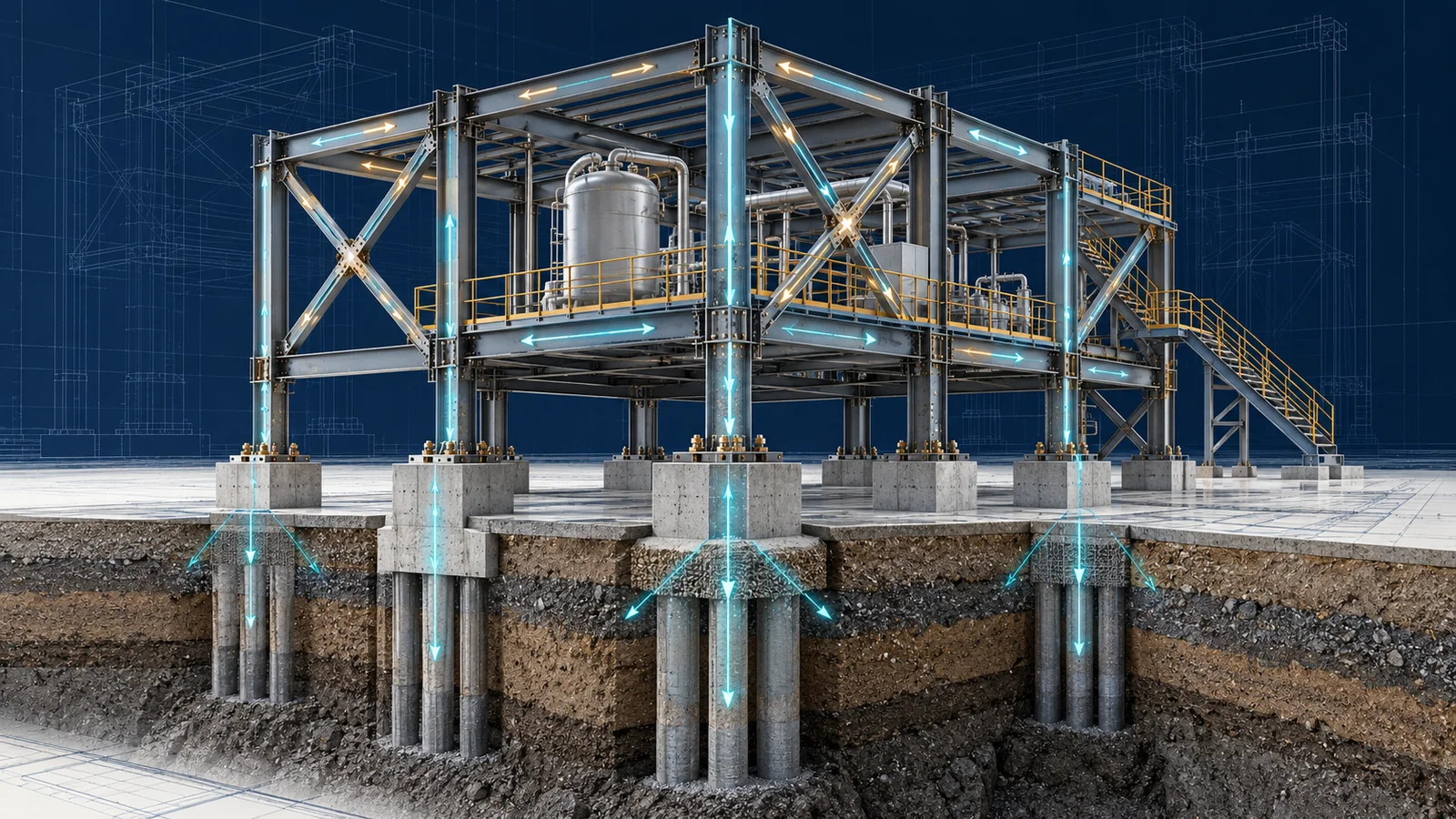
This service spotlight explains how the Fluxiss Structural Engineering service turns a design basis into a coordinated calculation and drawing package. The published scope covers steel, concrete and specialist structures for building and industrial projects, with work organised around the governing loads, a complete load path and the issue stage required by the client. Defining those items at the start keeps analysis, member sizing, connections and foundation reactions aligned instead of treating them as separate tasks.
A useful project brief starts with the latest geometry, grid and level information, intended use, material grades, geotechnical data, equipment and piping reactions, environmental criteria and applicable client standards. Structural Analysis establishes how gravity, wind, seismic and operational actions move through the model. Structural Design then uses the agreed combinations and acceptance criteria to size members and document the governing checks. Existing facilities also need survey information, condition records and a clear distinction between verified dimensions and assumptions.
“See how Fluxiss connects verified design inputs, steel and concrete analysis, specialist structures, connections and foundation reactions into a coordinated structural package.”
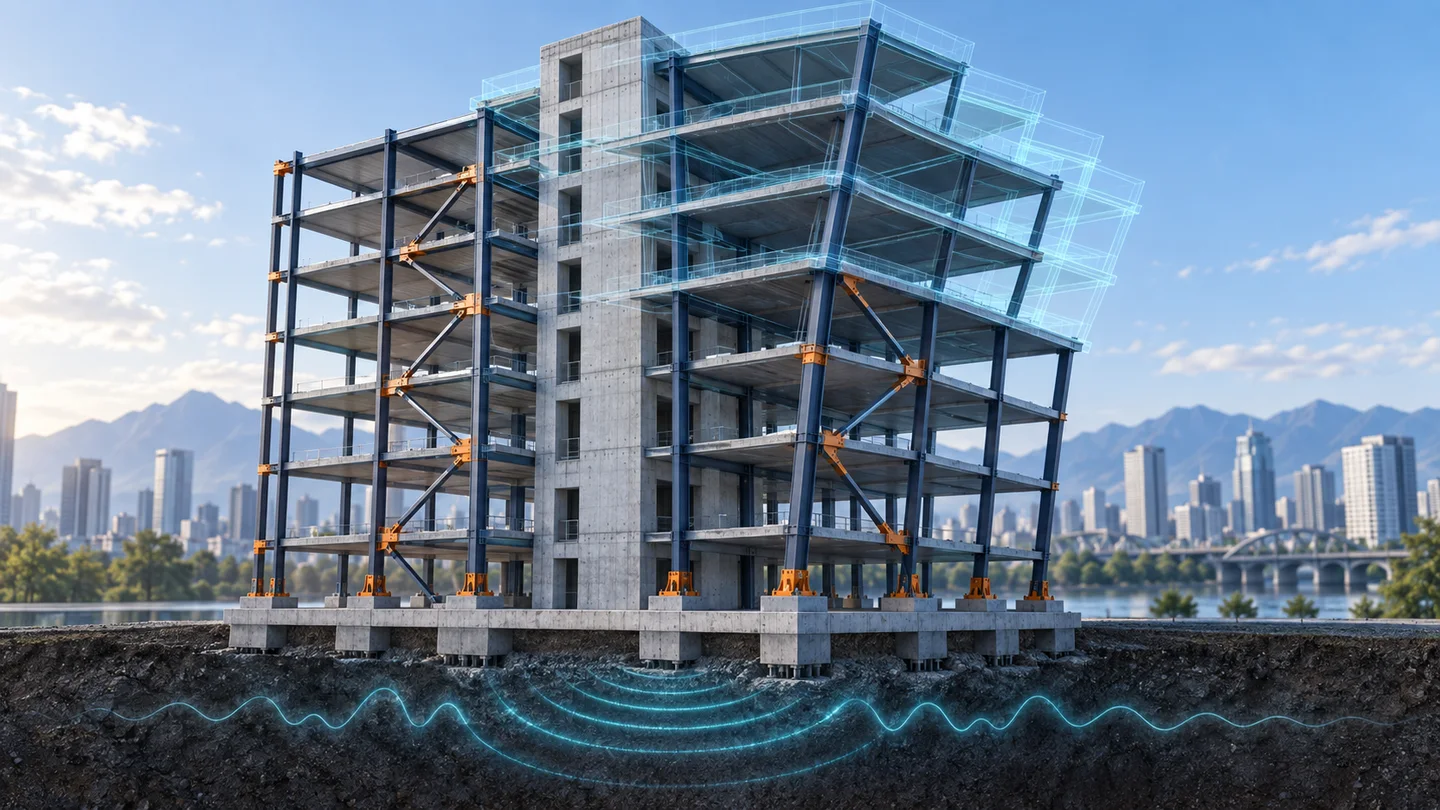
Industrial projects often extend beyond a conventional building frame. The Specialized Structures scope provides a route for pipe racks, equipment supports, skids and modular frames, where concentrated reactions, access, vibration and transport conditions can affect the design. Support and Brace Design connects these global demands to bracing, base plates, anchors and connection forces. Where earthquake actions govern, Seismic Analysis should use a consistent mass model, response basis and restraint arrangement rather than adding a disconnected seismic load late in the design.
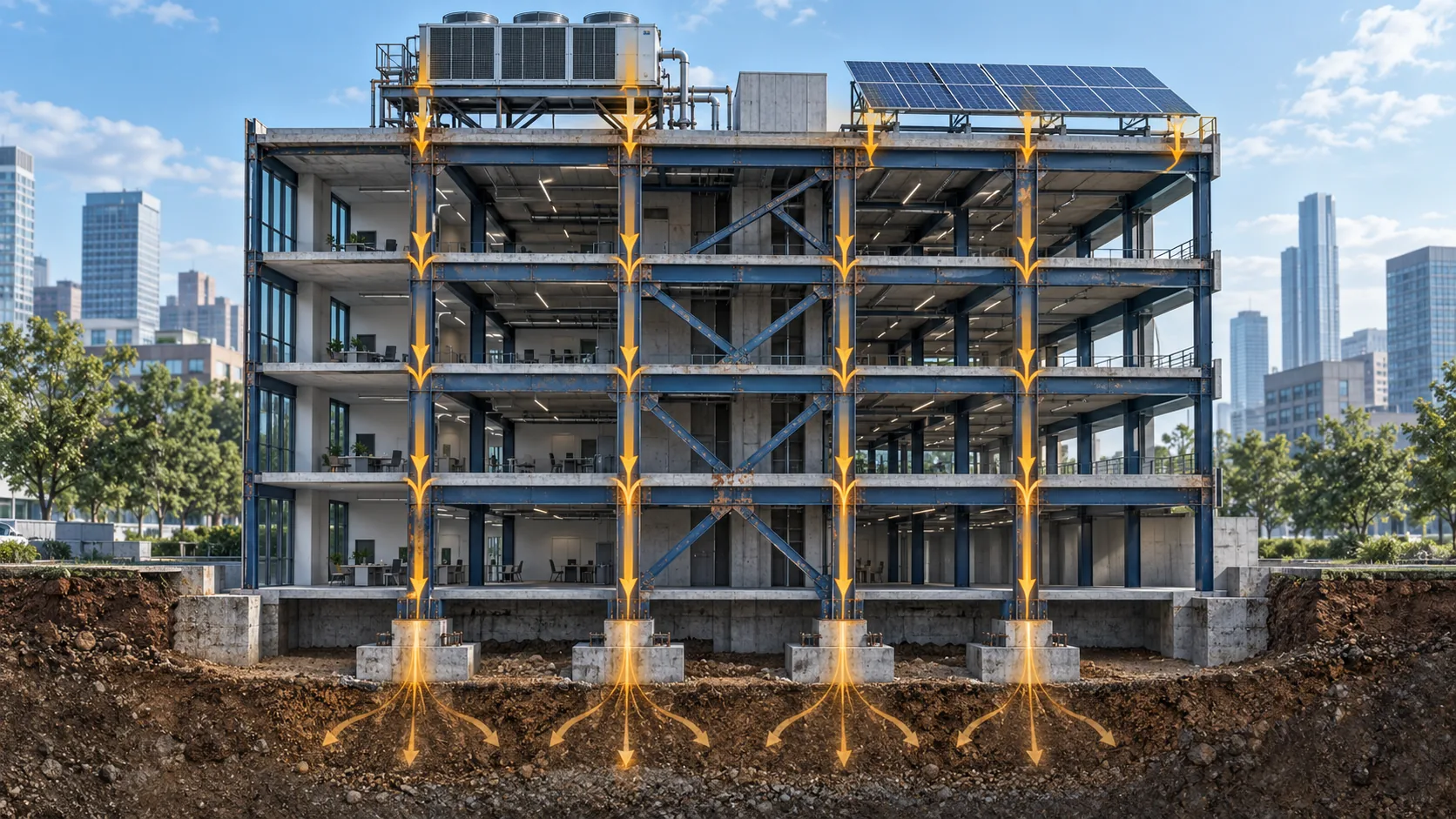
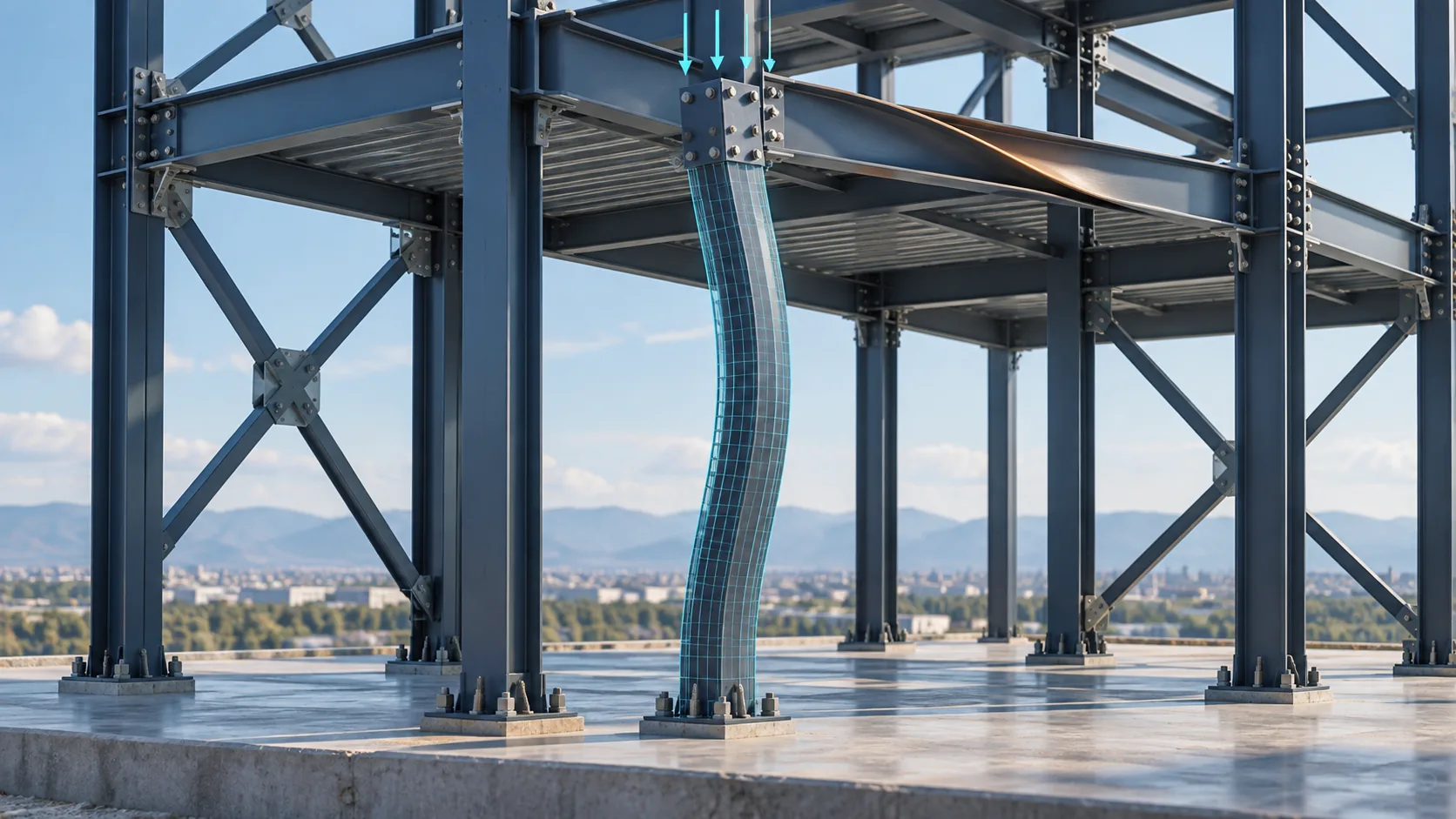
Modification work requires evidence about the structure that is already in service. Our guide to existing structures for additional loads explains how a new plant item, roof array or change of use should be traced through the actual load path and foundations. The article on steel structure buckling shows why member strength alone does not establish stability, while the guide to common seismic analysis mistakes highlights mass, stiffness, diaphragm and torsion assumptions that can change the demand throughout a model. These checks help the project team focus surveys and calculations on the decisions the design must support.
Fluxiss lists a structural design report, calculation package, STAAD or ETABS model, connection design sheets, foundation drawings and a compliance summary among the available deliverables. The exact package should identify the calculation basis, model revision, governing reactions, connection responsibilities, drawing status and interfaces with civil, architectural, MEP and equipment teams. Before an IFC issue, the model, calculations and drawings should describe the same geometry and loading assumptions, and review comments should be closed against a controlled revision.
To discuss a structural scope, contact Fluxiss with the project location, facility type, available drawings or model, design criteria, known loads, ground information, required software and intended deliverable stage. Clients can also schedule a technical meeting to review the inputs and identify gaps before a proposal is prepared. Project-specific codes, programme, analysis methods and deliverables are confirmed through the agreed scope rather than assumed from a general service description.
Fluxiss Team contributes services insights to the Fluxiss content library.
Related articles.
Let's Build Something Great Together.
Partner with Fluxiss for engineering that holds up - under pressure, under load, under scrutiny.