
Due to client NDA commitments, the showcased projects represent only a portion of our work and not the full scope of what we’ve delivered.
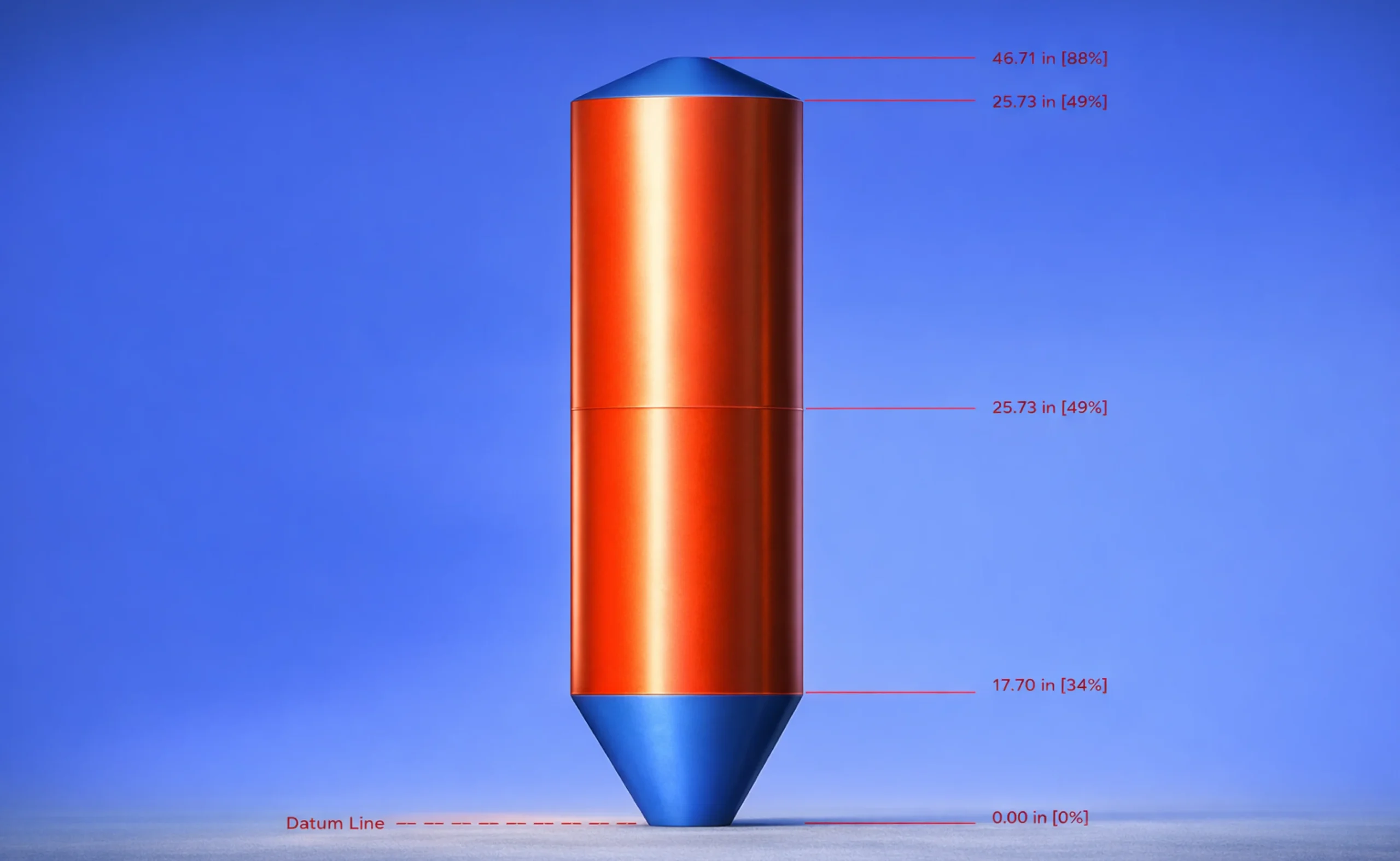
In engineering, the smallest oversight can lead to the biggest disasters. Recently, we had the chance to work on a project at Fluxiss, handled for a facility in Germany. It was a massive vertical vessel named the Reinigungs- und Speichersäule (R-321)—basically a cleaning and storage column.
When we first looked at the blueprints, the scale was impressive: a 96-inch diameter and over 329 inches long. But as we’ve learned from our research into international standards, designing for Europe while using US-based ASME Section VIII Division 1 codes requires a very specific kind of technical “handshake.”
You might wonder why we used ASME for a German site. Many global firms prefer it because of its rigorous safety factors. Fluxiss took these specs—SA-36 carbon steel material and specific pressure loads—and made sure they wouldn’t fail under real-world German weather.
During our analysis of the project files, our engineers noticed something alarming that the initial design had missed. While the vessel’s shell was thick enough to hold the internal pressure of 0.68 bar g, the geometry was failing in the corners.
The team at Fluxiss stepped in to bridge the gap between “it looks okay on paper” and “it’s safe to operate.” We didn’t just follow the code; we pushed the design to be better.
In the end, what could have been a structural failure became a success story. The R-321 column is now fully compliant with international safety standards and ready for operation in Germany. It’s a perfect example of why specialized techno-structural analysis is non-negotiable.
Need a pressure vessel design that actually passes inspection?
We’re proudly serving clients across the USA, UK, UAE, and Europe. From corporate giants to research labs and the shipping industry,