How to calculate pipe stress analysis

We are dedicated to applying cutting-edge methodologies and staying current with code updates, ensuring our clients’ projects meet the highest standards. We firmly believe that every successful piping project starts with a robust and detailed pipe stress analysis to ensure structural integrity, code compliance ASME B31.1 / B31.3 , and safe operation. If you need expert guidance through this complex domain, explore our dedicated pipe stress analysis services.
The Core Process: Piping Stress Analysis Step by Step
Defining Inputs and Design Conditions
The journey to structural assurance begins with meticulous data collection. The accuracy of our stress model is entirely dependent on the quality of the initial inputs.
What is the objective of the first step in piping stress analysis?
The objective is to gather all necessary geometry, material properties (like the modulus of elasticity and thermal expansion coefficient), operating temperatures and pressures, and external forces (wind, seismic) to create a comprehensive digital twin for analysis.
At Fluxiss, we systematically collect:
- System Geometry: Layouts, pipe diameters, wall thicknesses.
- Material Data: Yield strength, tensile strength, and code-based allowable stress limits in piping systems .
- Operating Data: Design pressure and temperature ranges, and expected steady-state and transient cycles.
- Loadings: Fluid weight, insulation weight, and external loads.
Modeling, Load Combination Classification, and Iteration
Once the data is defined, the piping model is built in advanced pipe stress analysis software (CAESAR II, AutoPIPE) . We model all components-nodes, elements, bends, tees-along with their boundary conditions, such as anchors, guides, and connected equipment nozzles, including specific stiffnesses for piping supports and restraints .
Load cases are classified and combined according to the design code:
- Sustained Loads (SUS): Weight + Internal Pressure.
- Expansion Loads (EXP): Thermal effects (relative movement).
- Occasional Loads (OCC): Wind, seismic, or water hammer.
These displacement and load combinations are critical. The solver then computes the resulting stresses and displacements for each defined scenario. If any check fails, we iterate, adjusting the routing or support scheme, to achieve full compliance in our piping system stress calculation .
Technical Foundations: Pipe Stress Analysis Methods and Formulas
A solid analysis relies on a firm grasp of the fundamental mechanics of materials and the code-prescribed formulas, ensuring accurate answers for how to calculate pipe stress analysis results.
Calculating Primary Stresses: Hoop Stress and Longitudinal Stress
The primary stresses arising from internal pressure are essential for design validation. They include the hoop stress and longitudinal stress .
- Hoop Stress (σh): The circumferential stress caused by internal pressure, calculated by the formula σh=2tPD (where P is pressure, D is diameter, and t is thickness). This is the key stress for determining the required pipe wall thickness and resisting bursting.
- Longitudinal Stress (σl): The axial stress caused by pressure and external axial loads, typically σl=4tPD for pressure alone.
These pressure stresses form the base of the overall stress state and are rigorously checked against material limits.
Evaluating Stress Due to Pressure and Temperature
The combined effect of pressure and temperature changes dictates the total system stress. Stress due to pressure and temperature is what drives the need for flexibility. When a pipe system heats up or cools down, the resulting thermal expansion in pipe stress analysis must be accommodated.
The basic thermal stress (if fully restrained) is σthermal=EαΔT. However, in a real piping network, flexibility is introduced to minimize stress. Our analysis determines how much of the expansion is converted into safe displacement versus potentially damaging stress, which is a testament to the system’s piping flexibility and stress calculation . For a general overview of the methods, you can refer to a thorough piping stress analysis guide .
Navigating Modern ASME B31.3 Stress Analysis Requirements
Staying compliant with the latest US code standards is a cornerstone of Fluxiss’s commitment. Adherence to ASME B31.3 (Process Piping) and B31.1 (Power Piping) is paramount, especially given recent updates.
The Shift to B31J for Stress Intensification Factors (SIFs)
A major structural change impacting our practice is the recent revision of ASME B31.3, specifically the removal of Appendix D (in prior editions). This appendix historically provided standard values for SIFs.
What are Stress Intensification Factors (SIFs)?
SIFs are multipliers used in stress analysis to account for localized stress concentrations in components like elbows, tees, and branch connections, where stresses are much higher than in the straight pipe.
By directing users to ASME B31J for determining SIFs and flexibility factors, the code is promoting a more rigorous and standardized approach based on experimental data.
Furthermore, the 2022 edition introduced a change in the stress-range factor f (for expansion loads) to f=20N−0.333≤1.2 (where N is the number of cycles), making the permissible expansion stress range more conservative. We ensure our software and data align precisely with the required edition of B31.3 or B31.1, achieving full code compliance ASME B31.1 / B31.3 .
Ensuring System Health: Piping Flexibility and Stress Calculation
A pipe system must be flexible enough to absorb thermal movement without generating excessive stresses or overloading connected equipment.
Importance of Support Modeling and Nozzle Loads
The positioning and type of piping supports and restraints are carefully selected and modeled to manage reaction forces and direct movement safely.
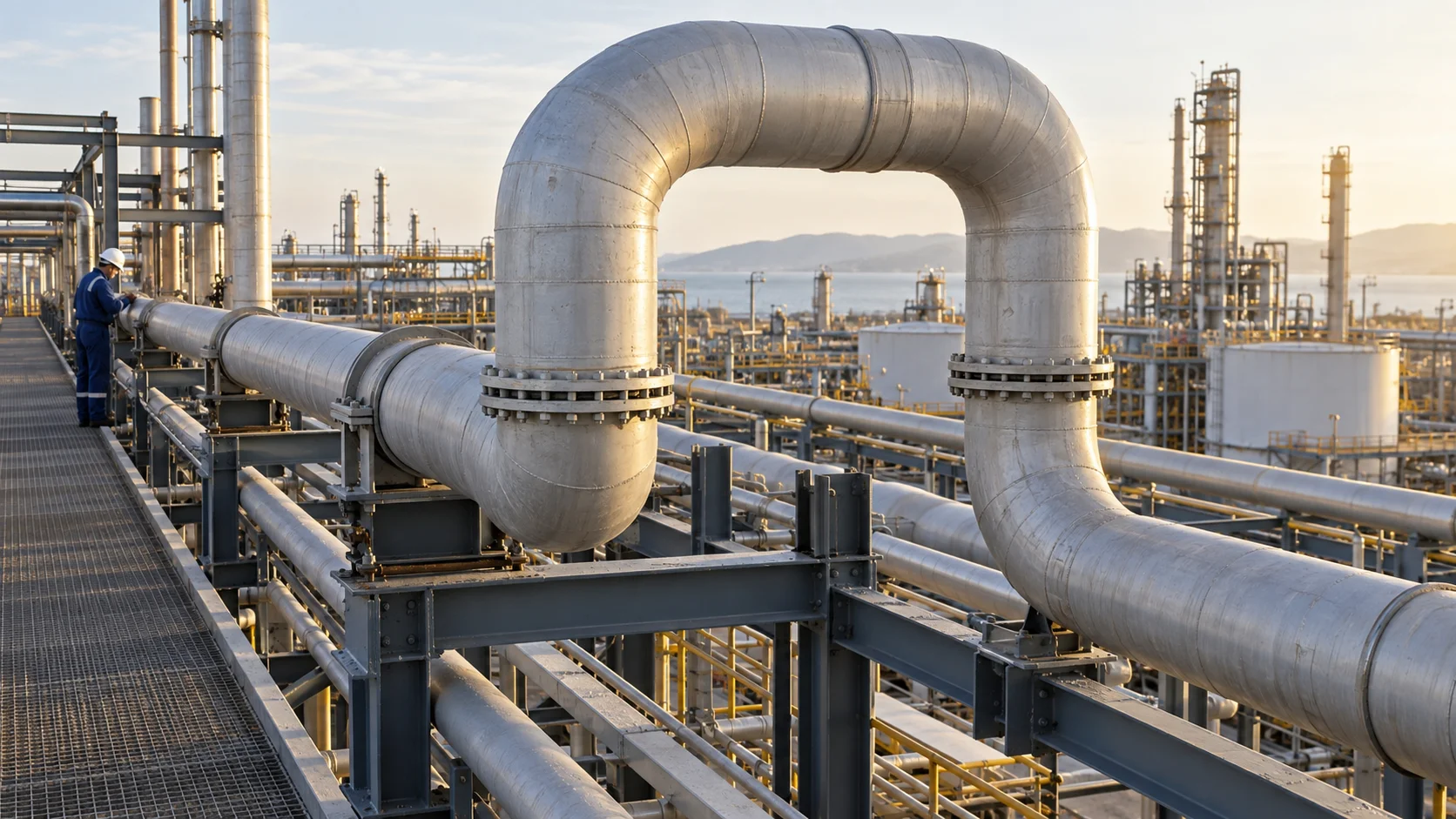
- Flexibility: The system must be flexible enough to handle the calculated ΔT movement. Expansion loops or offsets are often incorporated to increase piping flexibility and stress calculation .
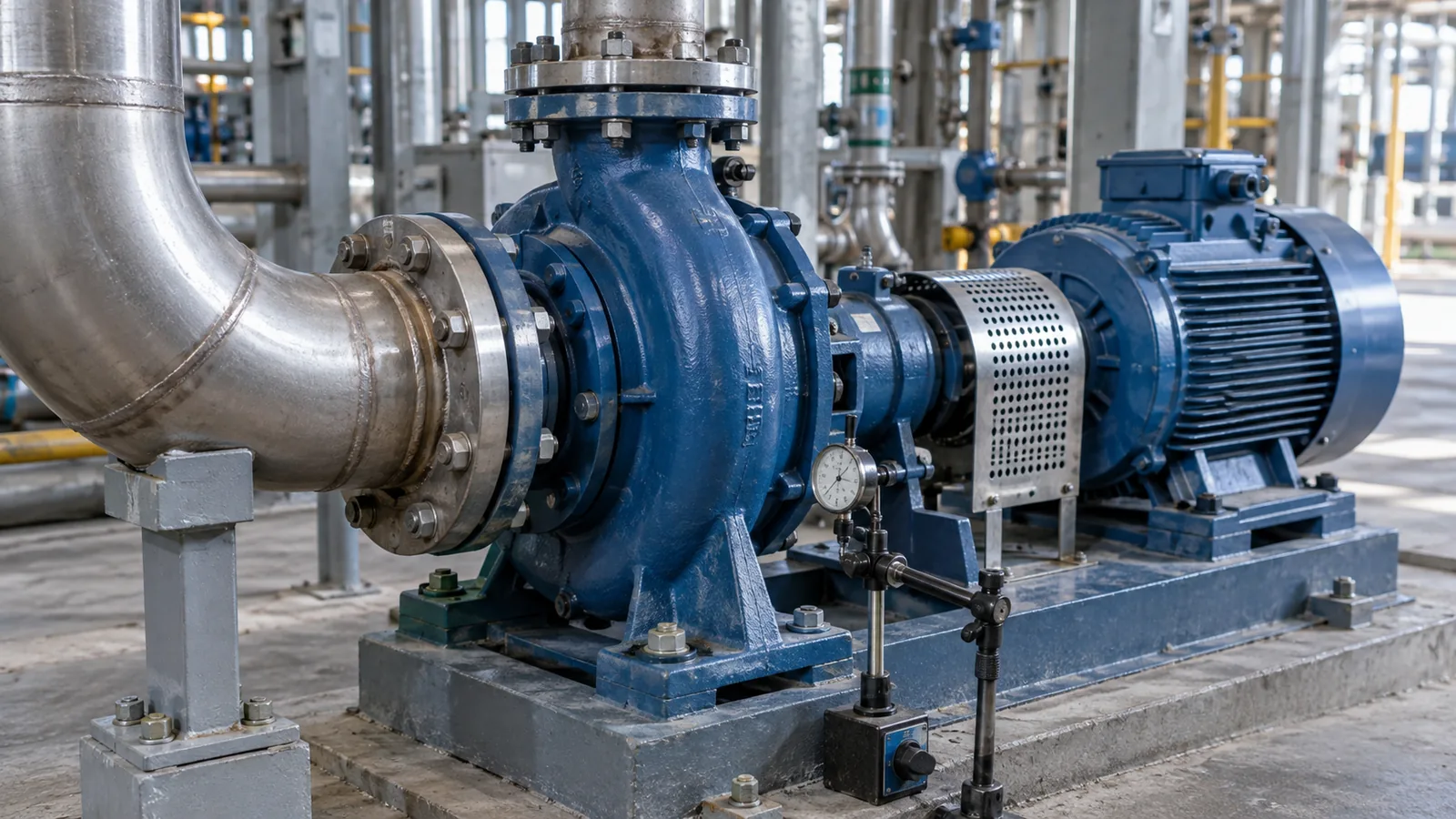
- Restraint: Supports limit displacement but also introduces reaction forces. The calculated support reaction loads (vertical, lateral, axial) and nozzle loads on connected equipment must be meticulously checked against their respective allowable capacities. A failure to check these loads can lead to catastrophic equipment damage.
If a system is too rigid, thermal stress can quickly violate the allowable stress limits in piping systems . For international projects requiring code comparison, we also consult materials detailing the difference between the European EN 13480 and the US ASME B31 codes.
Addressing Complex Scenarios: Static and Dynamic Load Analysis in Piping
Our analysis thoroughly accounts for both steady-state and transient forces, ensuring the structure can withstand long-term operation and sudden, short-term events.
Fatigue and Vibration in Piping Systems
While static analysis covers sustained and thermal loads, static and dynamic load analysis in piping also addresses occasional and cyclic forces.
- Occasional Loads: These include seismic events and wind gusts. For these, the incremental stresses from the occasional load are combined with the sustained stresses and checked against a higher occasional allowable stress limit.
- Dyna mic Analysis: For systems prone to high flow rates, pump pulsations, or acoustic resonance, we perform a dynamic/vibration analysis. This involves calculating the natural frequencies of the piping system to ensure they do not coincide with the operational excitation frequencies, which would lead to dangerous resonance and potential fatigue and vibration in piping failure.
This comprehensive approach, utilizing accurate displacement and load combinations , ensures that the design life is met, even under cyclical or transient stress events. For more rigorous risk evaluations, we recognize the necessity of consulting technical perspectives on pipe stress analysis from trusted industry resources .
The Engineer’s Toolkit: Pipe Stress Analysis Software (CAESAR II, AutoPIPE)
Modern pipe stress analysis software (CAESAR II, AutoPIPE) is indispensable for managing the complexity and iterative nature of stress analysis. Fluxiss utilizes the latest versions of industry-leading software to accurately model systems, apply various load cases, and swiftly execute the final stress checks.
These programs are the engine for our piping system stress calculation . They incorporate the geometric and material data, apply the current code SIFs (now often referencing B31J), and check computed stresses against code-allowable limits, generating a comprehensive report detailing:
- Stress ratios for sustained, expansion, and occasional cases.
- Displacement and load combinations at every node.
- Support and nozzle reaction forces.
However, the software is merely a tool; the expertise lies in the engineer’s ability to meticulously define inputs, boundary conditions, and code parameters to guarantee reliable results.
Conclusion: Securing Your Project’s Future Through Engineering Certainty
From understanding the intricate interplay of hoop stress and longitudinal stress to mastering the latest ASME B31.3 stress analysis requirements , the engineering involved in ensuring a safe, compliant, and durable piping system is significant. Fluxiss is committed to precise, code-compliant pipe stress analysis that minimizes risk and maximizes operational uptime. We employ a rigorous, systematic approach to how to calculate pipe stress analysis , ensuring every component from anchors to elbows is properly evaluated for code compliance ASME B31.1 / B31.3 .
Frequently Asked Questions
Pipe stress analysis is the procedure of verifying a piping system's structural integrity and operational safety. It ensures that all stresses arising from internal pressure, weight, and thermal expansion in pipe stress analysis remain below code-prescribed allowable stress limits in piping systems (e.g., ASME B31.3/B31.1). Proper analysis prevents catastrophic failures, leaks, and damage to connected equipment nozzles.
Practical engineering explainers connecting analysis methods, design inputs and project decisions.
Related articles.

Let's Build Something Great Together.
Partner with Fluxiss for engineering that holds up - under pressure, under load, under scrutiny.