
Today's service spotlight looks at the Fluxiss Pipe Stress Analysis service and the information that helps turn a piping enquiry into a defined engineering scope. The published service brings together flexibility, stress, support and reporting work for piping projects, with dedicated pages for static analysis, dynamic analysis, expansion checks, support optimization and issued-for-construction reporting. Owners, EPC teams and piping designers can use these pages to identify the work they need before requesting a proposal.
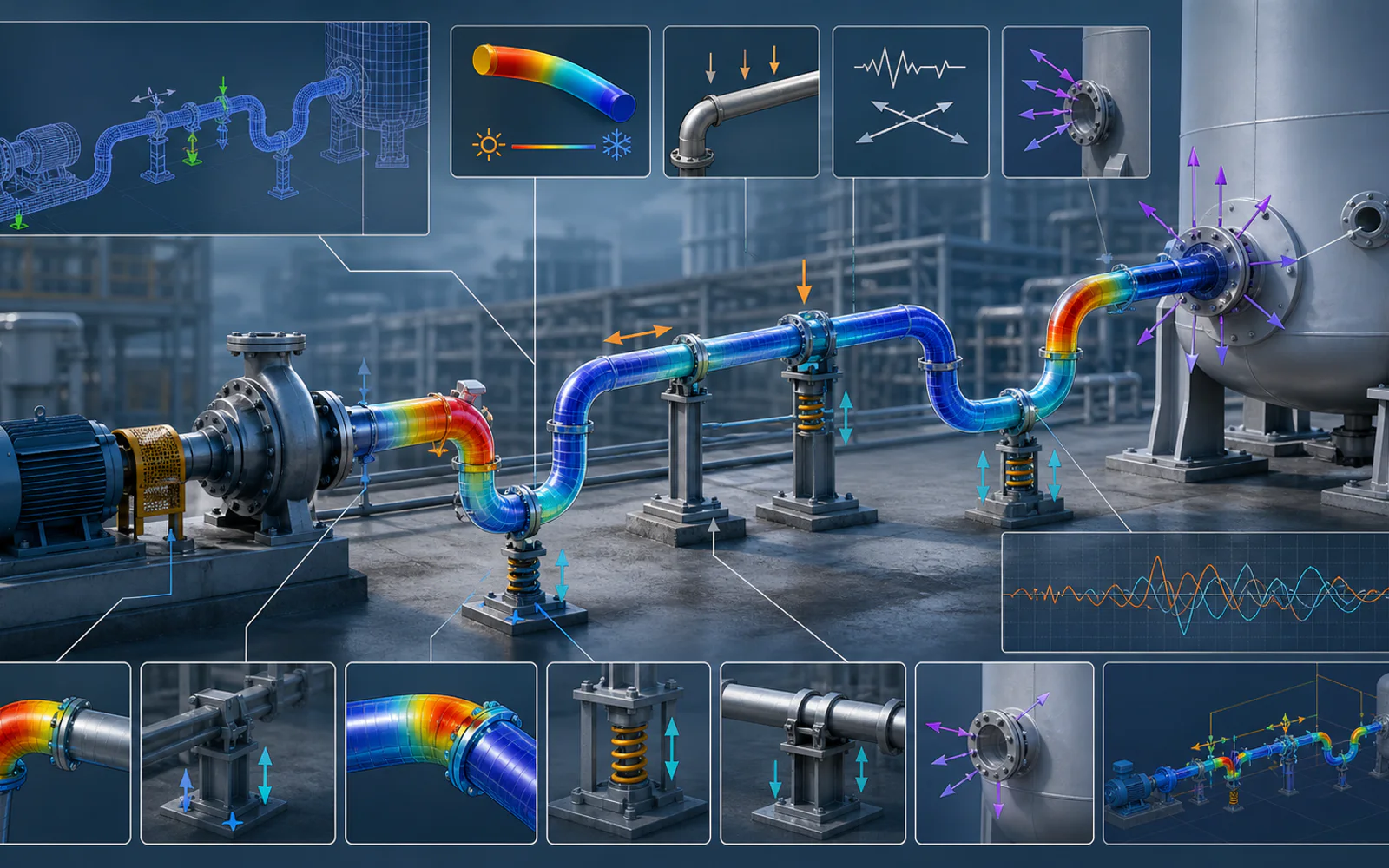
Static Stress Analysis addresses the load cases and support assumptions used to evaluate a piping system. Dynamic Stress Analysis provides a separate route for enquiries involving transient loading, while Expansion Stress Analysis focuses on thermal growth and routing flexibility. The parent service page also lists thermal and fatigue assessment, response-spectrum work and pipe-rack analysis. These are scope options to discuss against the project's operating conditions; an enquiry does not automatically require every analysis method listed on the site.
“Explore Fluxiss pipe stress services, from static and dynamic analysis to expansion checks, support optimization and IFC reporting, with a clear project-input checklist.”
Support Optimization connects the analytical model to the proposed restraint arrangement. The published scope includes spring-hanger selection and variable or constant support specification. For a project review, teams should identify the proposed anchors, guides, supports and equipment interfaces, and flag any positions that cannot be changed. Where an existing installation is being assessed, current drawings and information about the actual support condition help establish what the model should represent. Any missing inputs or assumptions should be resolved as part of the agreed scope.
The IFC Stress Analysis Report page provides the reporting route for teams preparing a construction package. The main service lists a stress analysis report, calculation package, marked-up isometrics, model files, support and spring schedules, and a compliance summary among its deliverables. The exact issue status, model format, review responsibilities and required supporting documents should be confirmed in the proposal. This gives the client a clear basis for checking that the engineering output matches the intended design, review or construction stage.
Fluxiss lists CAESAR II as a tool for this service and references ASME B31.1, ASME B31.3 and EN 13480 on the service page. The applicable code, client specification and analysis cases must be agreed for the particular project. To start that discussion, provide the design basis, piping drawings or existing model, operating cases, known loads and constraints, required deliverable format and deadline. For a modification, also identify what is changing and which parts of the existing system must remain in place. A useful brief separates confirmed information from assumptions that still need review.
Further reading is available through the pipe stress topic hub, which brings together practical articles on thermal expansion, equipment interfaces and piping analysis. Teams can contact the Fluxiss team or schedule a meeting to review the available drawings and define the next step. This update highlights the service already described on the website; project-specific scope, programme and deliverables are confirmed during the enquiry and proposal process.
Fluxiss Team contributes services insights to the Fluxiss content library.
Related articles.

Let's Build Something Great Together.
Partner with Fluxiss for engineering that holds up - under pressure, under load, under scrutiny.