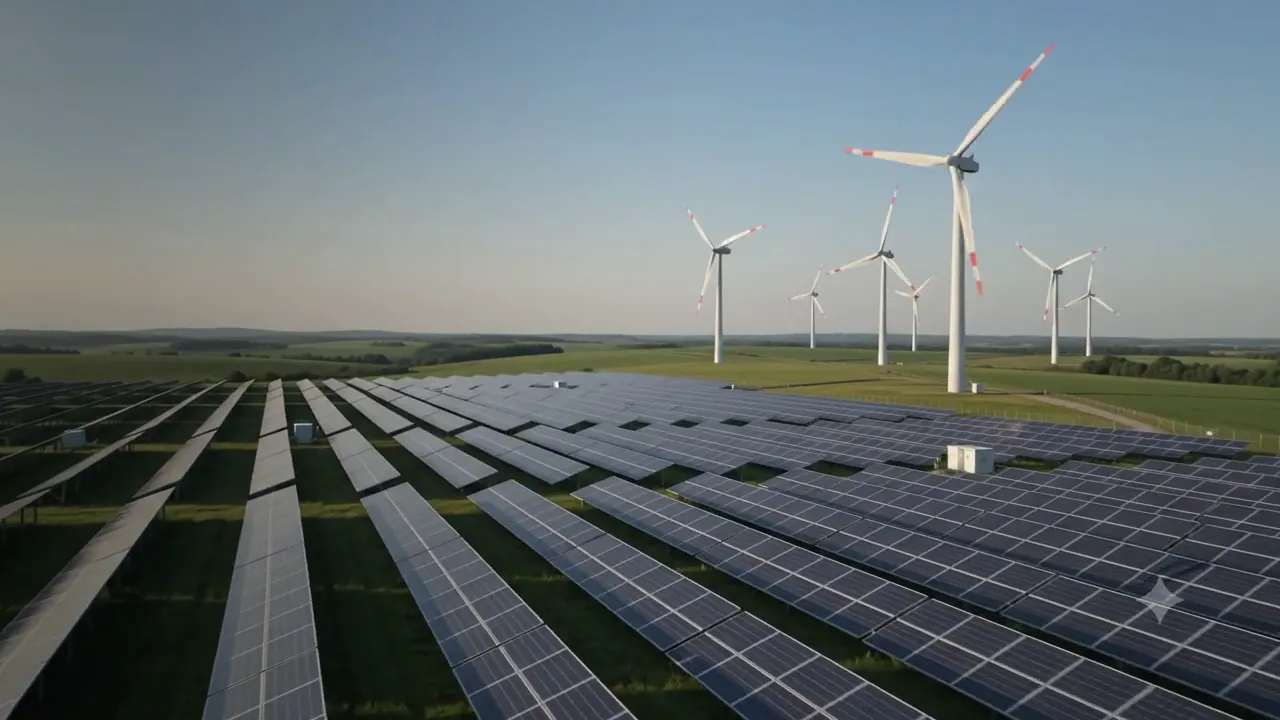
Technology & Equipment Assessment
Independent WTG, solar PV component and BESS technology assessments with track record, certification and bankability review for lenders and investors.
The wrong turbine, module, inverter, or battery chemistry can quietly erode twenty years of revenue. Fluxiss gives owners, developers, and lenders an independent technical opinion on the equipment behind a renewable project before supply contracts are signed and again when design changes create new exposure.
Our assessment connects site conditions, operating duty, certification evidence, manufacturer track record, warranty terms, and lifecycle performance. The result is a practical view of whether the selected technology is suitable, proven, serviceable, and bankable for the specific project—not simply whether it appears on a supplier data sheet.
What We Assess
- Wind Turbine Generator (WTG) Technology Assessment - platform maturity, site suitability class, and serial-defect history.
- Solar PV Component & System Assessment - module, inverter, and tracker technology review against independent test data.
- BESS Technology, Degradation & Augmentation Strategy - chemistry selection, cycle-life modelling, and augmentation planning.
- Track Record, Certification & Bankability Review - IEC certification status, manufacturer financial standing, and field performance history.
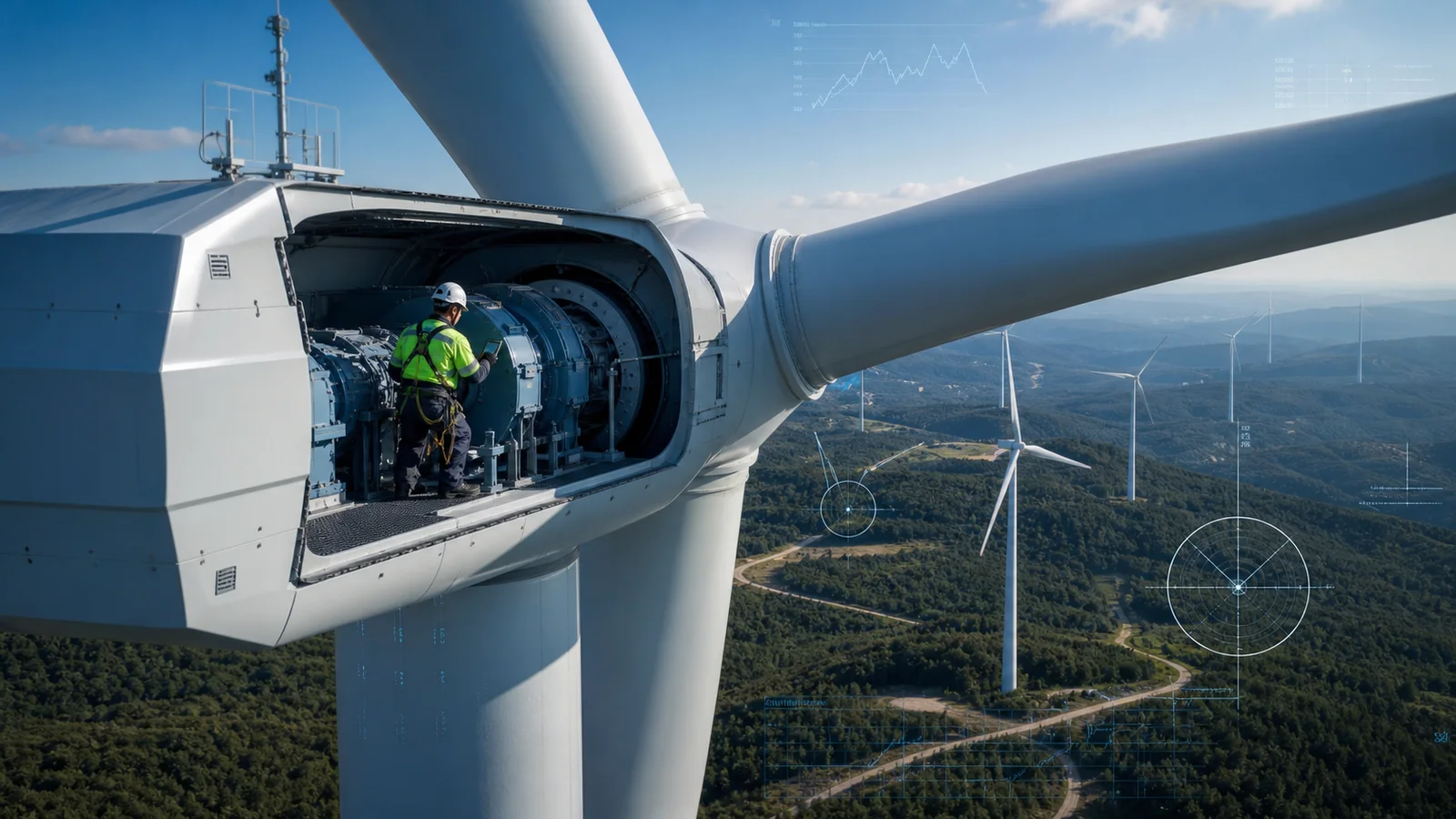
WTG Site Suitability and Platform Maturity
A wind turbine platform must match more than the average wind speed. We review the site wind class, turbulence intensity, extreme gusts, temperature range, air density, humidity, corrosion category, grid conditions, transport constraints, and operating strategy against the turbine's certified design envelope.
Platform maturity is assessed through fleet size, operating hours, major component history, technical advisories, upgrade campaigns, service capability, and evidence from comparable climates. We also challenge power-curve assumptions, availability exclusions, noise modes, wake-management restrictions, and the proposed long-term service strategy.
- IEC type certification and site-specific load compatibility review.
- Drivetrain, blade, converter, transformer, and control-platform maturity assessment.
- Serial-defect exposure, spare-parts strategy, and corrective-action status.
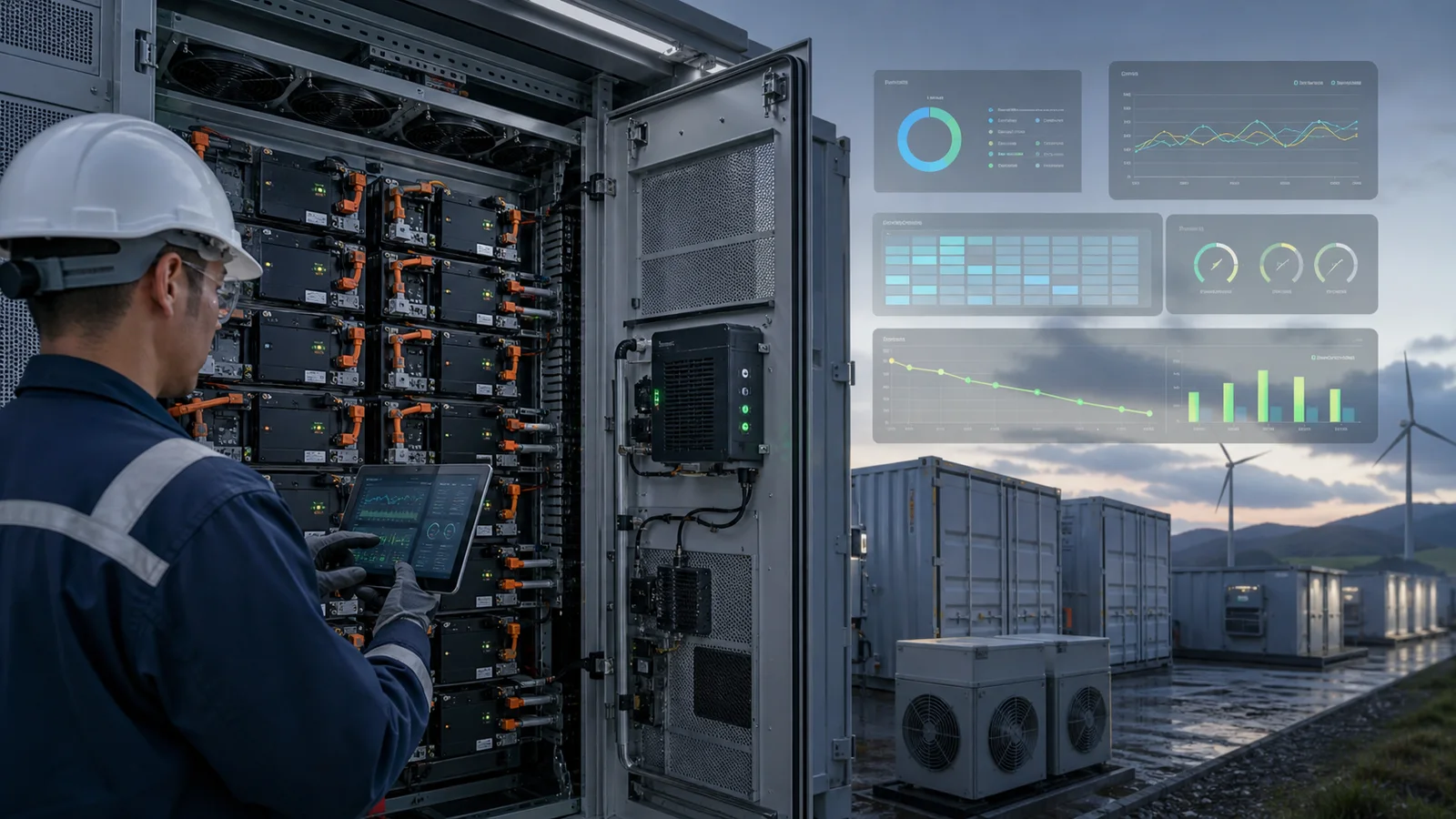
BESS Degradation and Augmentation Strategy
Battery capacity at commercial operation is only the starting point. Fluxiss models calendar ageing, cycling degradation, depth of discharge, temperature exposure, round-trip efficiency, auxiliary loads, and dispatch duty to test whether guaranteed energy and power will remain available throughout the contracted term.
We compare cell chemistry, rack architecture, HVAC concept, fire detection and suppression, battery management controls, power-conversion equipment, and augmentation assumptions. The review identifies when additional capacity may be required, how much space and interconnection capacity must be reserved, and whether warranty conditions align with the intended operating profile.
- State-of-health and usable-energy projection by operating year.
- Thermal-management, safety-system, and enclosure suitability review.
- Augmentation timing, quantity, outage, and lifecycle cost implications.
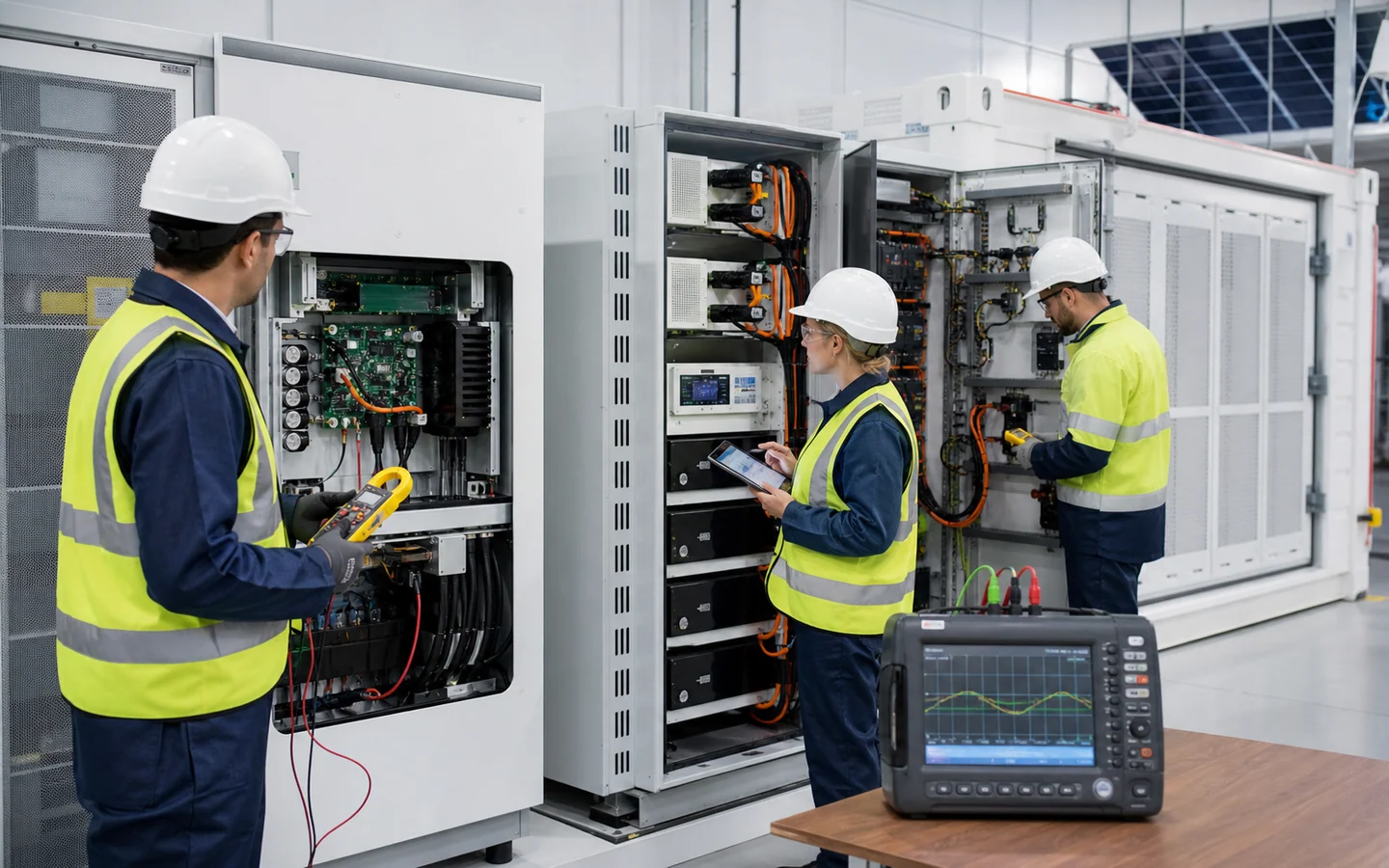
Certification, Track Record and Bankability
Certificates are checked for scope, validity, product variant, manufacturing location, applicable standards, and unresolved conditions. For solar modules and inverters, this can include independent test evidence, degradation behavior, quality-control procedures, compatibility, grid-code capability, and the relationship between the offered product and the model that was actually certified.
Bankability also depends on the organization standing behind the warranty. We review supply-chain concentration, manufacturing quality systems, field-failure evidence, service coverage, warranty security, insurance support, and the financial capacity to respond if a fleet issue emerges years after delivery.
You receive a concise assessment report with evidence references, open technical queries, mitigations, and risk flags ranked by safety, energy yield, availability, schedule, and revenue impact. Request an Equipment Assessment

Factory and Field Verification
Desktop assessment is connected to evidence through factory audits, document review, witness testing and field acceptance checks. We focus on whether the equipment delivered matches the certified configuration and project duty.
Findings are ranked by performance, reliability, safety and schedule impact, with practical close-out actions for suppliers, EPC contractors and owners.

Let's Build Something Great Together.
Partner with Fluxiss for engineering that holds up - under pressure, under load, under scrutiny.