Solar PV Project from Feasibility to Permit: Site Assessment, System Design, Structural Checks and Approvals
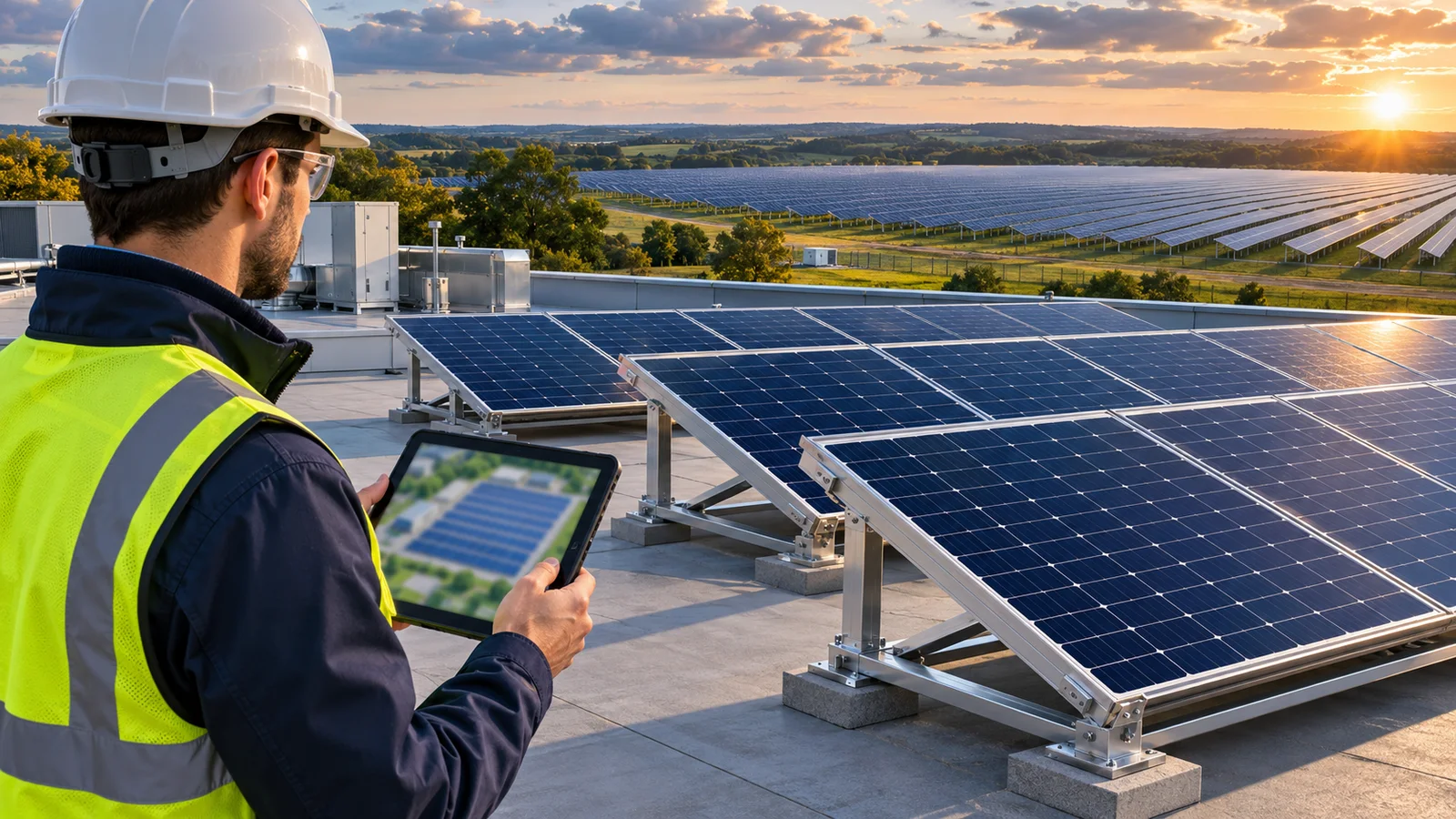
Most solar projects that run late do not fail on the panels. They fail on a roof that cannot carry the extra load, a grid connection that needs a new transformer, a permit pack that was missing a structural letter, or a yield estimate that was too optimistic for the lender. Each of those problems is an engineering question that could have been answered earlier.
This guide follows a commercial or utility-scale solar PV project through the engineering stages in the order they should happen, and shows where each piece of work feeds the next.
Stage 1: Feasibility and Cost Analysis
Feasibility answers one question: is this site worth designing for? A good study combines the solar resource, shading, available area, the client's load profile, the grid connection options and a first cost estimate. The output is an indicative system size, a yield range and a payback or levelised cost figure that the owner can take to a decision. Our solar feasibility and cost analysis service covers this stage.
- Irradiance data and a shading study for the actual roof or plot, not a regional average.
- Load profile and tariff, so self-consumption and export are estimated honestly.
- Grid capacity and the likely connection route and voltage.
- Capex, opex and degradation assumptions stated clearly so a lender can check them.
For larger projects the feasibility work usually grows into a lender-grade model. That is where renewable financial modelling and technical due diligence take over.
Stage 2: PV System Design
Once the site is approved, the PV system design fixes the module and inverter selection, string sizing, array layout, tilt and row spacing, and the DC and AC cable routes. String lengths are checked against inverter voltage windows at the coldest and hottest expected cell temperatures, and the layout is tested for inter-row shading in winter. Our solar photovoltaic system service delivers this design, and our guide on how a solar PV cell works explains the physics behind the voltage and temperature limits.
Stage 3: Mounting Structure and Wind Load Checks
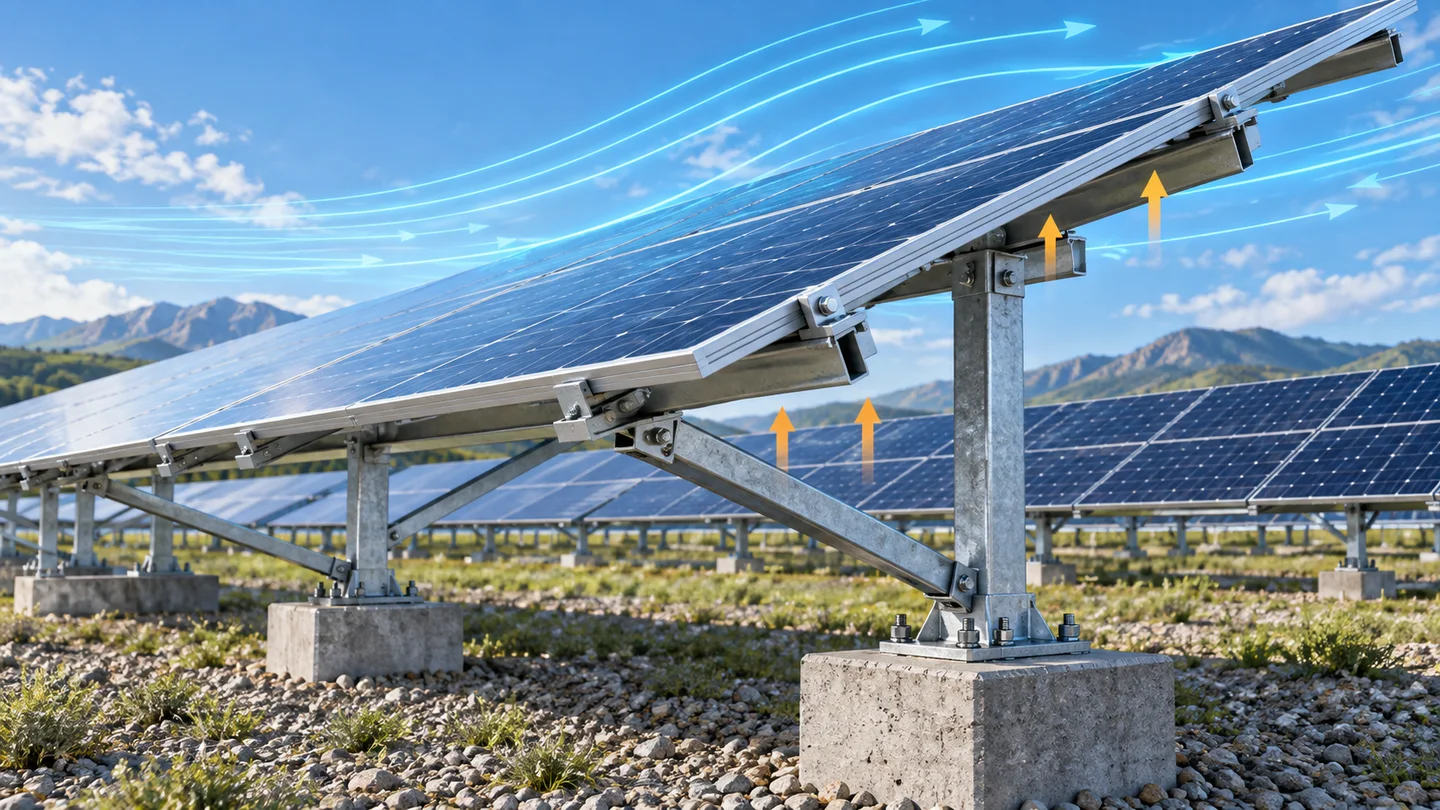
Every array adds dead load, and every array catches wind. On rooftops the existing structure has to be checked for the new load, ballast and point loads at the supports. On ground-mounted plants the racking, piles or foundations have to be designed for wind uplift, snow and, in some regions, seismic action. Wind is usually the governing case, and our article on calculating wind loads on PV systems walks through the method.
Structural checks are done by our structural engineering and structural analysis teams, and the solar PV structural vetting project in our portfolio shows a typical review of a third-party mounting design.
Stage 4: Electrical Design and Grid Connection
The electrical design turns the array into a safe, connectable installation: single-line diagram, cable sizing for voltage drop and current rating, protection and earthing, combiner boxes, isolators, metering and the point of connection. For larger plants this includes transformer and switchgear sizing and the studies the network operator asks for. Our electrical system design team prepares these drawings alongside the PV layout so the two never drift apart.
Stage 5: Permitting and Compliance
The permit pack collects the output of every earlier stage: site plan, array layout, structural calculations or a structural letter, single-line diagram, equipment data sheets, fire access and setback drawings, and the utility interconnection application. Missing one item is the most common cause of delay. Our solar permitting and compliance service prepares and tracks the pack, and our guide on what permits you need to install solar panels explains the typical approvals.
On utility-scale projects, permitting runs alongside schedule and cost control. Our renewable project controls and permitting and renewable EPC management services cover that wider programme.
How Fluxiss Helps
Fluxiss delivers the full chain under its solar engineering and design service, from feasibility through system design, structural checks, electrical design and permitting, or takes on only the stages your team needs. The service spotlight on solar PV system design, permitting and feasibility in our News section gives a short overview. To discuss a project, contact Fluxiss or schedule a technical meeting.
Frequently Asked Questions
For a single commercial roof or plot it is usually one to two weeks once site data, load data and grid information are available. Utility-scale studies with lender-grade modelling take longer.
Practical engineering explainers connecting analysis methods, design inputs and project decisions.
Related articles.
Let's Build Something Great Together.
Partner with Fluxiss for engineering that holds up - under pressure, under load, under scrutiny.