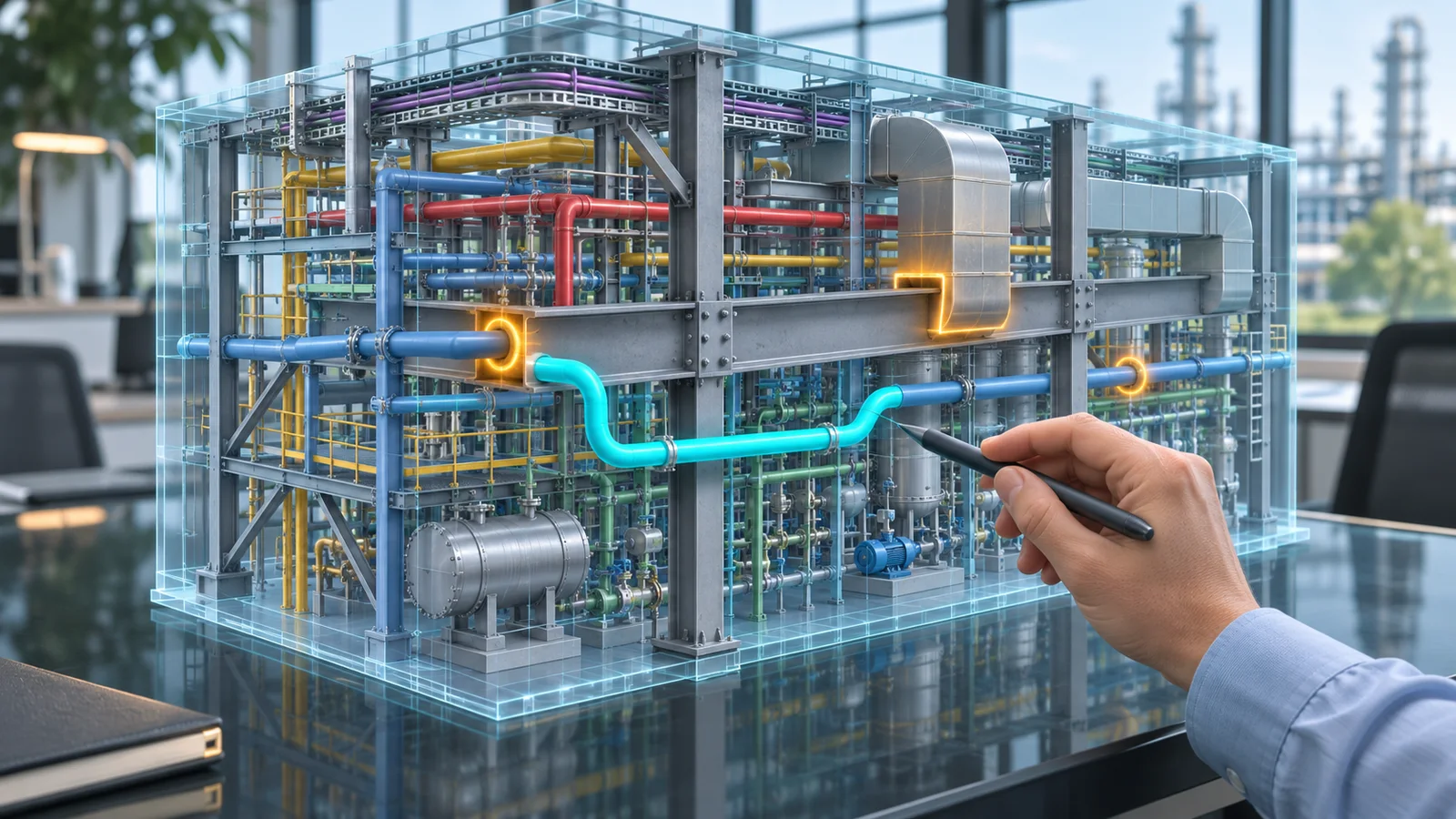
This service spotlight explains how the Fluxiss Clash Detection service keeps a plant design buildable before steel and pipe reach the site. A 3D model is only as good as the conflicts found inside it, and a single hard clash, such as a high-pressure steam line routed through the space a support column already occupies, can stop a construction crew for weeks while a field fix is improvised. Fluxiss runs clash detection as a dedicated sub-service of 3D Piping Layout and Isometrics, so that every model handed over for fabrication has been tested against structure, equipment, HVAC and electrical systems and signed off as clash-free.
The work starts by federating the discipline models into one coordination model. Piping from Piping Layout Design is brought together with the steel from Structural Engineering, the ducts, plant rooms and pipework from MEP Engineering, the cable trays and panels from Electrical System Design, and the vendor equipment models. Each discipline keeps ownership of its own model; the coordination model is where they are tested against each other. The process line list and the issued P&ID Development drawings define which lines exist and how they connect, so the clash model always reflects the current process design rather than an older revision.
“How the Fluxiss Clash Detection service turns a 3D plant model into a coordinated, buildable design: hard and soft clash checks across piping, structure, HVAC ducts and cable trays, a managed resolution workflow in Navisworks, E3D or PDMS, clash review meetings and reports that let isometrics go to fabrication without field rework.”
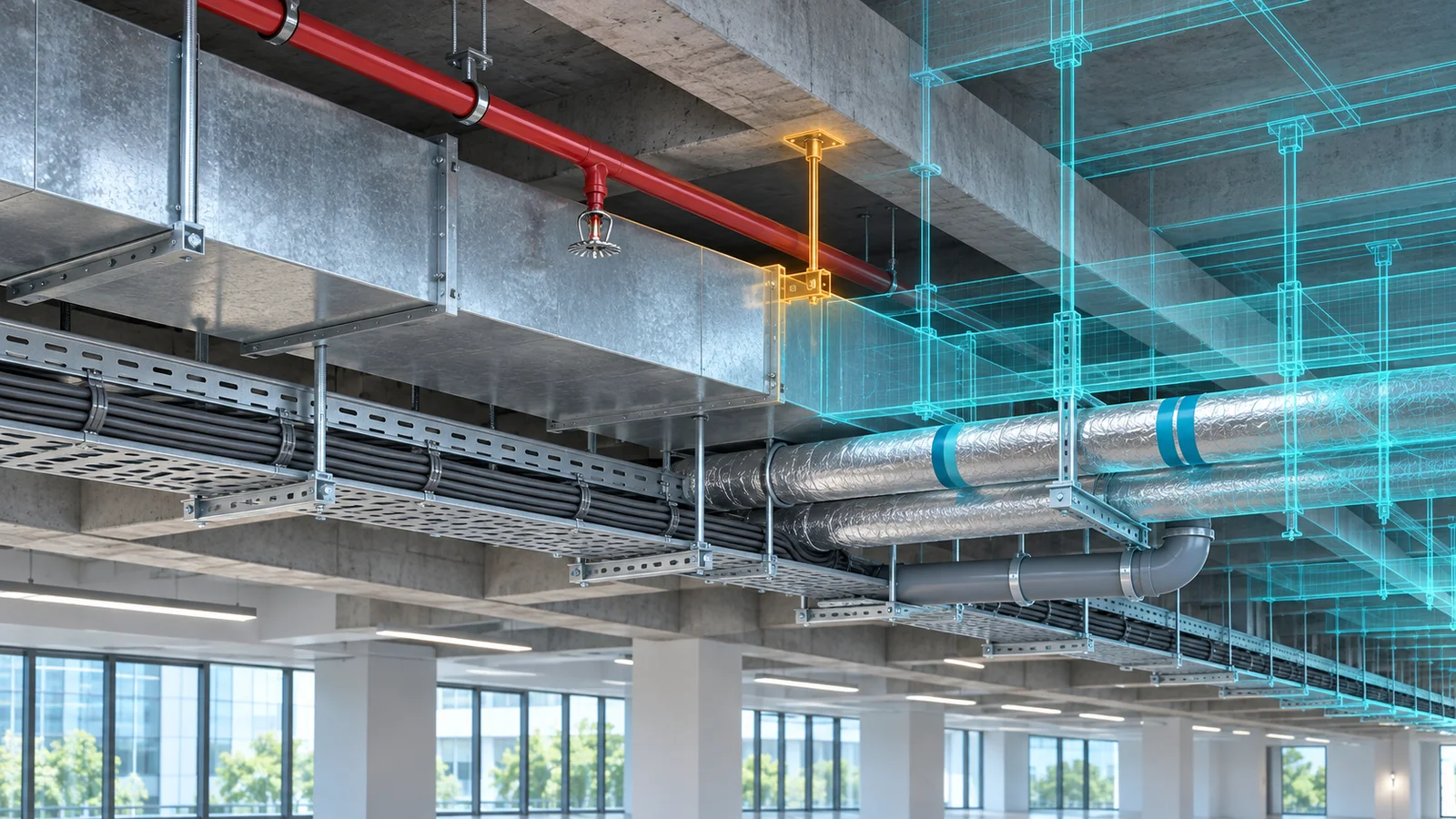
Two kinds of conflict are checked. Hard clashes are physical intersections, piping against structure, piping against duct, tray or equipment, and are reported with the exact location, the two objects involved and the discipline responsible. Soft clashes are clearance failures: a valve handwheel wedged against a cable tray, a flange that cannot be unbolted, a pump that cannot be lifted out, an escape route blocked by a pipe rack, or insulation thickness not allowed for in the gap. Fluxiss sets clearance rules from the project's maintenance, access and safety requirements, then runs both checks in Navisworks, AVEVA E3D or PDMS according to the client's platform, so the result is a model that can be operated and maintained, not just built.
Finding clashes is the easy part; the service is defined by the resolution workflow. Each clash is logged, grouped, assigned to an owner and tracked to closure. Many are resolved inside the piping model by rerouting, resupporting or changing elevation, and those changes are checked back against Pipe Stress Analysis and Support and Brace Design so that a fix does not create an overstressed line or an unsupported span. Clashes that need a structural or MEP change go to the owning discipline with a proposed solution. Clash review meetings bring the disciplines together on a fixed cycle to approve the proposals, and the clash detection report records what was found, what was changed and what remains open, which gives the owner a transparent audit trail at each model issue.
Standards shape how the model is managed. On UK projects Fluxiss works to ISO 19650 and the UK BIM Framework for information management, naming and model exchange; on US projects the model is developed to NBIMS-US practice and LOD 400, which is the level of detail that fabrication relies on. Once the model is clean, Isometric Drawing Generation produces the fabrication isometrics and Material Take-Offs are extracted from the same coordinated model, so the quantities, the drawings and the model agree. The 3D piping design spotlight, the P&ID development spotlight and the MEP engineering spotlight describe the neighbouring services that feed the coordination model, and our review of common piping design mistakes shows how most field rework traces back to clashes that were never checked.
A useful clash detection enquiry includes the native model files or formats in use, the disciplines and vendor models to be included, the project clearance and access rules, the current issue status of the P&IDs, the model exchange standard required by the client and the dates of the next model freeze or isometric issue. Project teams can contact Fluxiss with that information or schedule a technical meeting to agree the coordination model setup, the review cycle and the reporting format before the first clash run.
Fluxiss Team contributes services insights to the Fluxiss content library.
Related articles.

Let's Build Something Great Together.
Partner with Fluxiss for engineering that holds up - under pressure, under load, under scrutiny.