
This service spotlight explains how the Fluxiss Finite Element Analysis service tests a part, assembly or structure digitally before anything is built. FEA uses numerical methods to predict how a design reacts to force, heat, vibration, pressure and time, so weak spots, excess material and failure risks show up on screen rather than in the field. Fluxiss supports manufacturers, plant owners and engineering teams across the USA, UK, Europe and the UAE, and the work is organised into four connected scopes: static, dynamic and time-dependent, thermal and fatigue, and specialized analysis.
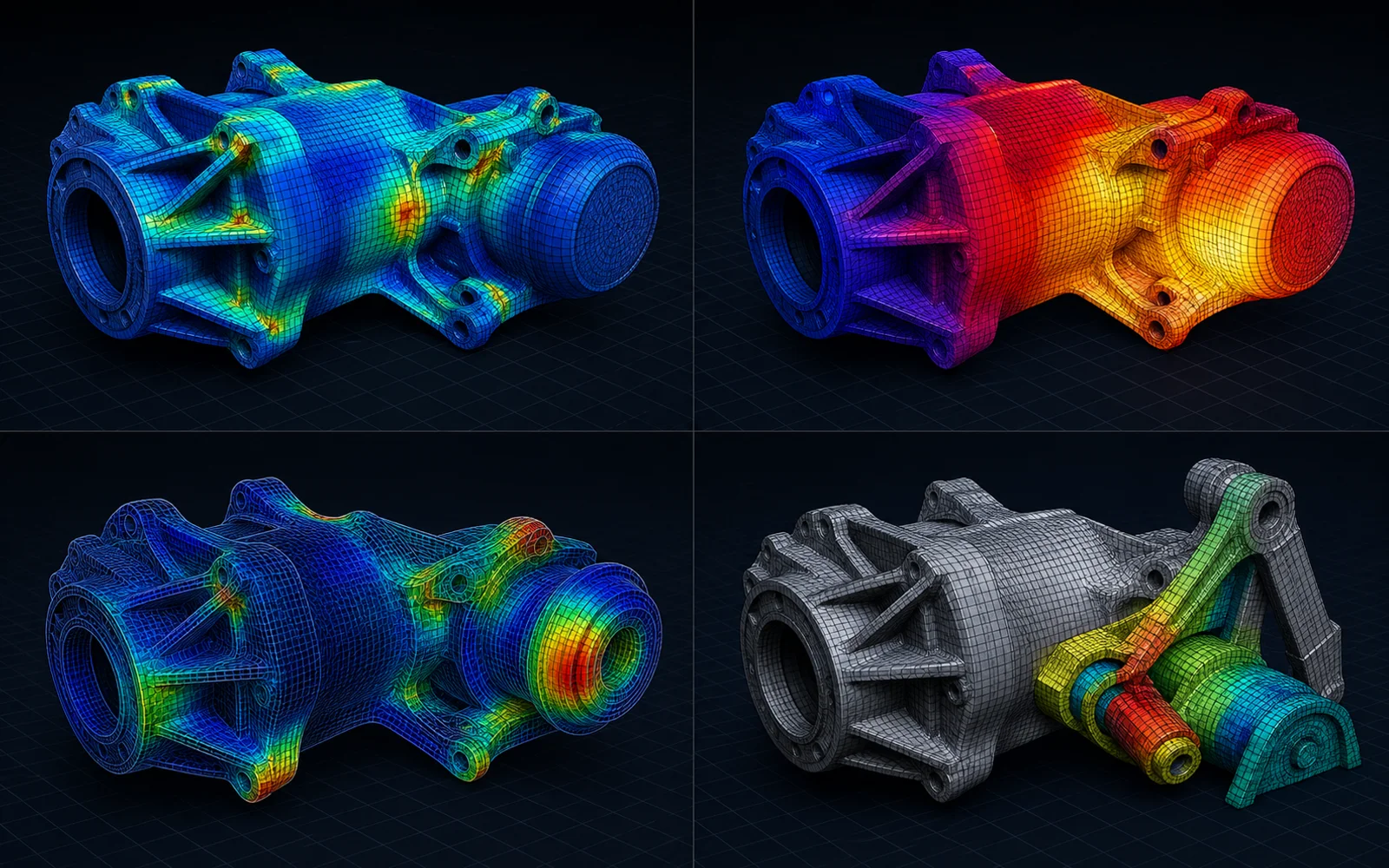
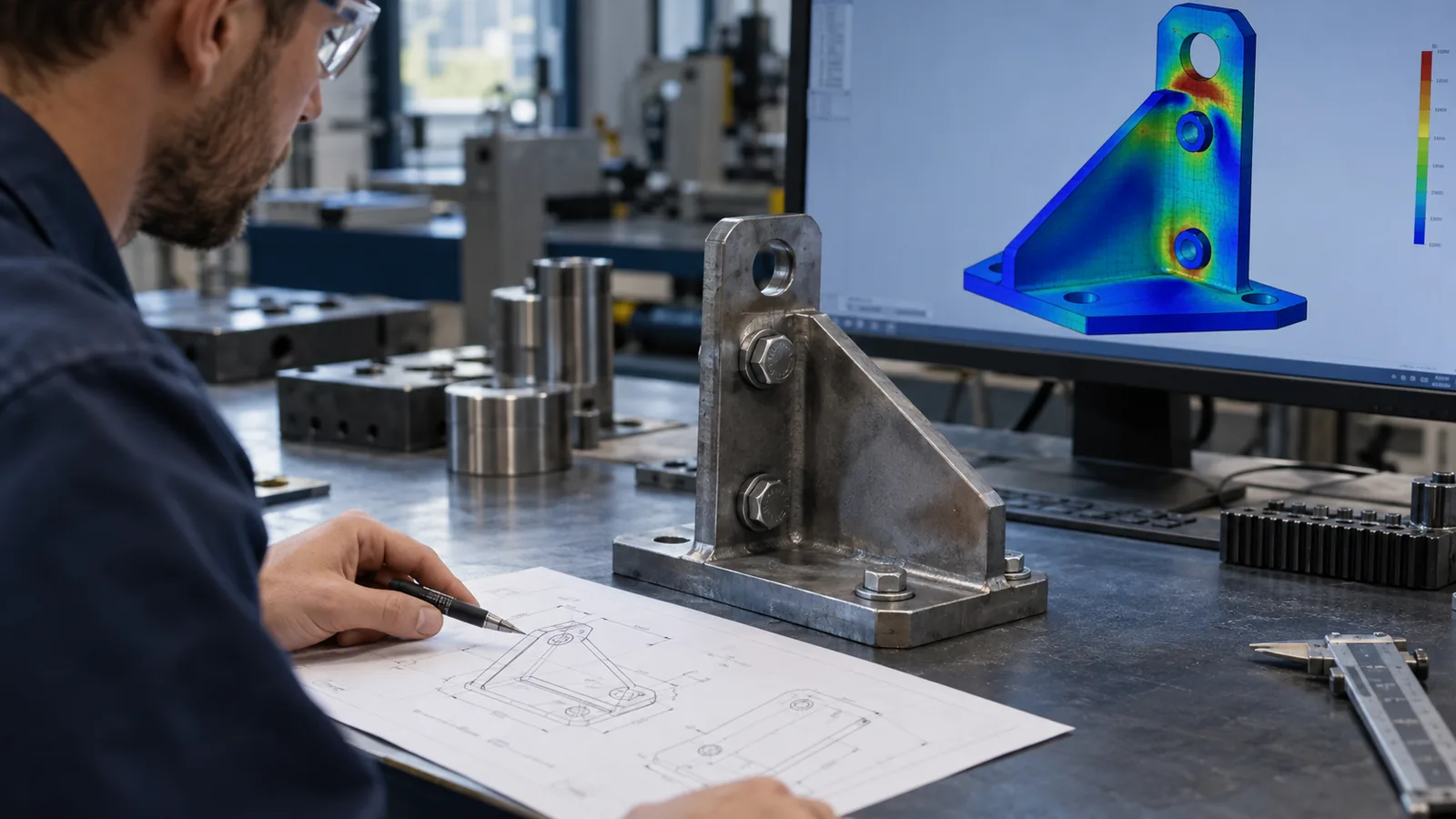
Static Analysis is where most problems start. Fluxiss usually begins with linear analysis to evaluate stress, strain and deformation under normal loads, giving safety factors and the locations that need attention. Slender, tall or compression-loaded members get linear buckling checks so the collapse load is known, not assumed. When the real behaviour is not linear, nonlinear material models, large-deformation analysis, contact between parts and plasticity are added, which captures overloads, dents and assembly forces that a linear run would miss.
“How the Fluxiss Finite Element Analysis service tests a design before it is built: linear and nonlinear static checks, buckling, modal and transient dynamics, heat transfer and fatigue life, and acoustics and FSI when a project needs more than strength.”
Dynamic and Time-Dependent FEA covers what happens when loads move. Modal analysis identifies natural frequencies and mode shapes, and harmonic and random vibration studies show how equipment such as rotating machines, HVAC units and vehicle parts respond in service. Transient dynamics then handles drops, shocks and impacts, the events that are expensive or unsafe to test physically, so a design can be changed before a prototype is ever dropped.
Thermal and Fatigue Analysis is the long-term view. Heat transfer analysis maps temperature through materials and systems, and the resulting thermal stresses feed into fatigue analysis that estimates life under cyclic loading, which matters most in oil and gas, aerospace, automotive and industrial equipment. Specialized Analysis covers the cases where strength is not the only question: acoustic FEA for quieter products and fluid-structure interaction for pipelines, valves, tanks and cooling systems, linked to Computational Fluid Dynamics where the flow side needs its own model.
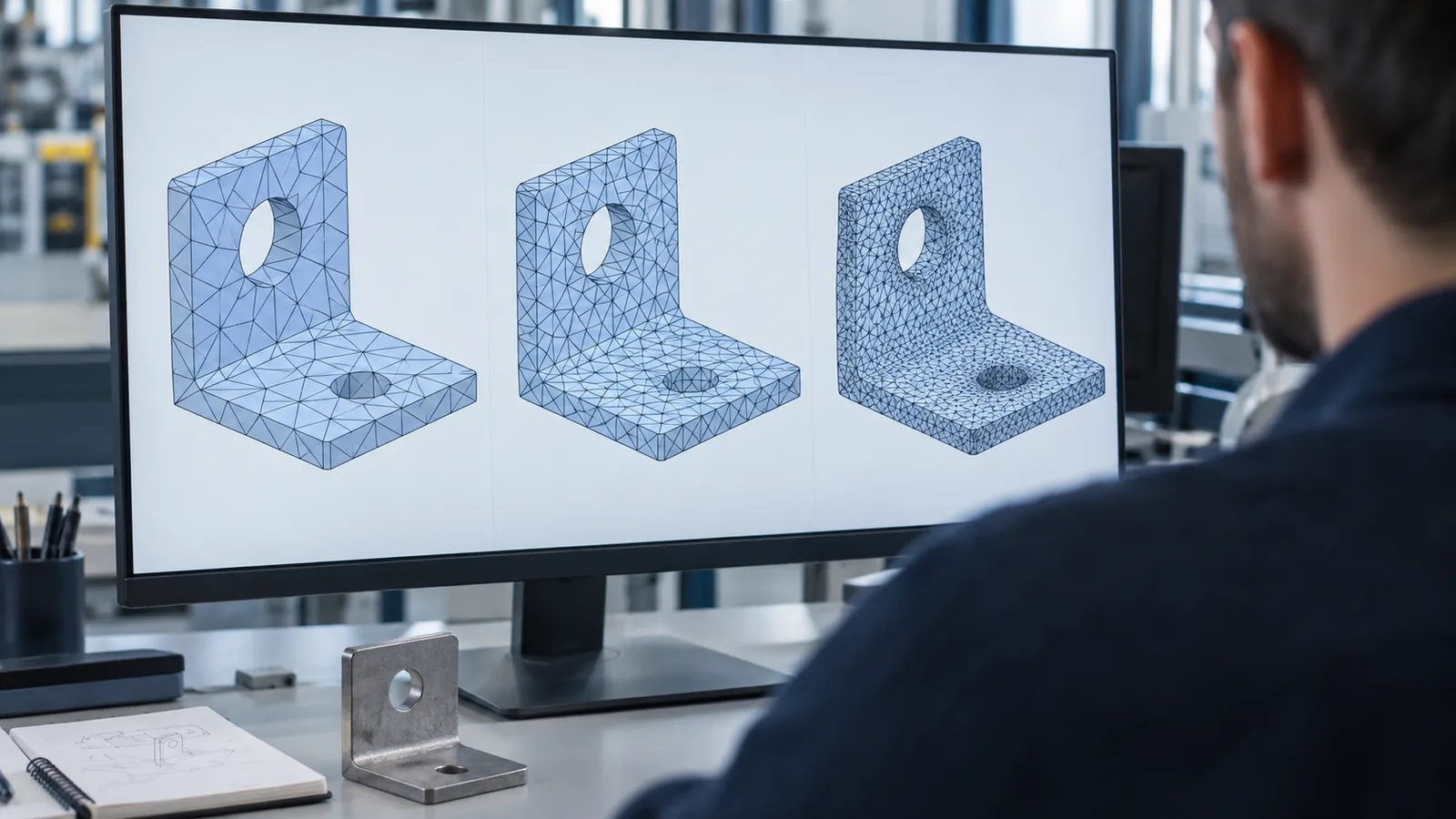
Software choice follows the problem. Fluxiss works in ANSYS, Abaqus, SolidWorks Simulation, COMSOL, NX and Fusion 360, with Python scripting when a study needs automation, but good engineering judgment matters more than the tool. Every model goes through geometry clean-up, a mesh convergence check and a sanity check against hand calculations before results are reported. Our guides to the main types of finite element analysis, mesh convergence, why FEA results go wrong and how FEA is used in structural engineering, together with the CAE spotlight and the CFD spotlight, explain the method in more depth.
A useful FEA enquiry includes the CAD model, materials and their properties, the load cases and boundary conditions, operating temperatures and duty cycle, the governing code or acceptance criteria, and what decision the analysis must support, such as a design change, a certification submission or a failure investigation. Where no clean model exists, Computer Aided Design can build one first. Teams can contact Fluxiss with that information or schedule a technical meeting to agree the scope, verification approach and report format before modelling begins.
Fluxiss Team contributes services insights to the Fluxiss content library.
Related articles.
Let's Build Something Great Together.
Partner with Fluxiss for engineering that holds up - under pressure, under load, under scrutiny.