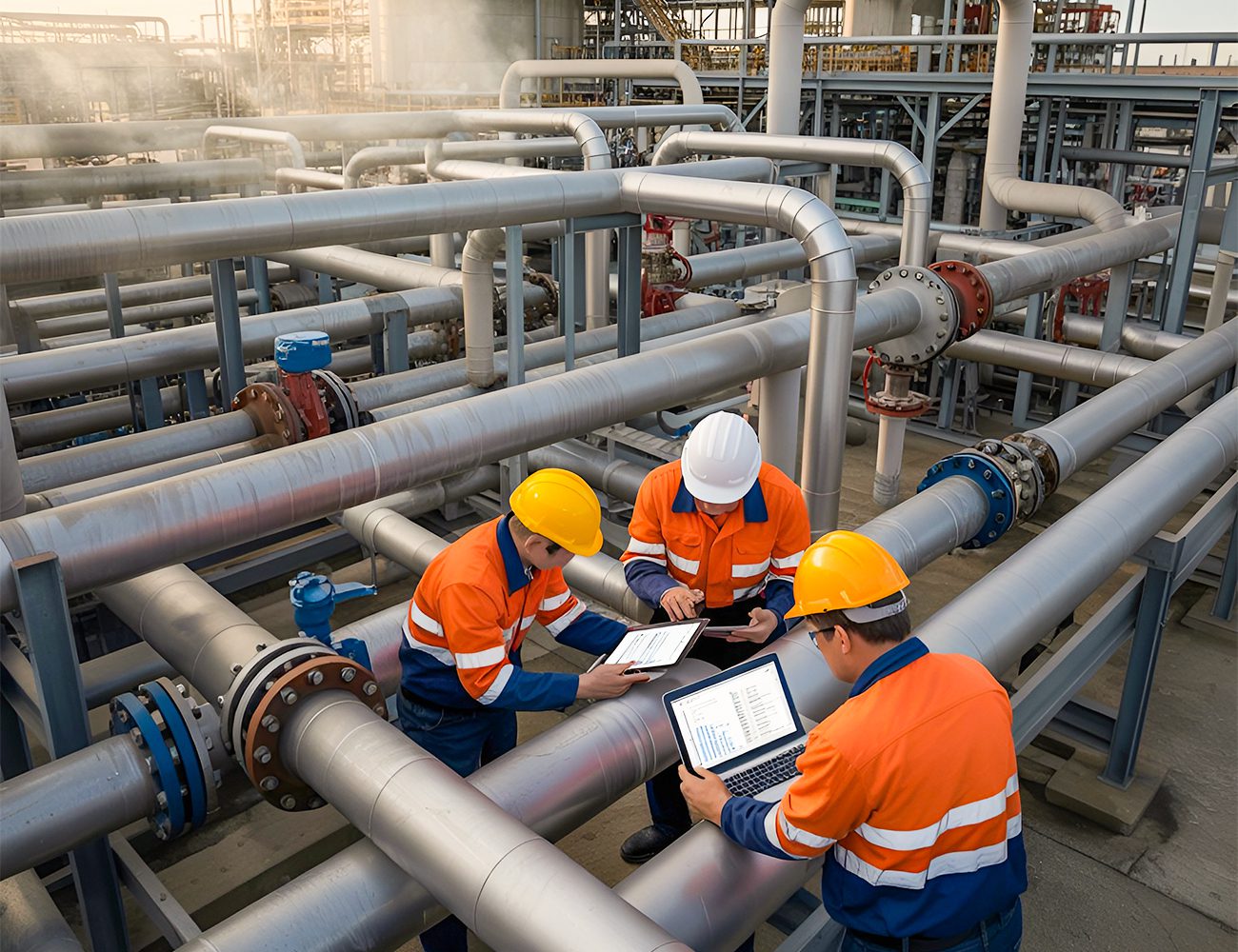
Cryogenic LNG Pipeline Stress Analysis and Support Redesign at −162°C
CAESAR II stress analysis of a 2-inch stainless LNG line at −162°C feeding flow meters and a cryogenic pump, rerouted and re-supported to pass ASME B31.3.
Challenge
A 2-inch SA-312 Gr. 304L LNG line ran from two storage tanks to two flow meters and a cryogenic pump at −162°C and 800 kPa. The cryogenic temperature caused severe thermal contraction, long unsupported spans produced sustained overstress, and the pump was a sensitive nozzle load receiver.
Approach
A full CAESAR II model was built to ASME B31.3 with material properties at −162°C across the 2", 1.5" and 1" Sch 80 sections. Sustained, operating, expansion, hydrotest, seismic and wind cases were run. The initial layout with proposed supports failed, so the line was rerouted and re-analysed with five simple supports at critical nodes.
Result
The original routing failed code compliance. The modified routing with the revised support layout passed all load cases, and support locations were documented with coordinates and distances from reference points (Rev. 0, 10 June 2025).
Scope of Work
- Cryogenic material properties at −162°C
- SUS, OPE, EXP, HYD, seismic and wind load cases
- Rerouting and support layout redesign
- Pump nozzle load consideration
Deliverables
- Stress analysis report with CAESAR model sketches
- Input listing and code compliance report
- Stress and restraint summaries
- Support location schedule
Similar projects
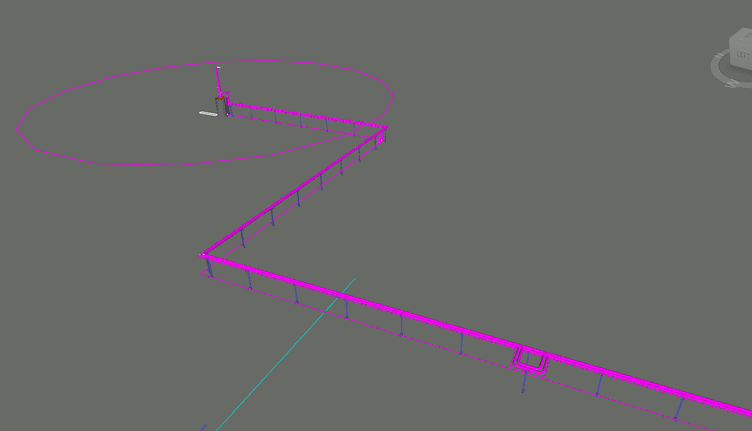
6-Inch Natural Gas Line Stress Analysis from Measuring Station to Gas Dryer
Existing-versus-modified CAESAR II analysis of a 6-inch carbon steel gas line with buried branches, bringing all stresses within ASME B31.3 allowables.
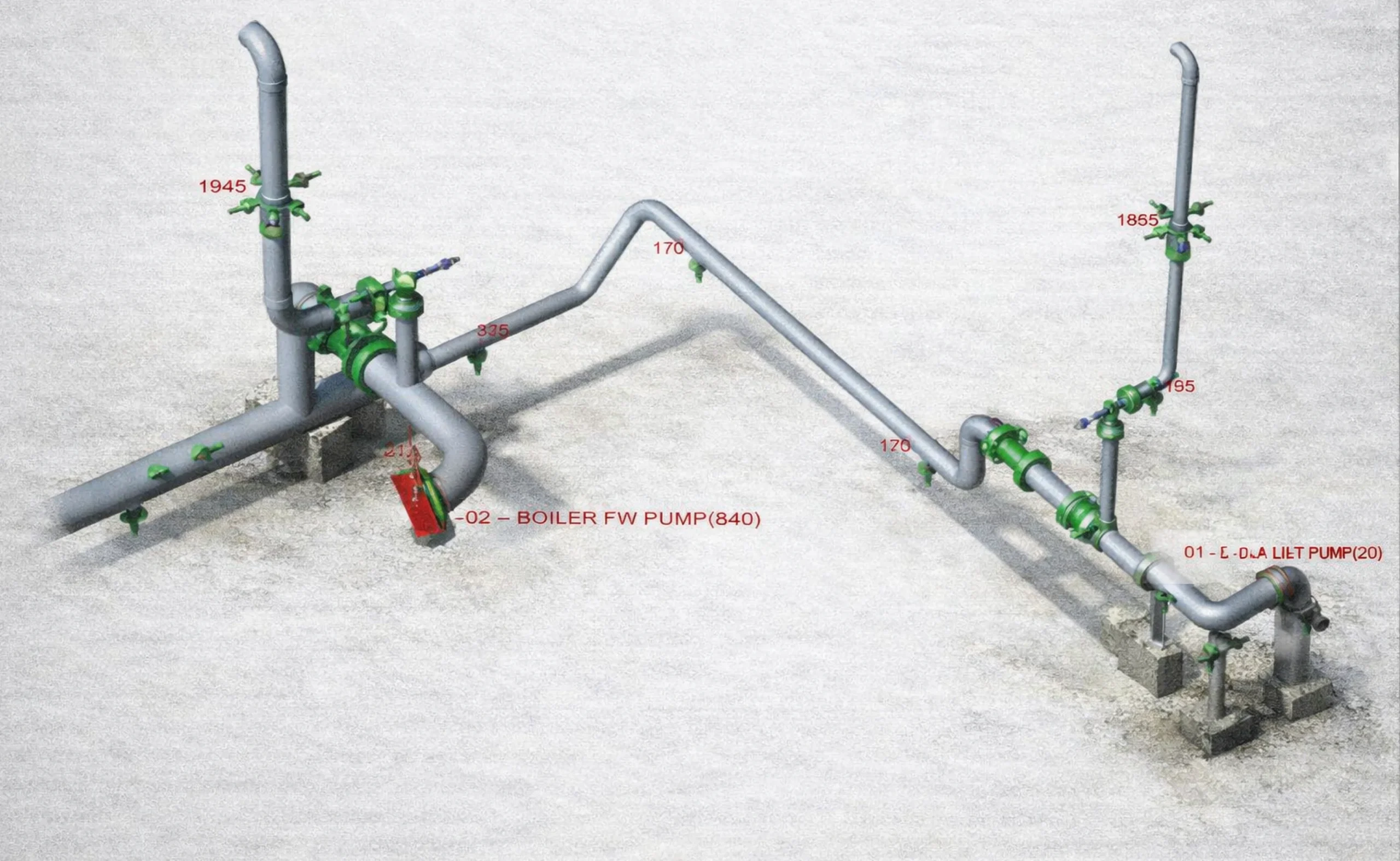
Seismic Pipe Stress and API-617 Compressor Nozzle Assessment for a Refinery Upgrading Project
Seismic and static analysis of a 6-inch refinery line where one added support brought compressor nozzle loads from fail to pass under API-617.
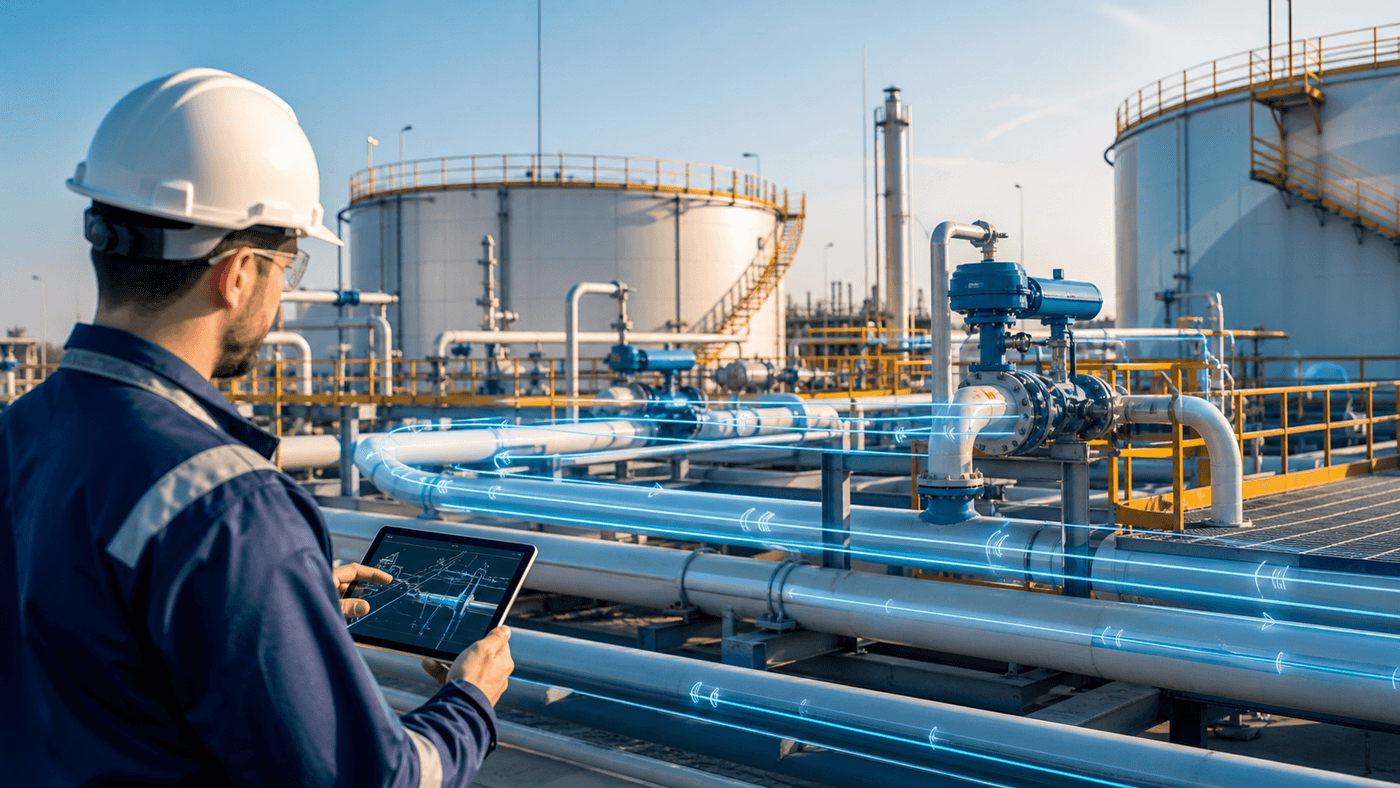
Buried and Above-Ground Oil Pipeline Stress and Surge Analysis from Tanker Berth to Terminal
Static and surge analysis of a 406 mm buried and above-ground oil pipeline from a tanker berth to a terminal, with all cases passing BS EN 13480-3.
Let's Build Something Great Together.
Partner with Fluxiss for engineering that holds up - under pressure, under load, under scrutiny.