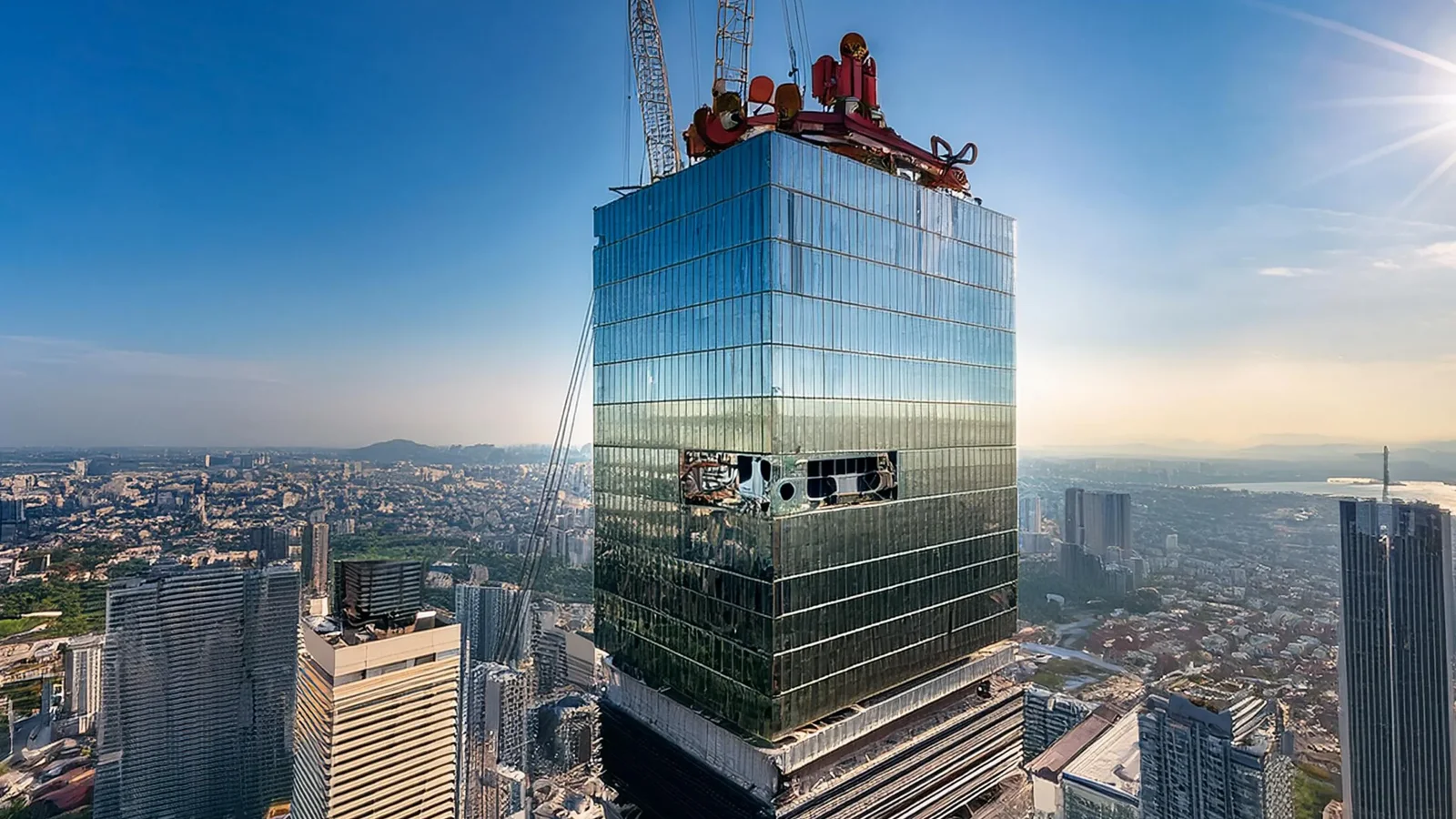
This service spotlight explains how the Fluxiss Seismic Retrofitting service brings an existing building, plant structure or pipe rack up to the earthquake performance that current codes and owners expect. Most of the structures in service today were designed to older editions of the seismic codes, or to none at all, and the ground does not distinguish between a new design and a fifty-year-old one. Fluxiss delivers retrofitting as a dedicated sub-service of Seismic Analysis, so that the assessment, the strengthening design and the construction drawings come from the same engineering team and the same structural model.
The work begins with an assessment of what exists rather than what the original drawings say. Fluxiss gathers the as-built drawings, previous surveys and material test data, then walks the structure to record corrosion, cracking, altered load paths and the equipment that was added after the original design. From that survey a structural model is built under Structural Analysis, with the member sizes, connection details and foundations as they are today. The seismic demand is then set from the site hazard: ASCE 41-23 and ASCE 7-22 on US projects, Eurocode 8 Part 3 on UK and European projects, and the local authority requirements in the UAE, each of which defines the performance objective, such as life safety or immediate occupancy, that the retrofitted structure has to meet.
“How the Fluxiss Seismic Retrofitting service brings an existing building, plant structure or pipe rack up to current earthquake performance: condition survey and as-built modelling, demand set to ASCE 41-23, ASCE 7-22 or Eurocode 8 Part 3, static, response spectrum or time history analysis, and strengthening designs such as bracing, jacketing, carbon-fibre wrapping and foundation upgrades that can be built without shutting the facility.”
Three analysis routes are used depending on the structure. Static Seismic Analysis with an equivalent lateral force is adequate for regular, low-rise structures and gives a fast first screen of the deficient members. Response Spectrum Analysis captures the modal behaviour of irregular buildings and tall pipe racks where a single mode does not govern. Time History Analysis is reserved for structures with important non-linear behaviour, base-isolated buildings or cases where the owner needs a performance-based result rather than a code check. Where a connection, a masonry wall or a corroded section cannot be judged with frame elements, a local model under Finite Element Analysis resolves the stresses and shows whether the detail will hold or needs strengthening.
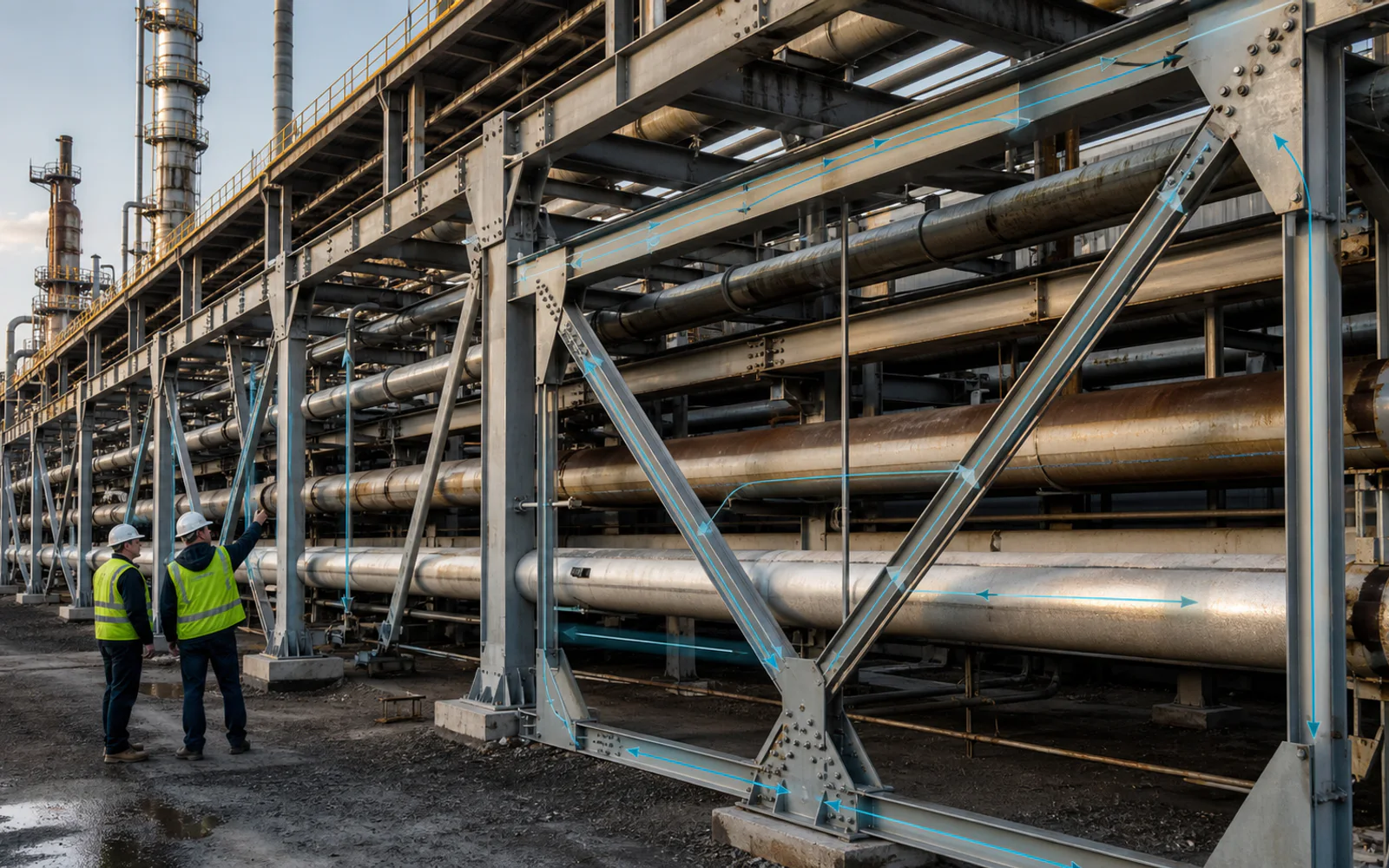
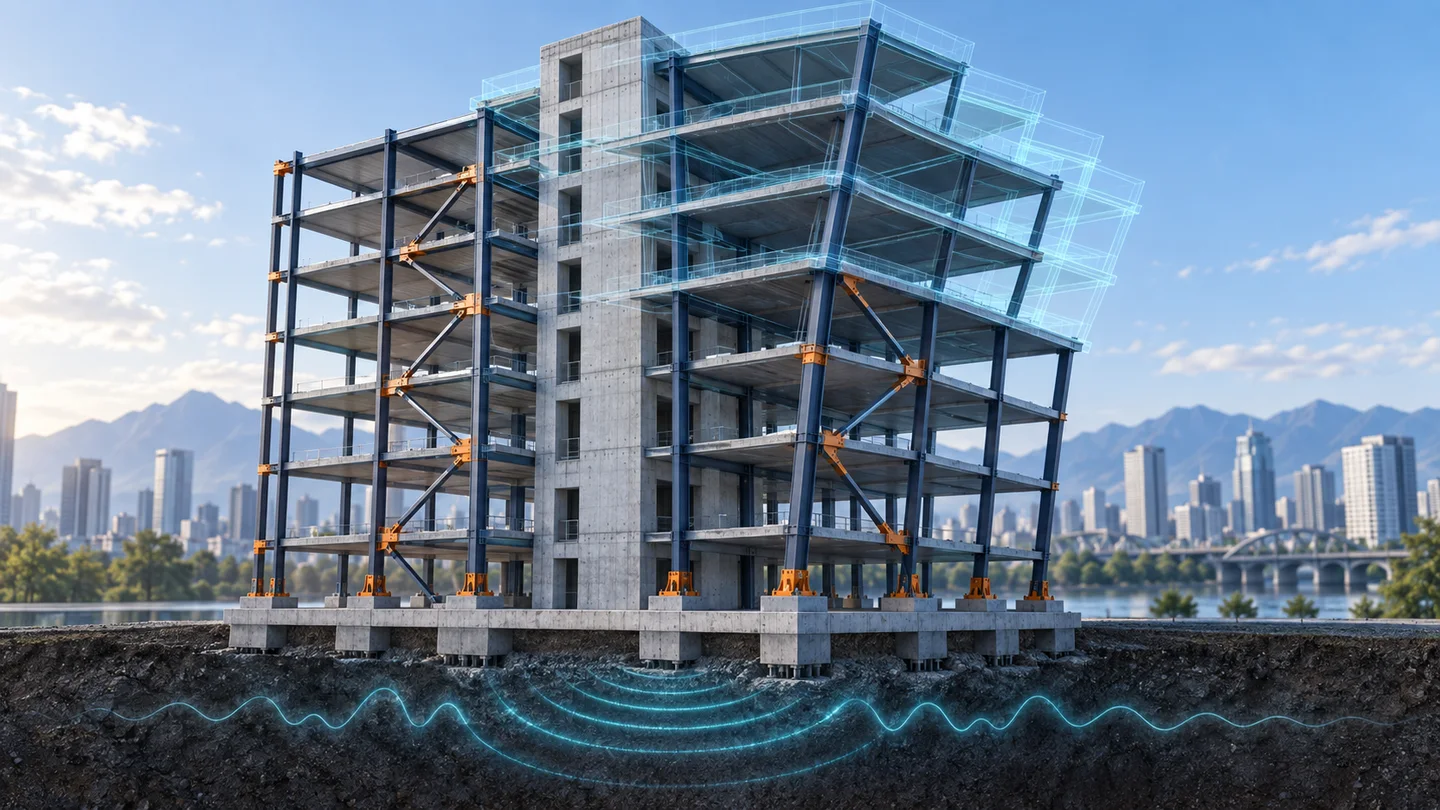
The retrofit design itself is chosen to disturb operations as little as possible. On steel pipe racks and process structures the common measures are added vertical bracing, strengthened base plates and anchor bolts, bay-by-bay member replacement and new struts at the pipe tiers, developed with Structural Engineering and coordinated with Pipe Stress Analysis so that a stiffer rack does not overload the lines it carries; the piping-side restraints are covered by Support and Brace Design. On concrete and masonry buildings the measures include concrete jacketing, carbon-fibre wrapping of columns and beams, new shear walls, diaphragm strengthening and the tying of walls, parapets and floors that older unreinforced buildings lack. Foundation upgrades, from enlarged footings to micropiles, are sized with Civil Engineering Design when the retrofit increases the overturning demand.
Deliverables are set so that the retrofit can be approved, priced and built. The assessment report states the performance objective, the deficiencies found and the demand-to-capacity ratio of each deficient element. The retrofit design package contains the strengthening drawings, connection details, material specifications and the phasing plan that keeps the facility operating during construction, and on US projects it carries the PE stamp of the state concerned. The seismic analysis spotlight, the structural engineering spotlight and the FEA spotlight describe the neighbouring services that feed the retrofit, our case study on retrofitting aging pipe racks walks through a real rack upgrade, and our note on common seismic analysis mistakes lists the errors a retrofit assessment has to avoid. Engineers who want to check their own retrofit demand calculations can use the Seismic Analysis Master Workbook from the Fluxiss products store.
A useful seismic retrofitting enquiry includes the location and site class of the structure, the as-built or original design drawings, any previous condition surveys or test reports, the equipment and piping now carried, the performance objective the owner or insurer requires and the constraints on construction access or shutdown windows. Owners and project teams can contact Fluxiss with that information or schedule a technical meeting to agree the assessment scope, the analysis route and the retrofit options before the model is built.
Fluxiss Team contributes services insights to the Fluxiss content library.
Let's Build Something Great Together.
Partner with Fluxiss for engineering that holds up - under pressure, under load, under scrutiny.