Fluxiss Service Spotlight: Thermal Management and Heat Transfer Simulation, from Conjugate Heat Transfer to Electronics Cooling and Battery Packs

This service spotlight explains how the Fluxiss Thermal Management and Heat Transfer service predicts where heat will go in a product or a plant before the first prototype is built. Heat decides the service life of a battery pack, the throughput of a processor, the rating of a transformer room and the comfort of an occupied space, and in each case the physical test comes late and tells the team only what happened, not why. Fluxiss runs thermal simulation as a dedicated sub-service of Computational Fluid Dynamics, so the same engineers who model the airflow also model the conduction through the solid parts and the heat that leaves by radiation.
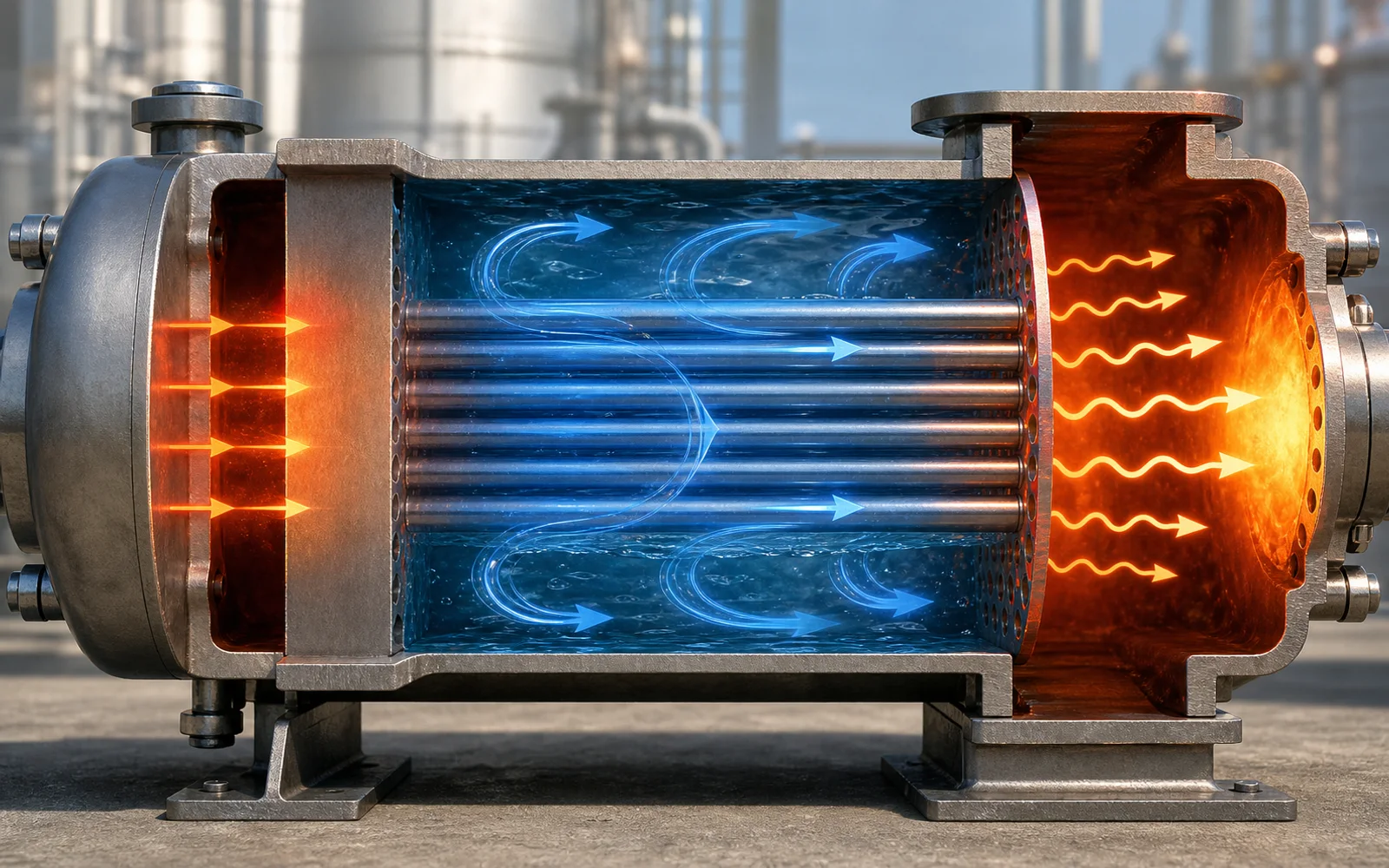
The work starts by defining the thermal problem rather than the geometry. Fluxiss establishes the heat sources and their duty cycle, the coolant or air path, the ambient conditions and the temperature limits that matter, whether that is a junction temperature on a chip, a cell temperature spread across a battery module or a surface temperature a maintenance technician is allowed to touch. The model then covers the three modes of heat transfer together: conduction through housings, heat sinks and busbars, forced and natural convection in the surrounding fluid, and radiation between hot surfaces. Where the solid and the fluid interact strongly, a conjugate heat transfer model solves both domains at the same time, which is the only reliable way to size a liquid cold plate, an engine cooling jacket or a radiator.
“How the Fluxiss Thermal Management and Heat Transfer service predicts where heat goes before a prototype exists: conduction, convection and radiation modelled together, conjugate heat transfer for cold plates and cooling jackets, electronics and switchgear cooling, transient battery fast-charge studies, and duct and pipework pressure-drop work that feeds HVAC and mechanical design.”
Electronics cooling is one of the most frequent requests. Fluxiss models enclosures, circuit boards and power modules to find the hot spots, selects heat sink geometry and thermal interface materials, and checks that the fan or blower airflow actually reaches the components rather than recirculating inside the box. The predicted temperature field is passed to Thermal and Fatigue Analysis and Finite Element Analysis so that the thermal expansion of a board, a solder joint or a bolted bus connection is checked for stress and fatigue life. The same hand-off is used in process plants, where our note on thermal stress in piping explains why a hot line needs its expansion designed rather than assumed.
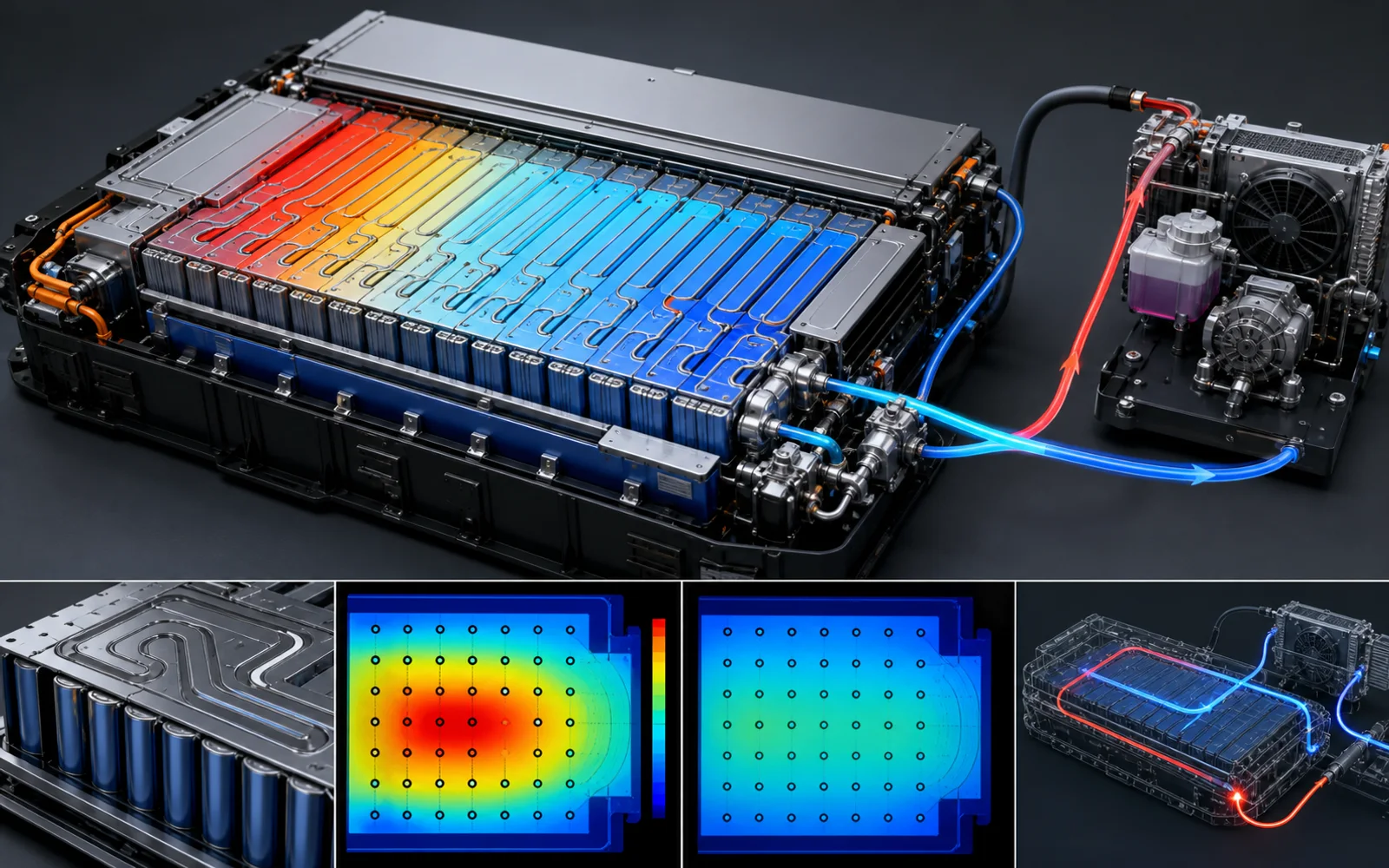
Battery thermal management is the fastest-growing part of the service. Fluxiss simulates fast-charge and discharge cycles as transient heat transfer problems, resolves the cell-to-cell temperature spread inside a module, and compares cooling strategies such as bottom cold plates, side cooling and immersion so that the pack stays inside its operating window without over-sizing the chiller. The same methods serve Automotive Engineering programmes for engine bays, brake cooling and cabin comfort, and Electrical System Design where switchgear rooms, transformer enclosures and cable trenches have to stay below their rated temperatures. Our primer on battery thermal management systems sets out the principles behind this work.
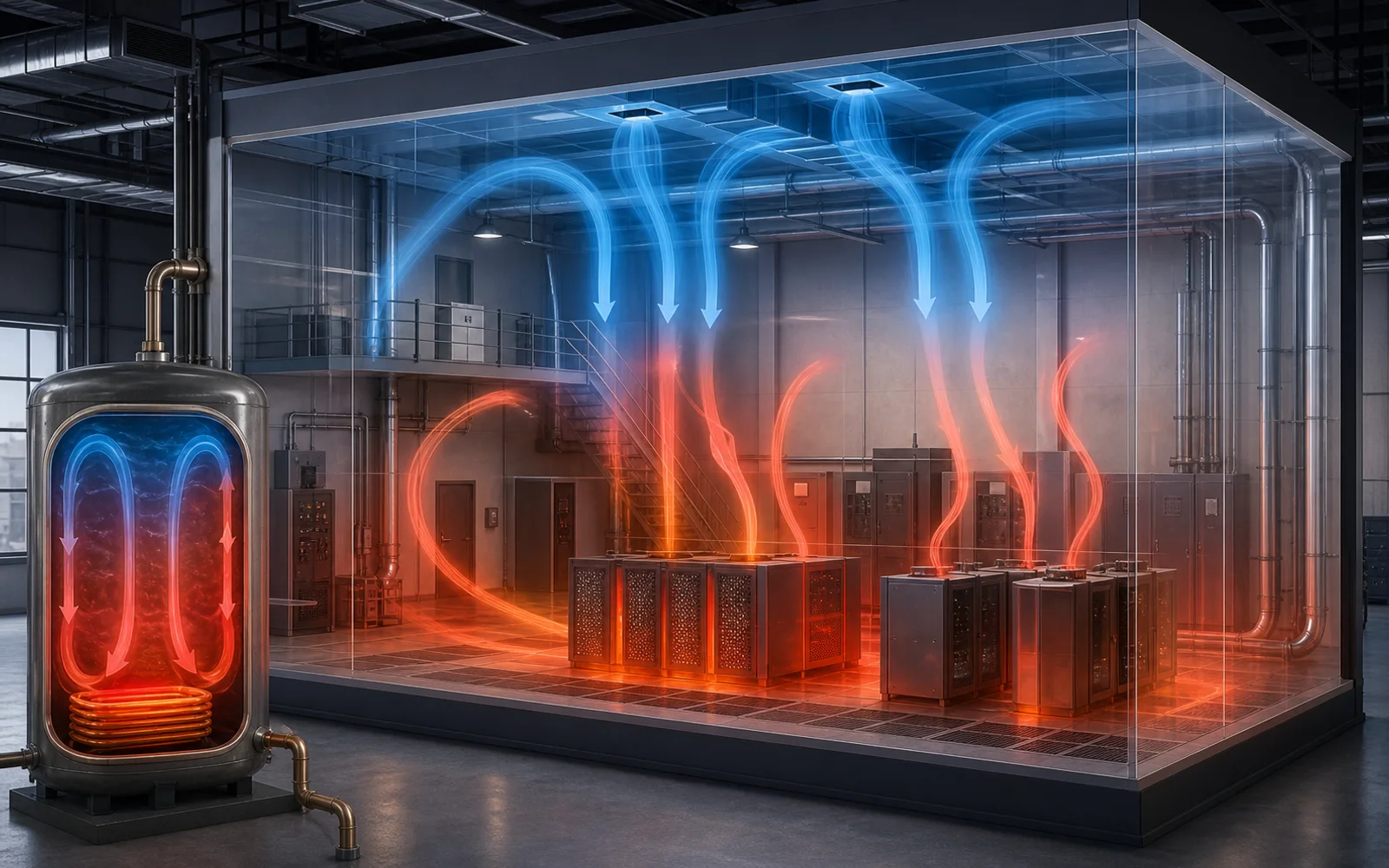
On the building and plant side the service overlaps with HVAC Engineering. Fluxiss models temperature distribution and air change in occupied spaces, data halls and plant rooms, assesses energy loss through envelopes and ductwork, and calculates pressure drop and head loss in ducts and process pipework so that fans and pumps are not working against avoidable losses; the results feed HVAC System Design and Mechanical System Design directly. External flow and heat rejection studies are shared with Aerodynamic Performance Analysis. The CFD engineering spotlight, the FEA spotlight and the HVAC engineering spotlight describe the neighbouring services, and the HVAC Engineering Master Workbook on the Fluxiss products store covers the load calculation methods that a thermal CFD study is normally checked against.
Deliverables are a thermal report with the model assumptions, boundary conditions, mesh and convergence evidence, temperature and flow fields at the agreed operating points, a comparison of the design options studied and a recommendation with the margins stated against each temperature limit. A useful enquiry includes the CAD of the assembly, the heat loads and their duty cycle, the coolant or air supply conditions, the ambient range, the temperature limits and any test data from a previous prototype. Product and project teams can contact Fluxiss with that information or schedule a technical meeting to agree the model scope and the operating points before the first run.
Fluxiss Team contributes services insights to the Fluxiss content library.
Let's Build Something Great Together.
Partner with Fluxiss for engineering that holds up - under pressure, under load, under scrutiny.